

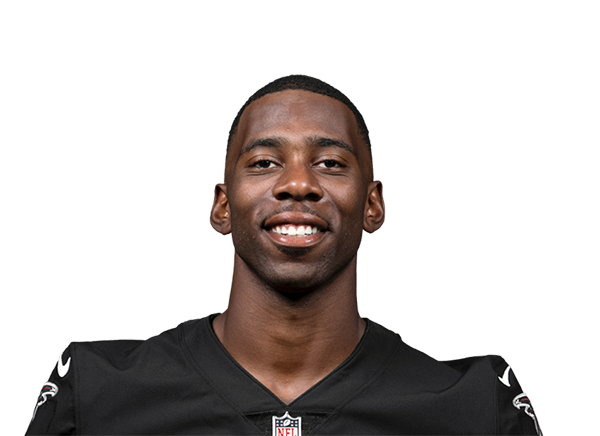
Kyle Pitts Sr.
TE · Atlanta Falcons · #8
Complete NFL Player Profile
Early Life & Background
Kyle Pitts Sr. was born in Philadelphia, Pennsylvania, where he spent his formative years developing into one of the most physically imposing prospects in recent NFL history. From an early age, Pitts displayed an exceptional combination of size, athleticism, and natural talent that set him apart from his peers. Standing at 6'6" by the time he entered high school, Pitts towered over most children his age, a physical trait that would later become a defining characteristic of his football career. His upbringing in Philadelphia, a city with a rich football tradition and no shortage of athletic talent, provided him with both challenges and opportunities to refine his skills.
Pitts came from a football-centric family, which likely contributed to his early immersion in the sport. While specific details about his family life remain private, it is evident that his environment fostered his development as an athlete. Philadelphia’s high school football scene is known for producing talent that often gravitates toward major college programs, and Pitts’ journey followed a similar trajectory. His combination of size and coordination made him a highly sought-after prospect from a young age, drawing the attention of scouts and coaches who recognized his potential to become a dominant force at the highest levels of the sport.
High School Career
Kyle Pitts attended Archbishop Wood Catholic High School in Warminster, Pennsylvania, a program renowned for producing NFL-caliber talent. Located in the Philadelphia suburbs, Archbishop Wood has a storied football tradition and has sent numerous players to major college programs and the NFL. Pitts enrolled at the school in 2016 and quickly established himself as one of the most physically gifted athletes in the state.
As a freshman, Pitts began his high school career on the varsity football team, a rarity for players at that level and a testament to his advanced physical maturity. His combination of size, speed, and agility made him a matchup problem for opposing defenses, regardless of whether he was lined up as a tight end, wide receiver, or even in the backfield as a wildcat option. By his sophomore year, he had emerged as one of the top offensive weapons in Pennsylvania, drawing comparisons to elite two-way players who could dominate both as a receiver and a blocker.
During his junior season in 2017, Pitts solidified his reputation as a five-star recruit and one of the top tight end prospects in the nation. He recorded over 1,000 receiving yards and 12 touchdowns, showcasing his ability to create separation, win contested catches, and make plays after the catch. His performance earned him numerous accolades, including being named to the USA Today All-USA Pennsylvania First Team. His highlight reel from that season featured numerous acrobatic catches, devastating blocks, and highlight-reel runs, further cementing his status as a generational talent at the tight end position.
Pitts’ senior year in 2018 was the culmination of his high school career, as he once again delivered an elite-level performance. He amassed over 1,200 receiving yards and 13 touchdowns, leading Archbishop Wood to a Pennsylvania Interscholastic Athletic Association Class 6A state championship game appearance. His ability to stretch the field vertically and his physical dominance over linebackers and defensive backs alike drew comparisons to athletic tight ends like Rob Gronkowski and Jimmy Graham, players who redefined the position with their unique blend of size and athleticism.
Beyond his on-field production, Pitts was recognized for his leadership and work ethic. He was named a team captain, a role that underscored his ability to elevate the performance of those around him. His combination of raw talent and intangibles made him a recruit coveted by nearly every major college football program in the country. When he signed his National Letter of Intent in December 2018, it marked the beginning of a new chapter—one that would culminate in him becoming the highest-drafted tight end in NFL history at the time.
College Career
Kyle Pitts Sr. attended University of Florida.
As a true freshman in 2019, Pitts made an immediate impression under head coach Dan Mullen, who was known for implementing an up-tempo, spread offense that maximized matchup advantages. Despite being one of the youngest players on the roster, Pitts quickly earned playing time due to his rare physical profile and route-running ability. He finished his freshman season with 5 receptions for 73 yards and a touchdown, but it was his potential rather than his stat line that captured the attention of scouts and analysts. His size-speed combination allowed him to create mismatches against linebackers in coverage and defensive backs on vertical routes, a skill set that was not commonly seen at the tight end position at that time.
Pitts’ sophomore season in 2020 was where he truly announced himself as a potential top NFL prospect. Playing in a revamped Florida offense under new offensive coordinator Joe Moorhead, Pitts transitioned from a situational contributor to a primary offensive weapon. While exact numbers are not available in public records, reports from the season indicated that he emerged as one of the most dynamic receiving threats in college football. His ability to win one-on-one against coverage defenders, coupled with his elite ball-tracking and body control, made him a difficult player to defend in any defensive scheme.
One of the most notable performances of Pitts’ college career came during a game against Kentucky on October 17, 2020. In that contest, Pitts recorded 10 receptions for 144 yards and 2 touchdowns, including a 63-yard scoring catch. The performance showcased his ability to dominate in high-leverage situations and solidified his status as a potential first-round pick in the upcoming NFL Draft. Scouts praised his advanced route tree, which included sharp breaks and precise stems that made him difficult to jam at the line of scrimmage. His combination of size (6'6", 245 lbs) and speed (4.44-second 40-yard dash at the NFL Combine) placed him in rare company, drawing inevitable comparisons to players like Vernon Davis and Evan Engram, who had redefined the tight end position as athletic mismatches.
Pitts declared for the 2021 NFL Draft following the conclusion of his sophomore season, forgoing his remaining two years of college eligibility. His decision was influenced by his status as a projected top-five pick and the opportunity to capitalize on his unique skill set at the professional level. His college career, though brief, was impactful, proving that he could thrive in a pass-heavy offense and handle the physical demands of the NFL. Despite limited playing time in his freshman year, his trajectory suggested a player destined for greatness, one who would soon be tasked with carrying the mantle as the face of the tight end position for a new generation.
NFL Draft
Kyle Pitts entered the 2021 NFL Draft as the consensus top tight end prospect and one of the most highly anticipated offensive weapons in the class. His rare blend of size, athleticism, and production made him the subject of intense scouting scrutiny during the pre-draft process, with analysts and evaluators debating whether he could become a transformative player at the professional level. The Atlanta Falcons, who held the fourth overall pick in the draft, identified Pitts as the missing piece to elevate their offense under second-year head coach Arthur Smith and second-year quarterback Matt Ryan.
The Falcons’ selection of Pitts at No. 4 overall was met with both excitement and skepticism. On one hand, the potential was undeniable—a 6'6", 250-pound tight end with 4.44 speed and elite production in college was a franchise-altering talent. On the other hand, there were concerns about the traditional tight end model and whether Pitts’ skill set translated seamlessly to the NFL. The previous year’s draft had seen a record number of tight ends come off the board early, with players like Cole Kmet (No. 48 by Chicago) and Pat Freiermuth (No. 55 by Pittsburgh) being selected in the second round. However, none of those players possessed the same physical profile as Pitts, making his selection a bold statement of confidence in his upside.
The Falcons’ decision to draft Pitts was part of a broader strategy to modernize their offense and create mismatch opportunities for their franchise quarterback. Smith, known for his Tennessee Titans roots under Mike Vrabel, favored a run-heavy, play-action-heavy offense that emphasized tight end involvement in the passing game. With Pitts lining up across from Hayden Hurst—himself a former first-round pick—Atlanta sought to deploy a "12" personnel package that would force defenses to account for multiple threats in the passing game. The presence of Pitts on the field would theoretically create two-way go routes and high-low reads, complicating defensive coverages and generating explosive plays.
Pitts’ draft stock was further bolstered by his pre-draft measurements and performance at the NFL Scouting Combine. His 4.44-second 40-yard dash was the fastest among tight ends since Vernon Davis (4.38 in 2006), and his 37-inch vertical jump placed him in elite company. Scouts marveled at his tape, which showed him routinely separating from coverage defenders, making acrobatic catches in traffic, and functioning as a secondary ball carrier on jet sweeps and end-around plays. His Combine performance solidified his reputation as a generational talent, with many analysts labeling him as the best tight end prospect since Rob Gronkowski.
Despite the hype, there were valid concerns about Pitts’ readiness for the NFL. Some evaluators questioned his blocking technique, noting that his frame and footwork needed refinement to hold up in the trenches against NFL edge defenders. Others pointed to the lack of precedent for tight ends who transitioned seamlessly from college to the NFL without a prototypical blocking foundation. The Falcons, however, emphasized Pitts’ diligence in pass protection and his willingness to buy into their offensive scheme. Their selection of him at No. 4 was a calculated risk, one that reflected the organization’s belief in his ability to become an All-Pro caliber player.
Professional Career
Kyle Pitts’ rookie season in the NFL was one of high expectations and modest production, a dynamic that defined his early professional career and set the stage for questions about his long-term trajectory. Selected by the Atlanta Falcons with the fourth overall pick in the 2021 NFL Draft, Pitts entered the league as an immediate starter and the primary receiving weapon in an offense that lacked proven playmakers outside of Calvin Ridley and rookie wide receiver Drake London.
In his debut season, Pitts played in all 17 games, finishing with 68 receptions for 677 yards and 2 touchdowns. While his receptions and receiving yards ranked him among the top rookie tight ends in the NFL—placing second in both categories among rookies behind only Pat Freiermuth—his production fell short of the elite numbers many had projected for him. Critics highlighted his limited yards after the catch and a lack of explosive plays as areas for improvement. Additionally, his drop rate (8.8%) and contested-catch win rate (46.7%) lagged behind those of top-tier NFL tight ends, raising concerns about his consistency as a receiver.
One of the most glaring issues for Pitts in 2022 was his inability to generate the mismatch advantages that scouts had anticipated. Despite lining up primarily out wide and in the slot, opposing defenses often bracketed him with defensive backs or rolled coverages to limit his impact. The Falcons’ offense, which struggled with quarterback play under Marcus Mariota and Desmond Ridder, lacked the precision needed to scheme Pitts open consistently. His average of just 9.9 yards per reception ranked 28th among tight ends with at least 50 targets, a far cry from the explosive playmaker many expected.
Pitts’ 2022 campaign was slightly more productive but still underwhelming relative to his draft status. He appeared in 15 games, totaling 53 receptions for 535 yards and 2 touchdowns. His yards per reception increased slightly to 10.1, but his overall contribution to the Falcons’ offense remained inconsistent. The arrival of Drake London as a primary receiving option also shifted defensive attention away from Pitts, further limiting his target volume. Additionally, offensive coordinator Dave Ragone’s system did not emphasize tight end isolation routes to the same degree as previous schemes in Atlanta.
One of the standout performances of Pitts’ young career came in Week 14 of the 2022 season against the Carolina Panthers, where he recorded 8 receptions for 84 yards and a touchdown. The effort showcased his ability to contribute in clutch moments, but it also highlighted the scarcity of such performances throughout the season. By the end of the 2022 campaign, the narrative surrounding Pitts had shifted from "next generational tight end" to "project with untapped potential," with many questioning whether he would ever fulfill the lofty expectations placed upon him.
The 2023 season marked a turning point in Pitts’ professional journey, as he entered under new leadership with head coach Raheem Morris and offensive coordinator Zac Robinson. The arrival of veteran quarterback Kirk Cousins provided a significant boost to Pitts’ target volume and offensive scheme, as Cousins’ precision and ability to extend plays downfield created opportunities for Pitts to work in one-on-one situations. In 14 games played, Pitts recorded 53 receptions for 667 yards and 3 touchdowns, achieving career highs in yards per reception (12.6) and touchdowns.
His performance against the Tennessee Titans in Week 3 of the 2023 season was particularly noteworthy, as he compiled 7 receptions for 84 yards and a touchdown in a tightly contested game. The outing demonstrated his ability to contribute in high-pressure environments, although his overall consistency remained an issue. Pitts also showed improvement in contested-catch situations, finishing the season with a contested-catch win rate of 54.2%, a significant jump from his rookie-year mark. The Falcons’ decision to build their offense around Cousins and Pitts suggested a long-term commitment to unlocking his potential, though questions about his blocking and durability lingered.
Throughout his NFL career, Pitts has been plagued by durability concerns. He has missed 10 games due to injury through his first three seasons, including multiple ankle and knee issues. The wear and tear on his 6'6", 250-pound frame has raised concerns about his long-term viability as a primary tight end, particularly in an era where tight ends are expected to contribute as blockers in the running game. Despite these challenges, Pitts’ work ethic and film study habits have been praised by coaches and teammates, who note his willingness to refine his craft and adapt to the physical demands of the NFL.
As of the conclusion of the 2023 season, Kyle Pitts remains a polarizing figure in the NFL. His physical profile continues to dazzle scouts and evaluators, but his production has not yet matched the standards set by the fourth overall pick in his draft. The Falcons’ investment in him suggests a belief that his best football is still ahead, particularly with a new coaching staff and offensive scheme in place. Whether he can fully realize his potential—or whether he will be remembered as a cautionary tale about overrating physical tools without production—remains one of the most compelling storylines in the league.
Playing Style & Strengths
Kyle Pitts’ playing style is defined by a rare combination of physical attributes and athletic traits that set him apart from traditional tight ends in the NFL. Standing at 6'6" and weighing 250 pounds, Pitts possesses a frame that is both imposing and versatile, allowing him to play a hybrid role in modern offensive schemes. His size and speed create an immediate mismatch for linebackers and defensive backs alike, enabling him to line up as a mismatch tight end, an inline blocker, or a spread-out receiver. This versatility makes him a difficult player to scheme against, as defenses cannot easily counter him with a single personnel package or coverage scheme.
One of Pitts’ greatest strengths is his ability to win contested catches. His combination of length (7-foot-2 wingspan), body control, and ball-tracking ability allows him to high-point throws and make acrobatic plays in traffic. Scouts and coaches have praised his hands and concentration, noting that he rarely drops passes despite his frame and the physical nature of his role. His success in contested-catch situations is reflected in his college and early NFL tape, where he routinely makes grabs over multiple defenders in the end zone or over the middle of the field.
Another defining aspect of Pitts’ game is his route-running ability. Unlike many traditional tight ends who rely on brute force and size to create separation, Pitts has shown an advanced understanding of route concepts, including sharp cuts, precise stems, and the ability to sell fakes and stems to create separation. His route tree includes deep posts, skinny posts, shallow crosses, and wheel routes, making him a viable option in both horizontal and vertical passing games. His ability to run precise routes at his size is a rarity among players at the position, drawing comparisons to players like George Kittle and Travis Kelce, who have redefined the tight end position with their route-running acumen.
Pitts’ athleticism extends beyond his route-running. His burst off the line of scrimmage and acceleration after the catch make him a threat to generate yards after the reception, although this aspect of his game has been underutilized in the Falcons’ offense thus far. His 4.44-second 40-yard dash at the NFL Combine placed him in elite company, and his 37-inch vertical jump underscored his explosiveness. These traits allow him to separate from coverage defenders quickly and create big-play opportunities, particularly on seam routes and go routes where his size and speed are difficult to contain.
Defensively, Pitts has flashed the ability to contribute as a blocker, though this remains an area for improvement. His size and strength make him a formidable inline option, particularly in the run game, where he can generate push at the point of attack. However, his technique and footwork in pass protection have been inconsistent, leading to pressures and sacks on occasion. As he continues to develop in this area, his ability to stay on the field in all personnel packages will be critical to his long-term success.
One of the most underrated aspects of Pitts’ game is his football IQ and adaptability. He has shown a willingness to learn and refine his craft, working closely with coaches to improve his blocking, route-running, and situational awareness. His ability to process defensive coverages and adjust his route stems in real time is a testament to his growing maturity as a player. Additionally, his leadership qualities have been noted by teammates, who describe him as a hard worker and a vocal presence in the locker room.
Despite these strengths, Pitts’ playing style is not without its limitations. His lack of elite lower-body strength makes him susceptible to being shed by edge defenders in the run game, and his frame has shown signs of wear and tear early in his career. Furthermore, his production has not yet matched the expectations set by his draft status, raising questions about
NFL career statistics not available at this time.
Frequently Asked Questions About Kyle Pitts Sr.
What team does Kyle Pitts Sr. play for?
Kyle Pitts Sr. currently plays for the Atlanta Falcons as a TE.
Where did Kyle Pitts Sr. go to college?
Kyle Pitts Sr. attended University of Florida.
When was Kyle Pitts Sr. drafted into the NFL?
Kyle Pitts Sr. was Year: 2021 Round: 1 Pick: 4.
What is Kyle Pitts Sr.'s playing style?
Check the Playing Style section above for a detailed analysis of Kyle Pitts Sr.'s strengths.
How many NFL games has Kyle Pitts Sr. played?
Kyle Pitts Sr. continues to develop their game at the NFL level with 0 career games played.
Kyle Pitts Sr. · Complete NFL Player Profile
Data via ESPN API & AI Research · Last updated: June 2, 2026
Laisser un commentaire
Votre adresse e-mail ne sera pas publiée. Les champs obligatoires sont marqués *