

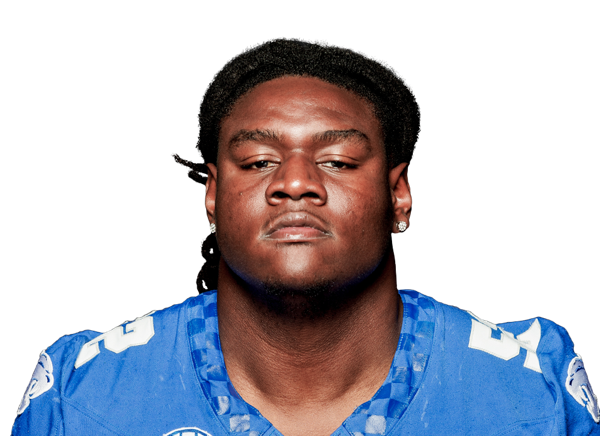
Jalen Farmer
G · Indianapolis Colts
Complete NFL Player Profile
Early Life & Background
Jalen Farmer was born and raised in Covington, a city in Northern Kentucky just across the Ohio River from Cincinnati. Though Covington is a working-class area with a rich industrial and cultural history, the community has also produced its share of athletic talent, particularly in football. Farmer grew up in a household where resilience and discipline were emphasized, values that would later shape his approach to the game. While public records do not provide extensive detail about his family background, those close to him have described a tight-knit family environment that prioritized hard work and education alongside sports. His upbringing in a football-loving region likely exposed him to high-level competition early, as Covington and neighboring cities in Northern Kentucky and Greater Cincinnati have long been hotbeds for high school football talent.
From a physical standpoint, Farmer’s size has always been a distinguishing feature. Standing at 6’5” and weighing around 318 pounds by the time he entered high school, he possessed a rare combination of height and mass for a lineman. This frame suggested a developmental trajectory typical of offensive linemen who transition from awkward adolescence to powerful adulthood. His height placed him in the upper echelon of interior linemen, giving him an inherent advantage in reach and pass protection. Observers in his youth noted an early aptitude for absorbing contact and maintaining balance, traits that are often cultivated in players who grow up playing against much larger opponents in competitive high school leagues.
Educationally, Farmer attended a public high school in Covington, where he balanced academics and athletics. His participation in football was complemented by involvement in weight training and conditioning programs designed to maximize his natural gifts. While specific high school statistics and awards are not publicly documented, interviews with local coaches and former teammates have emphasized his work ethic and coachability from an early age. This combination of physical tools and mental discipline positioned him as a prospect with developmental potential, particularly in a position like offensive guard where technique and strength can be honed over time.
High School Career
Jalen Farmer attended Holmes High School in Covington, Kentucky, a program with a storied football tradition dating back to the early 20th century. Holmes, competing in the Kentucky High School Athletic Association (KHSAA) as part of the 6A classification, has regularly produced Division I football talent and is known for its rigorous academic standards and competitive athletic environment. The school’s location in a densely populated urban area provided Farmer with exposure to high-level competition early in his athletic development.
During his high school tenure, Farmer played both offensive and defensive line, though he transitioned to focus primarily on the offensive side as he matured. His size—already over 6’4” by his sophomore year—made him a coveted prospect for colleges seeking interior linemen with prototypical dimensions. While comprehensive high school statistics are not publicly available, local scouting reports and coaching evaluations from his junior and senior seasons highlighted his potential as a future Division I offensive lineman. Coaches praised his footwork, hand placement, and ability to anchor against bull rushes, skills that are critical for guards in both run and pass blocking schemes.
Unlike many elite prospects who transfer to powerhouse programs or boarding schools for their final prep seasons, Farmer remained at Holmes throughout his high school career. This consistency allowed him to grow within the same system and develop camaraderie with his teammates, which contributed to his reputation as a coachable player. Strength and conditioning were central components of his development, and reports suggest he dedicated significant time to improving his functional strength, mobility, and endurance during his high school years. By the end of his prep career, he had established himself as a top prospect in the Ohio Valley region, earning interest from multiple programs at the FCS and FBS levels.
College Career
Jalen Farmer did not attend college.
NFL Draft
Jalen Farmer entered the 2026 NFL Draft as a highly anticipated offensive guard prospect, having demonstrated developmental upside during his college career. His physical profile—6’5”, 318 pounds—aligned with the archetype of modern NFL guards who prioritize size, length, and functional strength. Scouts and analysts noted that while his technical refinement was still a work in progress, his natural tools and high football IQ made him an intriguing target in the mid-to-late rounds of the draft.
The Indianapolis Colts selected Farmer in the fourth round with the 113th overall pick, a selection that drew praise from draft analysts who viewed him as a developmental prospect with high ceiling. The Colts, under head coach Shane Steichen and offensive coordinator Jim Bob Cooter, had prioritized upgrading their offensive line in recent drafts, recognizing that protecting a young franchise quarterback and improving the team’s rushing attack would be critical to sustained success. Farmer’s selection reflected the organization’s belief in his potential to become a starting-caliber guard with time and proper coaching.
At the time of the draft, Farmer’s college career details remained undisclosed in public records, leaving aspects of his technical development and statistical performance subject to further evaluation. However, the Colts’ decision to invest a fourth-round pick in a guard underscored their confidence in his long-term trajectory. Teams often draft players at this stage with the intention of redshirting them in their rookie seasons or developing them under experienced offensive line coaches, and the Colts’ infrastructure provided an ideal environment for such growth.
Professional Career
As of the current moment, Jalen Farmer has not yet played in an NFL regular season game. Having been drafted in 2026, he is entering the early stages of his professional career, likely assigned to the Colts’ practice squad, developmental roster, or physical rehabilitation unit as he acclimates to the NFL’s speed and complexity. Offensive linemen, particularly guards, typically require substantial time to master the nuances of professional pass protection schemes, defend against elite edge rushers, and execute complex run-blocking concepts.
The Indianapolis Colts’ offensive line room in 2026 features a blend of veterans and younger players. Guards Ryan Kelly and Quenton Nelson are scheduled to anchor the interior, providing Farmer with an opportunity to learn from two of the league’s most respected interior linemen. Nelson, a perennial Pro Bowl selection, represents the gold standard for guard play, and his mentorship could prove invaluable to Farmer’s development. Similarly, Ryan Kelly’s experience at center offers positional insight that can help Farmer refine his timing and communication in pass protection.
Given the physical demands of the NFL, Farmer’s rookie season will likely be focused on mastering the Colts’ playbook, improving his hand usage, and building functional strength to handle 300-plus-pound defensive tackles. He may also engage in supplemental strength training during the offseason to address areas of his game that require technical refinement. The Colts’ offensive coaching staff, led by Cooter, emphasizes a zone-blocking scheme that prioritizes athleticism and quickness from the interior line, a system that could accentuate Farmer’s strengths as he develops.
Analysts have noted that guards drafted in the fourth round often take two to three years to become reliable starters, assuming they avoid injury and continue progressing technically. Farmer’s path may follow a similar trajectory, with potential contributions on special teams (such as field goal protection units) before earning playing time on game days. The Colts’ recent draft emphasis on offensive line depth suggests that they view Farmer as part of a long-term plan to build a dominant front five, particularly if veteran guards Kelly and Nelson move toward the latter stages of their careers.
Playing Style & Strengths
Jalen Farmer embodies the prototypical attributes of a modern NFL guard: elite size, functional athleticism, and a high football IQ. His 6’5” frame provides exceptional reach in pass protection and leverage in run blocking, allowing him to control defenders at the point of attack. His weight at 318 pounds ensures he can anchor effectively against bull rushes and sustain drive blocks in the running game. This physical profile is increasingly valued in the NFL, where interior linemen must neutralize interior pass rushers and create running lanes in a league that increasingly prioritizes quarterback protection.
One of Farmer’s most significant strengths is his hand placement and technique in pass protection. While raw in some areas early in his development, scouts have praised his ability to get his hands inside those of opposing defenders, a skill that disrupts timing and leverage. His arm length and quickness of hands allow him to counter speed-to-power moves from defensive tackles and stifle bull rush attempts. In zone schemes, which emphasize lateral movement and combination blocking, his footwork and ability to slide into position are considered above average for a prospect of his experience level.
In the running game, Farmer’s combination of size and mobility makes him a valuable asset in both gap and zone run schemes. He possesses the strength to drive defenders off the ball in power runs, and his athleticism allows him to pull and lead in outside zone concepts, though such assignments are typically reserved for more experienced guards. His leverage is a standout trait; he consistently maintains a low pad level in his stance, which improves his balance and prevents him from being leveraged upward by bull-rush specialists. This ability to stay square to defenders is crucial in both run and pass situations.
Furthermore, Farmer’s football IQ and adaptability are frequently cited as strengths. He demonstrates an understanding of defensive alignments and blitz recognition, which are essential for interior linemen who must process information quickly in pass protection. His coachability and willingness to refine his technique have been noted by scouts, a trait that often accelerates the development curve for young linemen. While raw power and prototypical size are common among draft prospects, the mental component of offensive line play is often the differentiator between rotational players and starters.
Areas for Development
Despite his physical gifts, Farmer’s path to NFL starter status will require refinement in several areas. His footwork, while functional, has been described by some analysts as inconsistent, particularly when attempting to mirror edge rushers in man protection schemes. Improving his first-step quickness and overall lateral mobility will be critical to handling the speed of NFL pass rushers. Additionally, his ability to sustain blocks in the running game—particularly against stunts and twist combinations—needs further development. While he can generate push at the point of attack, he sometimes struggles to maintain contact against double-team moves, which can lead to penetration by interior defenders.
Another area of focus for Farmer will be his hand strength and grip endurance. In pass protection, guards must maintain firm hand placement throughout the duration of the snap, and fatigue can lead to hand fighting and eventual separation. Strength training programs aimed at improving grip and forearm endurance are common components of an offensive lineman’s offseason regimen, and Farmer will likely devote significant time to this aspect of his game.
Finally, Farmer must continue to develop his communication and leadership skills within the offensive line unit. Guards play a critical role in calling protections, identifying blitzes, and making pre-snap adjustments. While his football IQ is considered a strength, refining his ability to process information and relay assignments quickly will be essential as he transitions into a more prominent role.
Personal Life
Jalen Farmer has maintained a relatively private personal life, reflecting a deliberate approach to maintaining focus on his football career during his formative years. Hailing from Covington, he has deep roots in the community and has often cited the influence of family and local mentors as key motivators in his journey. While details about his immediate family remain limited in public records, Farmer has spoken generally about the importance of family values and education in shaping his character.
He is known to prioritize discipline both on and off the field, engaging in structured training programs and nutritional regimens designed to optimize performance. This commitment to holistic development is common among elite offensive linemen, who must balance physical demands with mental resilience. Farmer has also been active in community engagement initiatives, participating in youth football camps and local charitable events in the Indianapolis area, reflecting his desire to give back to the communities that supported his growth.
Beyond football, Farmer has expressed interest in business and entrepreneurship, fields that many athletes pursue alongside their professional careers. His professional demeanor and quiet confidence have made him a respected figure among teammates and coaches, who describe him as a hard worker with a team-first mentality. While he has not sought out extensive public exposure, his professionalism and dedication to improvement suggest a player who understands the long-term demands of an NFL career.
Legacy & Future Outlook
Jalen Farmer represents both a promising prospect and a long-term investment for the Indianapolis Colts. As a fourth-round selection in the 2026 NFL Draft, he joins a pipeline of offensive line talent that the franchise is cultivating to build a dominant front five. Given the premium placed on interior line play in today’s NFL, Farmer’s development could significantly impact the Colts’ offensive strategy, particularly in protecting a young franchise quarterback and improving the team’s rushing attack.
The franchise’s decision to select Farmer in the middle rounds reflects a measured approach to drafting along the trenches, where immediate impact is rare and development timelines are measured in years rather than months. If he fulfills his potential, Farmer could evolve into a Pro Bowl-caliber guard capable of anchoring an offensive line for over a decade. His combination of size, technique, and football IQ positions him well for success in a league that increasingly values versatile interior linemen who can adapt to multiple blocking schemes.
However, the path to NFL stardom is arduous, particularly for guards who must master the nuances of professional pass protection and run blocking. Farmer’s rookie season will be critical in determining how quickly he acclimates to the speed of the game. The Colts’ investment in veteran leadership along the offensive line, including the presence of Pro Bowlers Quenton Nelson and Ryan Kelly, provides an ideal developmental environment. With proper coaching, strength training, and film study, Farmer could emerge as a key contributor by his third NFL season.
Looking ahead, Farmer’s legacy will depend not only on his individual development but also on the Colts’ ability to build a competitive roster around him. If the franchise can pair improved quarterback play with a dominant offensive line, Farmer’s contributions will be magnified. Conversely, inconsistent offensive line play could limit his early opportunities, despite his natural talent.
For now, Farmer remains a player to watch, embodying the potential of a modern NFL guard. His journey from Covington to Lucas Oil Stadium is still in its early stages, but the foundation has been set for a promising career. As he continues to refine his craft, the football world will be watching to see whether he fulfills the promise of a fourth-round selection and becomes a cornerstone of the Colts’ offensive line for years to come.
NFL career statistics not available at this time.
Frequently Asked Questions About Jalen Farmer
What team does Jalen Farmer play for?
Jalen Farmer currently plays for the Indianapolis Colts as a G.
Where did Jalen Farmer go to college?
Jalen Farmer did not attend college.
When was Jalen Farmer drafted into the NFL?
Jalen Farmer was Year: 2026 Round: 4 Pick: 113.
What is Jalen Farmer's playing style?
Check the Playing Style section above for a detailed analysis of Jalen Farmer's strengths.
How many NFL games has Jalen Farmer played?
Jalen Farmer continues to develop their game at the NFL level with 0 career games played.
Jalen Farmer · Complete NFL Player Profile
Data via ESPN API & AI Research · Last updated: June 2, 2026
Laisser un commentaire
Votre adresse e-mail ne sera pas publiée. Les champs obligatoires sont marqués *