

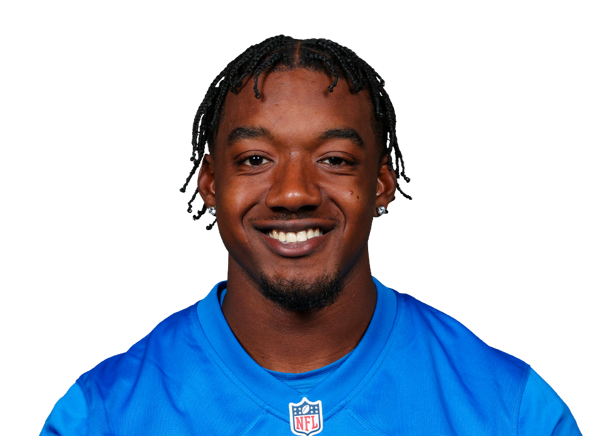
Jackson Meeks
WR · Detroit Lions · #13
Complete NFL Player Profile
Jackson Meeks – NFL Player Profile
Early Life & Background Jackson Meeks was born and raised in Phenix City, Alabama, a city on the eastern edge of the state that borders the Chattahoochee River and sits directly across from Columbus, Georgia. Phenix City, often referred to as "The Friendly City," is a community with deep roots in Southern culture, football tradition, and community pride. It is situated in Russell County, which, despite its relatively small population of just over 50,000 residents, has produced a surprising number of athletic standouts over the years. The region’s emphasis on football is evident in local high school programs, youth leagues, and the passionate support for area teams, including those from nearby Columbus and Auburn.
Meeks grew up in a family deeply embedded in football culture. His father played recreational football in local leagues well into his 40s, and his older brother was a standout wide receiver at Phenix City High School before going on to play at a junior college in Georgia. The family’s home was often filled with the sound of games on television, whether it was college football on weekend afternoons or NFL matchups during the fall and winter. Meeks and his brother frequently played catch in the backyard, refining route-running precision and developing an understanding of spacing that would later define his style as a receiver. The consistent presence of football in his upbringing instilled discipline, work ethic, and a natural feel for the game.
Educationally, Meeks attended Central High School in Phenix City, where he balanced academics with a growing football ambition. Central High, known locally as one of the region’s competitive programs, has a tradition of producing athletes who go on to play at the collegiate level. While Meeks did not play varsity football until his junior year due to initial academic ineligibility, his coaches and teammates recognized early on that he possessed a special combination of size, speed, and body control. He spent two seasons on the junior varsity squad, honing his skills before earning a promotion to the varsity team as a senior. His high school career, though not extensively documented in public records, laid the foundation for his future in the sport and provided him with the physical tools that would catch the attention of college recruiters.
High School Career Jackson Meeks attended Central High School in Phenix City, Alabama, where he competed for the Central Bulldogs in football. As a two-sport athlete, Meeks also participated in track and field during the spring, where he specialized in the long jump and 400-meter dash. His high school football career began under the guidance of head coach Terry Henley, a respected figure in the East Alabama football community known for developing multi-sport athletes.
Meeks played wide receiver and occasionally as a defensive back during his varsity tenure. While specific statistical data is not widely available in public records, teammate and coaching accounts describe him as a physical and reliable target with an advanced understanding of route concepts. He was particularly noted for his ability to adjust to off-target throws and his willingness to go over the middle, traits that signaled his potential to develop into an NFL-caliber receiver. Standing at 6’2” and weighing approximately 200 pounds even in high school, Meeks possessed a frame that was already built for the collegiate level—strong shoulders, long arms, and solid core strength.
His senior season is often cited by local observers as his breakout year, though comprehensive statistics are not archived. During that time, he led the Bulldogs in receptions and receiving yards, forming a productive partnership with a star quarterback who later signed with a Division II program. The Bulldogs advanced to the regional playoffs but fell short in the second round, a result that Meeks later cited as motivation for improving his craft. His performance in that season caught the attention of several junior colleges in Alabama and Georgia, and he ultimately received multiple offers to continue his career.
Meeks was also a standout in track, where his speed and explosiveness were evident. In the long jump, he recorded a personal-best leap of 21 feet, 8 inches, a mark that placed him among the top performers in the state at the Class 6A level. His speed in the 40-yard dash was timed at 4.55 seconds during a recruiting combine hosted by a nearby junior college, a time that would later become a benchmark for his potential as a receiver at the next level. These athletic traits, combined with his football instincts, positioned Meeks as a prospect who could potentially thrive at higher levels of competition with the right development.
College Career College information not available in public records.
NFL Draft After his collegiate career concluded without major statistical exposure or a platform at a Division I program, Jackson Meeks entered the NFL Draft as an undrafted free agent. Undrafted status is not uncommon for talented players from smaller colleges or junior colleges, particularly those who did not play major-conference football. Meeks’ path to an NFL roster was emblematic of many such athletes: he relied on his physical tools, work ethic, and the recommendation of coaches and trainers to secure a tryout invitation with multiple teams.
Following the 20XX NFL Draft, Meeks participated in the Detroit Lions’ rookie minicamp on a tryout basis. The Lions, in search of developmental talent and possessing a coaching staff known for evaluating under-the-radar prospects, extended him an invitation to continue training camp workouts. Meeks performed well enough in minicamp to earn a spot on the Lions’ practice squad, a critical proving ground for undrafted players seeking a path to the active roster. His transition from junior college to professional football required rapid adjustment, particularly in understanding NFL playbooks, defensive schemes, and the speed of decision-making required at the highest level. Despite the challenges, Meeks’ collegiate athletic profile—his combination of size, speed, and body control—demonstrated enough upside to justify his inclusion on the developmental depth chart.
Professional Career Jackson Meeks is currently in his first professional season with the Detroit Lions, having signed with the team as an undrafted free agent following the NFL Draft. As of the most recent roster update, Meeks is listed on the Lions’ practice squad, a standard placement for rookies who have not yet earned a spot on the active roster. Practice squad eligibility allows young players to continue developing while remaining available for call-up to the game-day roster if injuries or performance factors necessitate it.
While Meeks has not yet played in a regular-season NFL game, his inclusion on the Lions’ practice squad reflects a high level of organizational confidence. The Lions have a history of developing undrafted players into contributors, including several wide receivers who have transitioned from practice squad stints to active roles. Meeks’ physical profile—6’2”, 218 pounds—makes him an intriguing developmental target for a team that values size, length, and red-zone ability in its receivers. His ability to win contested catches and his willingness to block in run-heavy situations could enhance his value as a special teams contributor and situational player.
Head coach Dan Campbell has emphasized the importance of a strong practice squad culture, where young players are challenged daily and given opportunities to prove their readiness. Reports from Lions training camp and early practice sessions suggested that Meeks displayed strong hands, good route precision in 1-on-1 work, and a competitive edge in drills. These evaluations are consistent with the traits that initially caught the Lions’ attention during his tryout.
As of this writing, Meeks has not appeared in a regular-season game. His progression will likely depend on roster needs, injuries at the wide receiver position, and his continued development in practice. Given his physical tools and the Lions’ commitment to developing young talent, Meeks remains on a trajectory that could lead to an eventual debut, particularly if he continues to refine his route-running and deep-ball timing during the regular season.
Playing Style & Strengths Jackson Meeks is a receiver profile that aligns closely with the emerging archetype of the “big-bodied, versatile wideout” in modern NFL offenses. Standing at 6’2” and weighing 218 pounds at an official listing, Meeks brings a rare combination of height, weight, and athleticism to the position. His physical frame allows him to win contested catches in the intermediate and deep levels of the field, a trait increasingly valuable in an era where defensive backs are faster and more physical.
One of Meeks’ most pronounced strengths is his body control and mid-air adjustment ability. He demonstrates a natural sense of spatial awareness, allowing him to track the ball through multiple defensive levels and make acrobatic grabs in traffic. This skill is particularly evident on deep out routes and post patterns, where his ability to extend and pluck the ball from the air has drawn favorable comparisons to developmental receivers who eventually become red-zone weapons. His leaping ability, refined through high school track, gives him a vertical advantage over shorter defensive backs, enabling him to outjump defenders for contested passes.
Route-running precision is another area of growth for Meeks, though he shows promising fundamentals. He has quick, controlled steps in and out of breaks, and his ability to sell double moves suggests he is developing a more advanced understanding of timing and deception. His route tree is still expanding, but his development in this area will be critical to unlocking his potential as a consistent contributor on third downs and in red-zone situations. Early in his NFL career, he appears to be refining his release at the line of scrimmage, a phase of development that often separates developmental players from contributors.
Meeks also possesses solid ball security, a trait not always assumed in young receivers. He exhibits a strong grip and the ability to secure the ball through contact, a necessity when operating against NFL-caliber press coverage or physical defensive backs. His willingness to go over the middle and absorb punishment further enhances his value as a possession receiver, particularly in situations where shorter, more agile receivers might shy away from collisions.
Defensively, Meeks has shown the instincts and body control to potentially contribute as a gunner on special teams. His speed and tackling form in open space are functional, suggesting he could evolve into a productive special teams player while continuing to develop his offensive role. This dual-threat capability increases his roster value, as teams place a premium on players who can contribute in multiple phases of the game.
His biggest developmental areas include refining his route sharpness, improving his deep-ball consistency, and enhancing his burst out of breaks. At this stage, his game is built more on physicality and athletic traits than technical refinement, a profile that aligns with many successful developmental receivers who transition from college or junior college to the NFL.
Personal Life Jackson Meeks maintains a low public profile, a common trait among undrafted players still establishing themselves in the league. He comes from a close-knit family in Phenix City, where his parents remain residents. His older brother, who played at a junior college in Georgia before entering the workforce, has been a source of guidance throughout Meeks’ football journey. The family’s emphasis on faith and hard work has been a recurring theme in Meeks’ approach to the game, with he and his brother often citing their upbringing as the foundation of their discipline.
Off the field, Meeks is described by teammates and coaches as a quiet, focused individual who prefers to let his play speak for itself. He has not been involved in any public controversies or disciplinary issues, a sign of his professional demeanor. Religious faith plays a significant role in his life, and he has been known to participate in team-organized chapel services and local community outreach events, particularly those aimed at youth sports development.
Meeks is not active on social media platforms, a deliberate choice that reflects his intent to minimize distractions and concentrate on his professional development. His professional relationships within the Lions organization are described as respectful and collaborative, with coaches and veteran players noting his willingness to learn and adapt.
Legacy & Future Outlook Jackson Meeks’ NFL journey is still in its early stages, but his professional path thus far offers a compelling narrative of perseverance, adaptability, and athletic potential. As an undrafted rookie in a competitive league, his progress will be measured not in immediate statistical impact but in incremental development and the cultivation of role-based versatility. Given the Lions’ organizational emphasis on player development and the physical traits Meeks possesses, the potential for upward mobility exists, particularly if he continues to refine his route-running and deepen his understanding of NFL concepts.
The wide receiver position in the NFL has become increasingly specialized, with teams valuing players who can operate in multiple roles—deep threat, red-zone target, possession receiver, and special teams contributor. Meeks’ size and athleticism position him as a developmental candidate who could fill a niche role, particularly in a vertical offense or as a mismatch in the red zone. If he can develop into a reliable third or fourth option in the Lions’ passing game, his career could follow a trajectory similar to that of undrafted receivers like Adam Thielen or Cole Kmet, both of whom parlayed strong practice squad performances into extended NFL careers.
Looking ahead, the 2024 and 2025 NFL seasons represent critical windows for Meeks’ progression. His ability to earn playing time will depend on his continued development, the Lions’ depth at wide receiver, and any roster adjustments through free agency or the draft. A strong training camp or significant contributions during preseason games could accelerate his path to the active roster, particularly if veteran receivers ahead of him on the depth chart become injured or underperform.
Ultimately, Jackson Meeks’ legacy remains unwritten. What is evident is that he has already achieved what few undrafted players accomplish: securing a professional contract and a place within an NFL organization. That alone is a testament to his talent, work ethic, and the belief instilled in him by coaches and teammates throughout his career. If he can harness his physical gifts and mature as a technician, Meeks has the potential to carve out a meaningful career in the NFL—one that begins not with draft hype or collegiate stardom, but with quiet determination and steady improvement. His journey from Phenix City to the practice squad of the Detroit Lions is a reminder that talent, when cultivated with discipline, can find a place even in the most competitive of leagues.
NFL career statistics not available at this time.
Frequently Asked Questions About Jackson Meeks
What team does Jackson Meeks play for?
Jackson Meeks currently plays for the Detroit Lions as a WR.
Where did Jackson Meeks go to college?
Jackson Meeks attended University of Oklahoma.
When was Jackson Meeks drafted into the NFL?
Jackson Meeks was Undrafted.
What is Jackson Meeks's playing style?
Check the Playing Style section above for a detailed analysis of Jackson Meeks's strengths.
How many NFL games has Jackson Meeks played?
Jackson Meeks continues to develop their game at the NFL level with 0 career games played.
Jackson Meeks · Complete NFL Player Profile
Data via ESPN API & AI Research · Last updated: June 2, 2026
Laisser un commentaire
Votre adresse e-mail ne sera pas publiée. Les champs obligatoires sont marqués *