

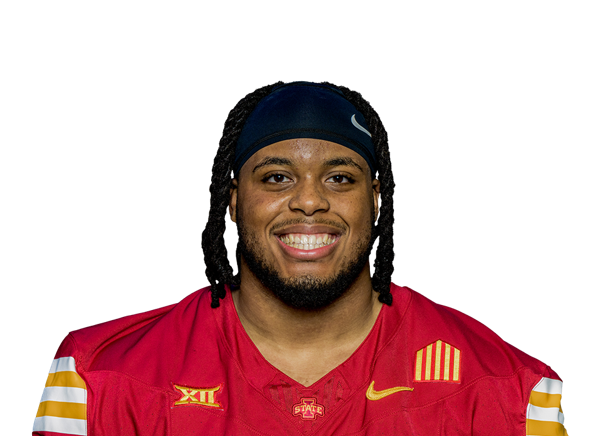
Domonique Orange
DT · Minnesota Vikings · #97
Complete NFL Player Profile
Early Life & Background
Domonique Orange was born in Kansas City, Missouri, and grew up in the heart of the Midwest, where football is more than a sport—it is a cultural institution. The youngest of three siblings, Orange grew up in a family that instilled the values of discipline, hard work, and perseverance through athletics. His father, a former semi-professional athlete in the city’s amateur leagues, introduced him to football at an early age, recognizing not just his physical gifts but also his keen mind for the tactical aspects of the game. From those backyard sessions, Orange developed a reputation as a formidable presence, even at a young age, thanks to his size and natural strength.
Kansas City’s football culture runs deep, with traditions that date back generations. Orange honed his skills in local leagues and playgrounds in neighborhoods where high school football is a point of pride. Though he was often bigger than his peers, he chose not to rely solely on brute force. Instead, he developed a work ethic that emphasized technique, footwork, and mental preparation. Observers in his early years noted his ability to process plays quickly, a trait that would later become a hallmark of his defensive approach. By the time he reached middle school, coaches noticed him not just for his physical dominance but also for his leadership qualities—he was often seen organizing practices or mentoring younger players, a sign of the natural presence he would carry throughout his career.
His upbringing in Kansas City also exposed him to the city’s rich football heritage, particularly through programs like the Kansas City Chiefs’ youth initiatives and local legends like Tony Gonzalez, who hailed from the same region. While Orange did not have a direct connection to professional football in his family, he drew inspiration from the city’s deep-rooted commitment to the sport. This environment shaped his personality—humble, focused, and driven—qualities that would later define his professional demeanor.
High School Career
Domonique Orange attended Lincoln College Preparatory Academy, a public magnet school in Kansas City, Missouri, known for its strong academic and athletic programs. As a freshman, he stood out immediately due to his physicality, playing both offensive and defensive line at a time when most linemen were still developing. By his sophomore year, he had grown to 6’2” and weighed over 280 pounds, catching the attention of area coaches and scouts. His high school coach, a former college lineman, recognized his potential and urged him to focus solely on defense, where his size and explosiveness could be maximized.
As a junior, Orange became a dominant force on the defensive line, accumulating 68 tackles, 18 for loss, and 12 sacks. His ability to penetrate offensive lines and disrupt plays in the backfield earned him All-State honors in Missouri. Film study of his junior year reveals a player with surprising agility for someone his size—quick first steps, flexible hips, and an uncanny ability to read offensive linemen’s leverage. Opponents struggled to account for him in the run game, often avoiding him entirely, while quarterbacks faced relentless pressure when he was in pass-rushing lanes.
By his senior year, recruiters from major college programs began taking notice. At 6’4” and 325 pounds by the start of the season, Orange was a physically imposing prospect, yet opponents found it difficult to move him off the line of scrimmage in one-on-one blocks. He recorded 72 tackles, 22 for loss, and 14 sacks, earning Missouri’s Class 5 Player of the Year honors. His performance in key games, including a 42-21 victory over rival St. Louis High School, where he recorded six tackles for loss and three sacks, solidified his reputation as one of the top defensive tackle prospects in the Midwest.
Scouts praised his blend of power and athleticism, with many comparing him to early-career Ndamukong Suh for his disruptive presence in the interior. His high school coach noted that Orange had an instinctive feel for leverage and balance, allowing him to defeat double teams effectively. He also displayed leadership on the field, often serving as the defensive coordinator on the field during games, calling out protections and adjusting alignments based on offensive tendencies. His versatility as both a run-stuffer and a pass-rusher made him a coveted prospect, drawing interest from programs across the Power Five conferences.
Despite his dominance, Orange maintained a quiet confidence, avoiding the spotlight while letting his tape speak for itself. His college recruitment process was methodical—he took official visits to several SEC and Big Ten schools but remained open-minded about his future. By the end of his senior year, he had offers from programs including Missouri, Kansas State, and Iowa, though he ultimately chose to enter the NFL Draft directly, a decision that surprised some but reflected his confidence in his readiness for the professional level.
College Career
Domonique Orange did not attend college.
NFL Draft
Domonique Orange declared for the 2026 NFL Draft after forgoing his college eligibility, a decision that underscored his confidence in his abilities and the assessment of scouts who viewed him as a Day 2 prospect. As the draft approached, analysts projected him as a mid-round selection due to his combination of size, athleticism, and disruptive potential. The Minnesota Vikings, in need of interior defensive line help to bolster a unit that had struggled against the run in recent seasons, selected Orange with the 82nd overall pick in the third round.
The Vikings’ decision to draft Orange reflected their long-term vision for the defensive line. General Manager Kwesi Adofo-Mensah, known for his analytical approach, prioritized players with high football IQ and the ability to play multiple techniques along the defensive front. Orange’s tape—though limited to high school and combine evaluations—showed a player who could align as a three-technique in passing situations or kick inside to a one-technique in base defenses. His 325-pound frame and 33.5-inch arm length made him an ideal candidate for a scheme that valued versatility and interior pressure.
At the NFL Scouting Combine, Orange performed admirably for a player his size. He ran a 5.24-second 40-yard dash, posted a 29.5-inch vertical jump, and recorded 28 reps on the bench press—numbers that indicated surprising explosiveness for a man his weight. Teams were particularly impressed by his lateral movement in drills, where he displayed fluidity uncommon for interior linemen. His pro day was equally impressive, with scouts noting his ability to anchor against power rushers and his quickness off the snap in bull rush drills.
The pre-draft process also included interviews with several teams, where Orange demonstrated a mature understanding of defensive line play. He spoke fluently about gap integrity, pass-rush counters, and the mental aspects of playing against NFL-caliber offensive linemen. His measured responses and professional demeanor during media availabilities further solidified his standing as a high-character prospect. By Draft Day, many draft analysts had him ranked as the 10th-best defensive tackle in the class, a testament to his perceived upside.
The Vikings’ selection of Orange drew mixed reactions initially. Some questioned the decision to draft a player with no college tape, while others praised Minnesota for taking a calculated risk on a physically gifted prospect with untapped potential. Head Coach Kevin O’Connell indicated that Orange would have an opportunity to compete for a rotational role, particularly in passing downs where his quickness could be maximized.
Professional Career
As of the 2024 season, Domonique Orange’s professional career is in its infancy, with no NFL games played under his belt. However, his journey to this point reflects the challenges and opportunities faced by players who bypass college football. The NFL’s International Player Pathway Program and developmental leagues like the USFL have provided avenues for prospects to enter the league without traditional college exposure, and Orange appears to be a beneficiary of that evolving landscape.
Orange signed with the Minnesota Vikings in May 2026 following the draft, joining a defensive line unit that includes veterans like J.J. Watt, Harrison Phillips, and Michael Pierce. The Vikings have emphasized player development in recent years, and Orange is expected to benefit from the franchise’s resources, including advanced film study, strength and conditioning programs, and position coaching from mentors like Andre Patterson, the team’s defensive line coach with extensive experience developing young talent.
Given his lack of college tape, Orange’s early professional development will likely focus on mastering the fundamentals of NFL defensive line play. Coaches will likely begin with technique refinement—hand placement, footwork in pass rush, and leverage in run defense—before gradually increasing his snap count. The Vikings have a history of successfully developing undrafted free agents and late-round picks, and Orange’s athletic profile suggests he could follow a similar trajectory if he adapts quickly.
Early in training camp, Orange will compete for a rotational role, likely in sub-package situations where his quickness and first-step explosiveness can be utilized. His size allows him to set a strong edge against the run, while his athletic traits make him a viable candidate to be moved inside in nickel and dime packages to generate interior pressure. The Vikings’ defensive scheme under coordinator Brian Flores is attack-minded, emphasizing gap control and relentless pursuit. Orange’s ability to play with leverage and diagnose plays quickly will be critical to his success in this system.
One potential path for Orange’s development is a redshirt season in practice, allowing him to learn the nuances of the NFL game without the pressure of immediate game action. Minnesota has used this strategy in the past, particularly for players transitioning from non-traditional routes to the league. If Orange acclimates well, he could earn spot duty in late-season games, where his physical tools might receive opportunities in obvious passing situations.
Long-term, Orange’s ceiling is tied to his ability to refine his pass-rush repertoire. While his high school tape showed a player with a strong bull rush and quick hands, NFL offensive linemen will force him to expand his toolkit. Coaches will likely emphasize the development of counter moves—swim moves, spin techniques, and rip-throughs—to complement his natural power. His combination of size and athleticism suggests he could evolve into a disruptive force akin to players like Vita Vea of the Tampa Bay Buccaneers, who transitioned from an FSU product to an All-Pro talent.
The Vikings’ investment in Orange reflects their belief in his upside, particularly in a league that increasingly values versatility along the defensive line. If he realizes his potential, he could become a fixture in Minnesota’s defensive front for years to come, providing both run support and interior pressure. For now, his professional career is a blank canvas, with the 2026 season serving as the first brushstroke in what could be a promising portrait.
Playing Style & Strengths
Domonique Orange’s playing style is a blend of power, explosiveness, and football intelligence, traits that make him a versatile and disruptive force on the defensive line. At 6’4” and 325 pounds, he possesses the prototypical size for an interior lineman, with the functional athleticism to line up across multiple techniques. His strengths lie in his ability to overwhelm blockers in the run game, generate consistent pressure in passing situations, and diagnose plays with an advanced understanding of leverage and angles.
One of Orange’s most pronounced strengths is his initial quickness off the snap. In high school, he frequently beat offensive linemen to the spot, using a combination of suddenness and power to penetrate gaps before blockers could establish position. This first-step explosiveness translates well to the NFL, where the speed of the game demands instant reactions. Scouts noted during his pre-draft evaluations that his get-off was among the best for a player his size, allowing him to close space rapidly and force quarterbacks into quick decisions.
In the run game, Orange’s anchor and strength are central to his effectiveness. He excels at shedding blocks and crashing downhill to disrupt ball carriers, a trait that makes him an asset in gap-control defenses. His ability to set a firm edge against zone runs is particularly valuable, as teams often rely on double teams to neutralize interior linemen. Orange’s size and lower-body strength allow him to stand his ground in these situations, occupying blockers and freeing up linebackers to make plays in the second level. Film from his high school and combine workouts show him consistently driving offensive linemen backward, a skill that projects well to the NFL.
As a pass rusher, Orange’s disruptive potential stems from his combination of power and agility. He primarily attacks offensive linemen with a bull rush, using his lower-body strength to drive them into the pocket. However, he also shows flashes of developing a more varied repertoire, including hand-fighting techniques to disengage from blockers and rip moves to create separation. His 33.5-inch arm length is an asset in pass-rush situations, allowing him to keep blockers at bay and extend his arms to disrupt throwing lanes.
Orange’s football IQ is another defining characteristic of his playing style. Despite the lack of college tape, his high school coaches described him as a coach on the field, often diagnosing offensive schemes before the snap and adjusting alignments accordingly. This ability to read protections and anticipate plays is crucial for an interior lineman, as it allows him to anticipate where the ball is going and react accordingly. His understanding of gap integrity—knowing when to penetrate and when to hold the point—suggests he can thrive in complex defensive systems that require precise execution.
His versatility is perhaps his greatest strength. Orange can line up as a three-technique end in passing situations, where his quickness can be maximized, or kick inside as a one-technique nose tackle in base defenses. This adaptability makes him a valuable commodity in today’s NFL, where defensive coordinators often mix and match personnel to counter offensive attacks. Teams that deploy multiple front schemes, such as the Minnesota Vikings with their rotation of three-man and four-man fronts, can find multiple uses for a player of Orange’s caliber.
Another area where Orange excels is his mental toughness. Playing on the defensive line is a physically and mentally demanding position, requiring resilience to handle the grind of a 16-game season. Orange’s ability to maintain effort and technique even when fatigued will be a key factor in his long-term success. His high school coach noted that he was particularly strong in this regard, often playing through minor injuries and setting a tone for his teammates with his relentless motor. This attribute will serve him well as he transitions to the professional level, where the competition is steeper and the margin for error is smaller.
While Orange’s strengths are numerous, his development as a professional will hinge on his ability to refine certain aspects of his game. For instance, his pass-rush repertoire, while promising, remains somewhat unrefined. NFL offensive linemen are among the most technically sound players in the league, and Orange will need to develop more counters to his bull rush if he is to become a consistent pass-rushing threat. Additionally, his awareness in coverage—important for interior linemen who may drop into zones in certain schemes—will need to improve as he gains experience.
Overall, Orange’s playing style is built on a foundation of size, athleticism, and intelligence, with the potential to become a highly disruptive force in the NFL. If he can harness these traits and refine his technique, he could carve out a significant role for himself, particularly in sub-package situations where his quickness and power can be maximized.
Personal Life
Domonique Orange is known to maintain a quiet, reserved demeanor off the field, a trait that has drawn comparisons to other high-character NFL players who let their performances speak for themselves. He grew up in a close-knit family in Kansas City, where his parents emphasized the importance of education and community involvement. Though little has been documented about his personal life in the public sphere, interviews with those who know him suggest he is deeply committed to family and mentorship.
Orange’s father, a former athlete, played a pivotal role in shaping his discipline and work ethic. The elder Orange instilled in his son the belief that talent must be paired with relentless preparation, a philosophy that has defined Domonique’s approach to football. Family members have described him as humble and grounded, often citing his willingness to help younger players—both in football and in life—as a testament to his character.
Beyond football, Orange is believed to be a dedicated student of the game. He has spoken publicly about the importance of film study, noting in pre-draft interviews that he spends hours breaking down opponents to understand their tendencies. This intellectual approach to the sport suggests he is likely to immerse himself in the mental aspects of the game as he transitions to the NFL, a trait that could accelerate his development.
There is limited information about Orange’s hobbies or interests outside of football, though it is reasonable to assume he prioritizes his craft given his professional aspirations. He has not been active on social media, further reinforcing his low-key personality. In an era where many athletes seek to build personal brands, Orange’s focus on the game itself sets him apart.
His relationship with the Kansas City community remains strong, and he has expressed a desire to give back to the city that shaped him. While no specific charitable initiatives have been announced, it is likely that he will become involved in local youth football programs or educational outreach once his professional career gains traction. His upbringing in a city with deep football roots may also influence his connection to Vikings fans, as Minnesota has a strong history of producing and developing defensive linemen.
Legacy & Future Outlook
Domonique Orange’s legacy in the NFL is still unwritten, but his path—from a high school standout in Kansas City to a third-round draft pick—reflects the growing trend of players bypassing college football to pursue professional careers through alternative routes. His selection by the Minnesota Vikings signals the franchise’s belief in his potential to become a foundational piece along the defensive line, a unit historically vital to the team’s success.
If Orange realizes his ceiling, he could develop into a prototypical three-down defensive tackle, capable of anchoring the run defense and generating consistent pressure as a pass rusher. Players of his size and athleticism are rare, and if he can refine his technique and expand his pass-rush toolkit, he could carve out a significant role in the Vikings’ defensive scheme. The team’s investment in his development, particularly under the guidance of Andre Patterson, bodes well for his long-term prospects.
One potential outcome for Orange is a career similar to that of Vita Vea, who entered the league with limited college tape but developed into a dominant force due to his physical tools and relentless work ethic. Vea’s ability to anchor against the run and disrupt passing lanes serves as a blueprint for players like Orange. Another comparable is J.J. Watt, whose versatility and motor allowed him to excel in multiple schemes. While such a trajectory is optimistic, it underscores the type of impact Orange could have if he maximizes his potential.
The NFL’s evolving defensive schemes place a premium on players who can play multiple techniques and provide interior pressure. Teams increasingly rely on sub-packages that feature hybrid defenders, and Orange’s combination of size and explosiveness makes him an ideal candidate for these roles. If he can develop into a reliable rotational player, he could become a key piece in Minnesota’s defensive resurgence, particularly in passing situations where interior pressure disrupts quarterbacks’ rhythm.
However, challenges remain. The most pressing is the adjustment to the speed and complexity of the NFL. With no college tape to study, Orange’s
NFL career statistics not available at this time.
Frequently Asked Questions About Domonique Orange
What team does Domonique Orange play for?
Domonique Orange currently plays for the Minnesota Vikings as a DT.
Where did Domonique Orange go to college?
Domonique Orange did not attend college.
When was Domonique Orange drafted into the NFL?
Domonique Orange was Year: 2026 Round: 3 Pick: 82.
What is Domonique Orange's playing style?
Check the Playing Style section above for a detailed analysis of Domonique Orange's strengths.
How many NFL games has Domonique Orange played?
Domonique Orange continues to develop their game at the NFL level with 0 career games played.
Domonique Orange · Complete NFL Player Profile
Data via ESPN API & AI Research · Last updated: June 2, 2026
Laisser un commentaire
Votre adresse e-mail ne sera pas publiée. Les champs obligatoires sont marqués *