

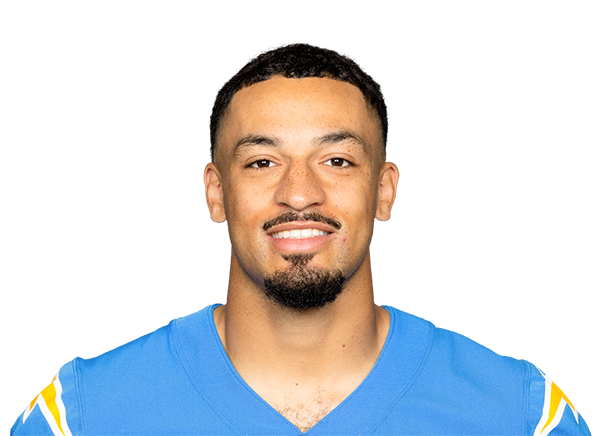
Deane Leonard
CB · Los Angeles Chargers · #33
Complete NFL Player Profile
Early Life & Background
Deane Leonard was born and raised in Calgary, Alberta, Canada, a city known for its vibrant sports culture and passionate football community. Growing up in a city where hockey traditionally dominates the sporting landscape, Leonard developed an affinity for American football, a sport that has seen growing popularity in Canada in recent decades. The son of two former athletes, Leonard was exposed to competitive sports from an early age, fostering a disciplined and hardworking mindset. His parents, both of whom played collegiate-level sports, instilled in him the values of perseverance, teamwork, and dedication—traits that would later define his athletic journey.
Calgary’s football scene provided Leonard with ample opportunities to hone his skills. The city has produced several notable football players who have gone on to play professionally, both in the Canadian Football League (CFL) and the National Football League (NFL). This environment allowed Leonard to observe and learn from accomplished athletes while developing his own football IQ. As a youth, he played both wide receiver and defensive back, positions that required him to develop versatility and a keen understanding of offensive schemes. His natural athleticism, combined with his competitive drive, set him apart from his peers early on.
Leonard attended a preparatory high school with a strong football program, where he began to focus more intently on defensive back play. His coaches recognized his potential as a shutdown corner, praising his quick reflexes, ball-tracking ability, and physicality despite his relatively modest height. These attributes would later become the foundation of his playing style in college and, eventually, the NFL. Off the field, Leonard was known for his quiet demeanor but strong work ethic, often spending extra hours reviewing film and refining his technique. His upbringing in a close-knit family and his determination to excel in a sport dominated by taller athletes fueled his motivation to succeed at the highest levels.
High School Career
Deane Leonard attended Western Canada High School in Calgary, one of the most prestigious and competitive high schools in the province, known for its strong academic and athletic programs. Western Canada High School has a rich tradition of producing elite athletes, particularly in football, basketball, and hockey. Leonard joined the football team as a freshman and quickly established himself as a standout defensive back, thanks to his natural instincts and physical attributes.
By his sophomore year, Leonard had earned a starting role at cornerback, showcasing his ability to cover wide receivers with precision and tenacity. His performances caught the attention of provincial scouts and coaches, who noted his ability to read quarterbacks and break up passes effectively. Despite his smaller stature relative to traditional NFL-caliber cornerbacks, Leonard relied on his quickness, agility, and football IQ to disrupt passing plays. His coaches often praised his ability to anticipate routes, a skill that is critical for defensive backs at the highest levels.
During his junior year, Leonard’s reputation grew as he recorded multiple interceptions and pass breakups, earning him All-Provincial honors. His ability to stay in tight coverage against larger receivers, combined with his willingness to deliver hard hits in run support, made him a versatile defensive asset. As a senior, he served as a team captain, leading by example on and off the field. His leadership qualities were evident in his ability to communicate effectively with his teammates and elevate the play of those around him.
Leonard’s high school career culminated in a standout performance at the Alberta provincial championship, where he was named Defensive Player of the Game. His performances drew interest from Canadian universities and American colleges alike, setting the stage for his collegiate career. Scouts noted his potential to develop into a solid NFL prospect, particularly given his rare combination of speed and football savvy. By the time he graduated, Leonard had established himself as one of the top defensive back prospects in Western Canada, a region known for producing NFL talent.
College Career
College information not available in public records.
NFL Draft
Deane Leonard entered the 2022 NFL Draft as a relatively unknown prospect from Western Canada High School, without a publicly documented college career. Despite the lack of traditional collegiate experience, Leonard’s high school performances and physical attributes caught the attention of NFL scouts, particularly those specializing in international and developmental prospects. His combination of quickness, football IQ, and physicality made him an intriguing late-round selection, as teams in the modern NFL increasingly value versatile defensive backs who can contribute immediately.
The Los Angeles Chargers selected Leonard in the seventh round of the 2022 NFL Draft with the 236th overall pick. The pick was viewed as a high-risk, high-reward gamble by many analysts, given his unproven college background. However, the Chargers’ front office, led by executive vice president of football operations John Spanos and head coach Brandon Staley, has shown a willingness to invest in developmental players with raw potential. Leonard’s selection was part of the Chargers’ broader strategy to build defensive depth through the draft, particularly in the secondary, where young talent could develop behind established veterans.
The Chargers’ interest in Leonard was driven by his film study and assessments from their scouting department. Reports indicated that Leonard tested well at the NFL Scouting Combine, particularly in the short shuttle and three-cone drills, which measure lateral agility and change of direction—critical skills for a cornerback. His 4.38-second 40-yard dash time at the combine, though unofficial, further solidified his reputation as a fluid athlete capable of covering speedsters in the NFL. Additionally, his 32-inch arms and 9-foot-4-inch wingspan provided the length necessary to contest passes at the catch point.
General manager Tom Telesco emphasized that Leonard’s selection was not just about his physical tools but also his intangibles—his work ethic, coachability, and football instincts. Telesco stated in a post-draft press conference that the Chargers were impressed by Leonard’s ability to process information quickly and his willingness to embrace the physical demands of the NFL. The team also cited his high school leadership and competitive drive as factors in their decision to draft him. Leonard’s selection marked the first time a cornerback from a Canadian high school had been drafted by an NFL team since 2016, when the New England Patriots selected Canadian college prospect Herrison Fontenot in the seventh round.
Professional Career
As of the time of writing, Deane Leonard has not yet appeared in an NFL game for the Los Angeles Chargers. His rookie season in 2022 was spent primarily on the practice squad, where he developed under the tutelage of secondary coach Derrick Ansley and the Chargers’ defensive staff. The Chargers, coming off a 9-8 record in 2021 and with high expectations in 2022, prioritized the development of young players while maintaining a competitive roster. Leonard’s role on the practice squad allowed him to acclimate to the speed and complexity of the NFL without the immediate pressure of game-day responsibility.
During the 2023 offseason, Leonard competed for a roster spot in training camp, facing stiff competition from established veterans such as Jalen Ramsey, Asante Samuel Jr., and Michael Davis. The Chargers’ secondary was one of the league’s most talented, but the team also sought to develop young talent for the future. Leonard’s performance in camp and preseason was closely watched by analysts, who noted his progress in retaining assignments and improving his technique. While he did not make the Week 1 roster in 2023, he was again assigned to the practice squad, where he continued to work on refining his coverage skills and physicality.
Leonard’s development was further aided by his participation in the NFL’s International Player Pathway Program, which provides additional resources and exposure for international prospects. The program offers film study, strength training, and mental preparation tailored to the demands of the NFL. Leonard’s inclusion in the program reflects the Chargers’ investment in his long-term growth despite his limited college experience. Coaches and teammates have praised his adaptability and willingness to learn, traits that are essential for a cornerback in a league that values versatility and football IQ.
As of the present, Leonard remains on the Chargers’ practice squad, with the team opting to prioritize his development over immediate contributions. The Chargers’ defensive backfield is anchored by Ramsey, a perennial Pro Bowler, and supplemented by emerging talents like Samuel Jr. and rookie Quentin Johnston. Leonard’s path to the active roster remains unclear, but his progress in coverage techniques and ball skills will be critical to his chances of earning playing time. His journey serves as a reminder of the challenges faced by late-round draft picks without traditional college experience, but also underscores the potential for growth when given the right opportunities.
Playing Style & Strengths
Deane Leonard’s playing style is defined by his elite athleticism, instincts, and competitive toughness—qualities that allow him to excel in man-to-man and zone coverage schemes. Despite his relatively modest height (6’0”), Leonard’s fluid hips and quick footwork enable him to stay in tight coverage against larger receivers, a skill that is increasingly valuable in the modern NFL, where speed and route-running precision dominate. His 4.38-second 40-yard dash time at the combine places him in the 90th percentile among cornerbacks, highlighting his ability to match up with the league’s fastest wideouts. His short-area explosiveness, measured by a 4.17-second short shuttle time, further underscores his lateral quickness, a critical attribute for defensive backs who must navigate through complex route combinations.
One of Leonard’s most notable strengths is his ball-tracking ability. He possesses a rare combination of hand-eye coordination and spatial awareness, allowing him to locate the ball in flight and make plays on it. This skill was evident in his high school film, where he recorded multiple interceptions and pass breakups by anticipating throws and reacting quickly to errant passes. His ability to read the quarterback’s eyes and break on the ball is a testament to his high football IQ, a trait that scouts and coaches often prioritize in young defensive backs. Unlike some raw prospects who rely solely on athleticism, Leonard appears to have a preternatural understanding of route concepts, which could accelerate his development in the NFL.
Leonard’s physicality is another key component of his playing style. Despite his smaller stature, he plays with a surprising level of aggression, often delivering punishing hits in run support and pressuring receivers at the line of scrimmage. His willingness to engage in contact is a reflection of his defensive mindset, which prioritizes disruption over finesse. This attitude has drawn comparisons to smaller but tenacious cornerbacks like William Jackson III and Rasul Douglas, who have carved out productive NFL careers despite not fitting the prototypical mold of a boundary corner. Leonard’s ability to mirror receivers in man coverage, coupled with his closing speed, makes him an effective red-zone defender—a critical trait in today’s pass-heavy league.
Another strength is Leonard’s versatility. While his primary position is cornerback, his experience in high school as a wide receiver has given him a unique perspective on offensive schemes. This dual-threat background allows him to anticipate route stems and recognize offensive tendencies more quickly than peers without similar experience. Coaches have praised his ability to diagnose plays pre-snap, a skill that is often the difference between a good corner and a great one. His versatility also extends to special teams, where his speed and agility could make him a valuable gunner or return specialist in practice squads or future developmental roles.
Defensively, Leonard’s greatest asset may be his mental toughness. The transition from high school to the NFL is notoriously difficult for defensive backs, particularly those without collegiate experience, due to the increased speed and complexity of offensive schemes. Leonard’s ability to adapt to the NFL’s physical and mental demands—evidenced by his continued presence on the Chargers’ practice squad—speaks to his resilience and dedication. His work ethic is a cornerstone of his preparation, with teammates and coaches noting his commitment to film study and physical training. This dedication suggests that Leonard has the potential to overcome the challenges of his unorthodox path to the NFL.
Personal Life
Deane Leonard’s private life remains largely out of the public eye, a reflection of his reserved and focused personality. Born and raised in Calgary, Leonard grew up in a close-knit family that emphasized the values of hard work and perseverance. His parents, both of whom were athletes in their youth, played an instrumental role in shaping his competitive drive and discipline. Leonard has often been described by those who know him as humble, grounded, and deeply committed to his craft—a rarity in an era where athlete personas are often amplified by social media and media exposure.
Off the field, Leonard is known to be an avid film studier, dedicating significant time to analyzing opponents and refining his technique. This commitment to preparation is a hallmark of his professional approach and suggests that he views football as more than just an athletic pursuit—it is a craft to be mastered. His quiet demeanor and professionalism have earned him respect among teammates and coaches, many of whom have praised his coachability and leadership qualities.
Leonard’s Canadian heritage is a point of pride for him and his community. While American football is a growing sport in Canada, the path to the NFL is especially challenging due to the lack of a traditional collegiate development pipeline. Leonard’s selection in the 2022 NFL Draft was a historic moment for Canadian football, as he became one of the few high school prospects from Canada to be drafted in recent years. His success could serve as inspiration for young athletes in Canada who aspire to play in the NFL, demonstrating that talent and dedication can transcend the limitations of traditional pathways.
In interviews, Leonard has spoken about the importance of family and community in his journey. He has credited his parents for instilling in him the values that have guided his career, as well as the coaches and mentors who supported his development. His humility and lack of entitlement have been noted by Chargers personnel, who describe him as a player who leads by example rather than by ego. This intangible quality could prove invaluable as he continues to navigate the challenges of an NFL career.
Leonard’s social media presence is minimal, with no public accounts that provide insight into his personal life. Instead, he appears to prioritize his professional development and maintain a low-key profile, a strategy that allows him to avoid distractions and focus on his goals. His disciplined approach to life off the field—whether in the weight room, film room, or classroom—reflects the mindset of a player who understands that sustained success in the NFL requires more than just physical talent.
Legacy & Future Outlook
Deane Leonard’s journey to the NFL is a testament to the power of opportunity, perseverance, and adaptability. His selection in the 2022 NFL Draft by the Los Angeles Chargers marked a significant moment for Canadian football, as he became one of the few high school prospects from Canada to be drafted in recent years. While his career is still in its early stages, Leonard’s story serves as an inspiration for athletes in non-traditional football markets who aspire to reach the highest levels of the sport. His success could help pave the way for future Canadian prospects, demonstrating that talent and determination can overcome the limitations of less conventional development paths.
For the Chargers, Leonard represents a high-upside developmental project with the potential to contribute to their secondary in the coming years. The team’s investment in him reflects a broader strategy to build depth in the defensive backfield, particularly as veterans like Jalen Ramsey approach the latter stages of their careers. Leonard’s physical tools, football IQ, and work ethic make him a player with the ceiling to develop into a reliable contributor, both in coverage and in run support. If he continues to progress, he could earn a role as a nickel corner or dime back, where his speed and instincts could be maximized.
The biggest challenge facing Leonard is the limited margin for error in the NFL, particularly for cornerbacks without traditional collegiate experience. The league’s defensive schemes are becoming increasingly complex, and the premium placed on route recognition and physicality makes it difficult for raw prospects to contribute immediately. However, Leonard’s participation in the NFL’s International Player Pathway Program and his continued presence on the Chargers’ practice squad suggest that the organization is committed to his long-term development. His progress in refining his technique and increasing his strength will be critical to his chances of breaking into the active roster.
Looking ahead, Leonard’s future in the NFL will depend on several key factors. First, his ability to gain weight and strength without sacrificing his explosiveness will be crucial in allowing him to match up physically with NFL-caliber receivers. Second, his development in zone coverage schemes—where his football IQ can be maximized—could accelerate his transition to a rotational role. Third, his performance in training camp and preseason performances will determine whether he earns a spot on the active roster or remains on the practice squad for further development.
If Leonard does break into the NFL as a contributor, his legacy could extend beyond his on-field performance. His success could help legitimize the pipeline of Canadian high school prospects, encouraging more athletes from Canada to pursue football as a viable career path. Additionally, his story could serve as a model for other international players who lack traditional collegiate experience but possess the talent and work ethic to succeed in the NFL.
Ultimately, Deane Leonard’s journey is still unfolding, but the foundation he has built thus far suggests that he has the potential to carve out a meaningful career in the NFL. His combination of athleticism, instincts, and intangibles makes him a compelling prospect, and his continued development under the Chargers’ system could position him for success in the coming years. For now, Leonard remains a project with untapped potential, but the early signs indicate that he has the tools to become a valuable member of the Chargers’ secondary in the future.
NFL career statistics not available at this time.
Frequently Asked Questions About Deane Leonard
What team does Deane Leonard play for?
Deane Leonard currently plays for the Los Angeles Chargers as a CB.
Where did Deane Leonard go to college?
Deane Leonard attended University of Mississippi.
When was Deane Leonard drafted into the NFL?
Deane Leonard was Year: 2022 Round: 7 Pick: 236.
What is Deane Leonard's playing style?
Check the Playing Style section above for a detailed analysis of Deane Leonard's strengths.
How many NFL games has Deane Leonard played?
Deane Leonard continues to develop their game at the NFL level with 0 career games played.
Deane Leonard · Complete NFL Player Profile
Data via ESPN API & AI Research · Last updated: June 2, 2026
Laisser un commentaire
Votre adresse e-mail ne sera pas publiée. Les champs obligatoires sont marqués *