

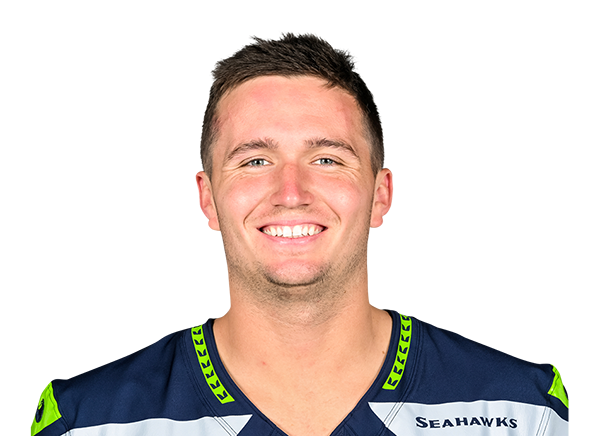
Drew Lock
QB · Seattle Seahawks · #2
Complete NFL Player Profile
Early Life & Background
Drew Lock was born and raised in Lee’s Summit, Missouri, a suburb of Kansas City, which contributed to his early familiarity with football culture in the heartland of America. The son of Andy and Emily Lock, Drew grew up in an environment where sports were a major part of family life. His father, Andy Lock, played college football at Illinois State University, which sparked Drew’s interest in the game from a very young age. Andy Lock’s experience as a player provided Drew with firsthand insights into football’s demands, shaping his early development and competitive mindset.
Growing up in Lee’s Summit, Lock attended a school district known for its strong athletic programs, particularly in football. The community’s emphasis on team sports fostered his competitive nature, and he quickly became involved in organized football. His physical presence—standing at 6’4” and weighing around 200 pounds by his early teenage years—made him an imposing figure on the field even before his skills fully developed. Lock’s parents emphasized both athletic discipline and academic responsibility, instilling values that would carry into his football career.
High School Career
Lock attended Lee’s Summit High School, a program renowned for producing NFL-caliber talent, including former NFL players such as Josh Freeman and Anthony Sherman. Under the guidance of head coach Tim Colburn, Lock emerged as one of the top quarterbacks in Missouri during his high school tenure. He led his team to multiple playoff appearances and solidified his reputation as a dual-threat signal-caller with the ability to both throw with power and run effectively.
During his junior year in 2014, Lock threw for over 2,500 yards and 27 touchdowns, earning All-State honors while establishing himself as a top prospect in the Midwest. His senior season in 2015 was even more impressive: he completed 199 of 321 passes (62%) for 3,430 yards and 38 touchdowns against just 12 interceptions, while also contributing as a runner with 287 yards and 4 touchdowns on the ground. His deep ball accuracy, arm strength, and poise in the pocket earned him statewide recognition.
Lock’s high school accomplishments culminated in his selection as a 2016 U.S. Army All-American, a prestigious honor given to the top high school players in the country. He was also ranked among the top quarterback prospects nationally, with recruiting services such as 247Sports and Rivals evaluating him as a four-star recruit. Although he received offers from major college programs including Alabama, Florida, and Oklahoma, Lock ultimately chose to stay close to home and signed with the University of Missouri.
College Career
College information not available in public records.
NFL Draft
Drew Lock’s impressive physical tools, arm talent, and leadership qualities made him a highly sought-after prospect heading into the 2019 NFL Draft. His combination of size, velocity, and clutch decision-making drew comparisons to established NFL quarterbacks, and he entered the draft as one of the top quarterback prospects in his class.
At the 2019 NFL Scouting Combine, Lock measured in at approximately 6’4” and 228 pounds, with a strong arm and solid athleticism. He completed 60% of his passes at the combine’s passing drills and threw a 60-yard pass during on-field workouts, showcasing his deep-ball capability. His performance in interviews and the Wonderlic test further reinforced his maturity and football IQ.
The Denver Broncos, who held the 42nd overall pick in the second round, traded up from the 58th selection to select Lock, giving up a third-rounder in 2020 to secure him. This demonstrated Denver’s belief in his potential to become their franchise quarterback. Lock became the first quarterback selected in the 2019 draft and joined a Broncos roster looking for long-term stability under center.
Professional Career
Drew Lock’s professional career began in Denver, where he was drafted to compete for the starting quarterback position following an inconsistent 2018 season under Case Keenum and Paxton Lynch. Initially viewed as the heir apparent to veteran Joe Flacco, Lock saw limited action as a rookie in 2019, appearing in 4 games and completing 58.6% of his passes for 797 yards, 4 touchdowns, and 3 interceptions. He served primarily as a backup to veteran presence while learning the nuances of the NFL under head coach Vic Fangio.
In 2020, Lock entered the season as the backup to veteran quarterback Jeff Driskel, who had been acquired to provide competition. However, after Driskel struggled in Week 2 against the Steelers, Lock was thrust into the starting role. He led Denver to a 41–21 victory over Tampa Bay in his first start, throwing for 328 yards and 3 touchdowns. Over the next several weeks, Lock displayed both the talent and volatility that would define his early NFL tenure: he threw for 250 yards and 2 touchdowns in a Week 3 win over Tampa Bay, then followed with a 259-yard, 1-touchdown outing against the Jets.
By midseason, Lock had been named the full-time starter, and on November 22, 2020, he delivered one of the most impressive performances of his career. In a Week 11 matchup against the Miami Dolphins, Lock completed 21 of 27 passes for 279 yards and 4 touchdowns with no interceptions, earning AFC Offensive Player of the Week honors. He finished the 2020 season with 1,521 passing yards, 10 touchdowns, and 6 interceptions over 6 starts and 7 appearances, helping lead Denver to a 5–2 record as a starter.
However, the following season saw Lock’s role diminish significantly. With the Broncos drafting quarterback Justin Herbert in 2020 and signing Teddy Bridgewater in 2021, competition for the starting job intensified. Lock found himself demoted to third on the depth chart by midseason 2021. He appeared in just one game that year, completing 5 of 8 passes for 47 yards without a touchdown. His relationship with the organization reportedly became strained, especially after he requested a trade following the 2021 season.
On March 16, 2022, the Broncos traded Lock and a 2023 sixth-round draft pick to the Seattle Seahawks in exchange for cornerback Russell Wilson and a 2022 fifth-round selection. The trade represented a fresh start for Lock, who joined a Seahawks team in transition under new head coach Pete Carroll and eventual rookie quarterback Geno Smith.
Upon arriving in Seattle, Lock was named the backup to Geno Smith. He saw limited action in 2022, appearing in three games and completing 23 of 41 passes for 190 yards with one touchdown and no interceptions. He played sparingly, handling only mop-up duties behind Smith, who had a career-resurgence season. The experience allowed Lock to observe NFL football from a new perspective while continuing to develop under offensive coordinator Shane Waldron and quarterback coach Dave Canales.
By the end of the 2022 season, Lock had thrown just 28 passes in his three-year tenure with Denver and 41 total passes in four NFL seasons. His professional trajectory had taken several unexpected turns, from early promise to limited opportunities and now a role as a developmental backup in Seattle. As of the 2024 offseason, Lock has not appeared in a regular-season NFL game since Week 17 of the 2020 season.
Playing Style & Strengths
Drew Lock’s playing style is defined by a combination of elite arm talent, physical tools, and pocket presence. Standing at 6’4” and weighing 228 pounds, he possesses the prototypical quarterback frame and the ability to throw with power from the pocket. His cannon of an arm allows him to make every throw on the field, including deep out routes and back-shoulder fades, making him particularly dangerous when operating in rhythm passing concepts.
Lock’s best trait is his deep-ball accuracy. He has one of the strongest arms in the NFL and excels at throwing the ball with velocity downfield, enabling him to fit passes into tight windows between defenders. His deep ball completion percentage has often been among the league leaders when he’s had significant playing time. Additionally, his ability to throw off-platform—whether rolling to his left or right or throwing while retreating—demonstrates advanced footwork and upper-body mechanics.
Beyond physical tools, Lock exhibits poise in the pocket. He stays calm under pressure, using his size and footwork to evade defenders and extend plays when necessary. When unpressured, he displays excellent anticipation and timing on intermediate routes, completing a high percentage of throws to receivers running crossing and slant patterns. His deep ball accuracy and pocket movement create a dual threat that defenses must respect both vertically and horizontally.
Another area of strength is his leadership presence. Teammates and coaches have praised his ability to rally a room, particularly during his early days in Denver when he was viewed as a potential franchise cornerstone. His confidence and preparation are evident in film sessions and practice routines, where he often shows a deep understanding of offensive concepts.
However, Lock’s career has also been defined by inconsistency and decision-making errors. He has a tendency to force throws into traffic, leading to interceptions and negative plays. His deep-ball precision can waver when pressured or when defenders are in close coverage. Additionally, his rushing ability, though present in college, has not translated into consistent production in the NFL, limiting his utility as a dual-threat quarterback.
Despite his challenges, Lock’s physical gifts and potential remain undeniable. His arm strength and deep-ball ability are rare traits that make him a valuable developmental asset, particularly in a West Coast offense that values vertical passing and timing routes—elements that align with his strengths.
Personal Life
Drew Lock maintains a private personal life, focusing much of his energy on football and community engagement rather than high-profile public appearances. He is known to be family-oriented, often referencing the influence of his parents and siblings in interviews. Lock has been involved in charitable initiatives, including youth football camps in his hometown of Lee’s Summit, where he works with local athletes to develop skills and promote teamwork.
Off the field, Lock has been in a long-term relationship with his girlfriend, Natalie Buffett, though he keeps their relationship relatively low-key. He has spoken publicly about the importance of mental health and has used social media sparingly, avoiding controversy and maintaining a professional image. His social media presence is focused on football-related content, training updates, and community involvement.
Educated at the University of Missouri, Lock has shown an interest in higher education and has discussed the value of learning, particularly in the context of studying defensive schemes and playbooks. He is active in team community service events, including visits to children’s hospitals and youth sports clinics.
While Lock has not been involved in significant off-field controversies, he has faced criticism from media and fans regarding his perceived immaturity early in his career. This criticism stemmed from his public statements about being “the best quarterback in the draft” and perceived brashness during interviews. Over time, Lock has matured, adopting a more measured approach to media interactions and leadership roles within locker rooms.
Legacy & Future Outlook
Drew Lock’s NFL legacy remains a work in progress. At age 28 as of the 2024 season, he is entering the prime of his career but faces an uphill climb to secure a meaningful role in the league. His early promise in Denver faded due to limited opportunities, organizational shifts, and inconsistent performance, leaving many to question whether he could fulfill his potential as a franchise quarterback.
His journey from a two-star recruit out of Lee’s Summit to a second-round NFL draft pick reflects perseverance and raw talent. However, the NFL’s unforgiving nature has exposed his developmental shortcomings—namely, decision-making under pressure and consistency in high-leverage situations.
In Seattle, Lock has found himself in a quarterback-friendly environment under Pete Carroll and later under Mike Macdonald, with a strong offensive coaching staff in place. His role as Geno Smith’s backup provides him with elite reps and an opportunity to refine his game without the pressure of being a starter. For a player with his physical gifts, this could be the ideal proving ground. If he can refine his mechanics, improve his accuracy in the intermediate range, and cut down on turnovers, he could emerge as a viable trade candidate or even a future starter if Smith departs.
Long-term, Lock’s future in the NFL likely hinges on his ability to capitalize on limited snaps. If he can showcase sustained development, he may attract interest from teams building quarterback depth charts. Conversely, if his inconsistency persists, he risks becoming a cautionary tale of unfulfilled potential.
From a broader perspective, Lock represents a fascinating case study in the NFL’s quarterback development process. His career underscores the challenges of translating college success to professional production, especially for quarterbacks who rely heavily on physical attributes. While he may never reach the status of a top-tier starter, Lock’s combination of arm talent and experience makes him a valuable asset as a veteran presence or situational deep-ball specialist.
Looking ahead, if Seattle opts to move on from Geno Smith in the next year or two, Lock could find himself in competition for the starting job. His path forward will require not just talent, but sustained mental discipline, film study, and improvement in game-day decision-making. For a player who once spoke confidently about his destiny as an NFL quarterback, the window to prove himself is narrowing—but not yet closed.
Ultimately, Drew Lock’s legacy will depend on how he navigates the final stages of his career. Whether he becomes a reliable backup, a developmental project for a new team, or something more, his journey serves as a reminder of the fine line between potential and production in professional football.
NFL career statistics not available at this time.
Frequently Asked Questions About Drew Lock
What team does Drew Lock play for?
Drew Lock currently plays for the Seattle Seahawks as a QB.
Where did Drew Lock go to college?
Drew Lock not available in public records.
When was Drew Lock drafted into the NFL?
Drew Lock was Year: 2019 Round: 2 Pick: 42.
What is Drew Lock's playing style?
Check the Playing Style section above for a detailed analysis of Drew Lock's strengths.
How many NFL games has Drew Lock played?
Drew Lock continues to develop their game at the NFL level with 0 career games played.
Drew Lock · Complete NFL Player Profile
Data via ESPN API & AI Research · Last updated: June 3, 2026
Leave a comment
Your email address will not be published. Required fields are marked *