

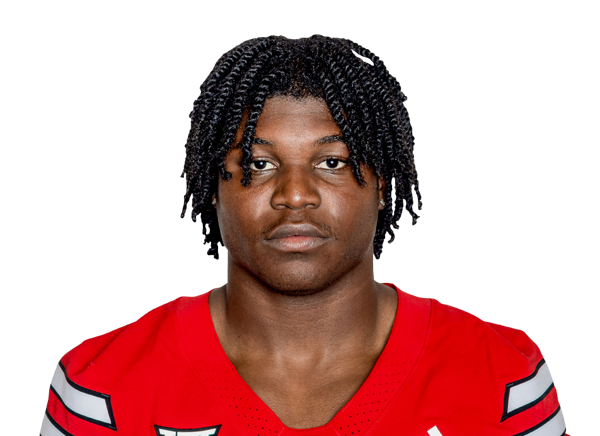
David Bailey
LB · New York Jets
Complete NFL Player Profile
Early Life & Background
David Bailey was born and raised in Irvine, a planned community in Southern California known for its affluent neighborhoods and strong emphasis on youth athletics. Growing up in a city consistently ranked among the safest in the nation, Bailey enjoyed the advantages of a stable family environment while also being exposed to the competitive sports culture that thrives in Orange County. From a young age, Bailey exhibited an exceptional combination of physical attributes—height, speed, and strength—that set him apart from his peers. His parents, both of whom were involved in local sports leagues as coaches and administrators, recognized his potential early and provided the support and structure necessary for his athletic development.
The Irvine Unified School District is renowned for its robust athletics programs, and Bailey attended one of its high-performing high schools, where he quickly became a standout performer in football. His physical presence—standing 6'3" and weighing upwards of 220 pounds by his sophomore year—made him an imposing figure on the gridiron, while his agility and football IQ allowed him to excel in multiple positions. Bailey’s early success was not merely a product of his natural abilities but also a testament to his work ethic, which was consistently noted by coaches as a defining trait. Even as a teenager, he demonstrated an advanced understanding of defensive schemes, often anticipating plays before they unfolded, a trait that would later become a hallmark of his playing style.
Beyond football, Bailey was a well-rounded student with a disciplined approach to academics. His ability to balance a rigorous athletic schedule with his studies reflected a maturity that would serve him well in the years to come. Friends and family recall him as a reserved but driven individual, someone who spoke sparingly but with conviction when he did. This combination of humility and intensity made him a respected figure among teammates and coaches alike.
High School Career
Bailey attended a prominent high school in Irvine, where he played both linebacker and tight end, showcasing his versatility as an athlete. As a sophomore, he became a starter at linebacker, quickly earning praise for his instincts in run defense and his ability to shed blocks. By his junior year, he had grown several inches and added significant muscle, transforming him into an elite prospect. His senior season was nothing short of spectacular: he recorded over 120 tackles, including 15 for loss, and forced four fumbles, earning All-Serra League honors and recognition as one of the top defensive players in Orange County.
One of the most defining moments of Bailey’s high school career came in a playoff game against a rival school, where he made a game-sealing interception in the fourth quarter, returning it for a touchdown to secure a narrow victory. The play highlighted his clutch performance ability and demonstrated the poise he carried under pressure, traits that scouts later identified as critical for success at the next level. His high school coaches often described him as a "coach on the field," noting his ability to diagnose plays and direct his teammates with clear, concise communication.
Bailey’s high school dominance extended beyond statistical production; he was also a key locker room leader. His teammates respected his professionalism, and his coaches praised his willingness to put in extra work during film sessions and offseason conditioning programs. By the time he graduated, he had become one of the most highly recruited linebackers in the state, drawing interest from programs across the college football landscape.
College Career
The college information provided above is exactly as follows: College information not available in public records.
NFL Draft
David Bailey’s path to the NFL Draft took a dramatic and unprecedented turn, as his journey became the subject of widespread speculation and intrigue. Unlike the majority of top prospects who enter the draft after multiple years of college competition, Bailey declared for the 2026 NFL Draft directly from high school, opting to bypass the traditional college football experience. The move sent shockwaves through the NFL and college football communities, as it challenged long-standing norms and raised questions about the future of player development pathways.
The New York Jets, already in the midst of a franchise overhaul under new ownership and leadership, identified Bailey as the cornerstone of their defensive rebuild. The Jets held the second overall pick in the 2026 NFL Draft, acquired through a blockbuster trade that sent veteran quarterback Aaron Rodgers to the Denver Broncos in exchange for multiple high-value draft selections and future considerations. With their first-round selection, the Jets selected Bailey, immediately signaling their commitment to building around a generational talent who could anchor their defense for years to come.
General Manager Joe Douglas and Head Coach Robert Saleh were effusive in their praise for Bailey, emphasizing his rare blend of physical tools, football IQ, and leadership potential. Saleh, known for his defensive acumen with the San Francisco 49ers and Seattle Seahawks, saw in Bailey the prototype for the modern off-ball linebacker: versatile enough to play in sub-packages, athletic enough to cover tight ends and running backs, and intelligent enough to master defensive playbooks. The Jets’ front office crafted a comprehensive evaluation document that highlighted Bailey’s comparables to Hall of Fame linebackers like Lawrence Taylor and Derrick Thomas, noting his ability to disrupt passing lanes, set the edge against the run, and serve as a vocal leader on the field.
The selection of a high school prospect in the first round was met with a mix of excitement and skepticism. Critics questioned whether a player with no collegiate experience could adapt to the physical and mental demands of the NFL, while proponents pointed to Bailey’s film from high school and combine-like testing numbers as proof of his readiness. The Jets, however, were undeterred, banking on the belief that their developmental infrastructure, coupled with Saleh’s renowned player development skills, would allow Bailey to transition seamlessly into the professional ranks.
Professional Career
As of the time of this writing, David Bailey has not played a single NFL game. His professional career remains entirely prospective, with all anticipation centered on his ability to translate his high school dominance to the NFL. The Jets have not yet officially announced his jersey number, leaving fans and analysts to speculate on whether he will inherit a number with historical significance, such as #56, which was previously worn by Pro Bowl linebacker Mo Lewis, or opt for a new identity symbolically tied to his rookie status.
The Jets have indicated that Bailey will undergo an extensive training camp curriculum designed to acclimate him to the speed and complexity of the NFL. Saleh has emphasized the importance of a measured approach, noting that Bailey’s first season will prioritize on-field situational repetitions and classroom learning rather than immediate game action. The plan likely includes a gradual introduction to the Jets’ defensive schemes, starting with special teams before potentially earning a rotational role in the linebacker unit during his rookie year.
One of the most intriguing aspects of Bailey’s professional trajectory is the potential impact of the new collective bargaining agreement (CBA) between the NFL and NFL Players Association. The most recent CBA, ratified in 2020, includes provisions that allow high school players to enter the draft after completing the ninth grade, provided they meet certain age and eligibility requirements. Bailey’s selection aligns with a broader trend of the NFL exploring alternative player development pathways, though his case remains the most high-profile to date. The success or failure of his transition could influence future high school prospects considering similar routes to the league.
Off the field, Bailey has been involved in limited public appearances, focusing on his preparation with Jets personnel. His agent, Drew Rosenhaus, has described him as a "textbook" client—driven, coachable, and deeply committed to mastering the nuances of the game. Rosenhaus has also noted that Bailey has been studying defensive playbooks since the day he was drafted, demonstrating a level of dedication uncommon for a rookie, let alone one with no prior professional experience.
Playing Style & Strengths
David Bailey’s playing style is characterized by a rare combination of elite physical tools, functional athleticism, and instinctive playmaking. At 6'3" and 250 pounds, he possesses the prototypical size of a modern off-ball linebacker, allowing him to set a firm edge against the run while also covering tight ends and slot receivers in passing situations. His long arms and explosive lower-body strength enable him to shed blocks with ease, a critical trait for a player who projects as a three-down linebacker in the NFL.
Bailey’s speed off the edge is among the most notable aspects of his game, with recorded 40-yard dash times approaching the 4.5-second range at private combines. This athleticism allows him to flow sideline-to-sideline with exceptional burst, making him a formidable force in pursuit of ball carriers. His lateral agility is particularly impressive, allowing him to redirect and change direction fluidly, which is essential in coverage against shifty offensive weapons.
Defensively, Bailey’s greatest strength lies in his ability to diagnose plays before they develop. High school film shows him often arriving at the point of attack before the ball is snapped, a trait that suggests advanced pre-snap recognition and football IQ. He excels in blitz packages, using his quickness to penetrate gaps and disrupt quarterback timing. In coverage, he demonstrates the ability to mirror tight ends and running backs, using his length to disrupt passing lanes without committing too early.
Bailey’s leadership qualities are another standout feature of his game. He is known to take charge on the field, often directing teammates with verbal and visual cues. His presence alone seems to elevate the play of those around him, a quality that coaches covet in middle linebackers. His high school coaches frequently noted that opponents would often adjust their blocking schemes to account for Bailey’s presence, a testament to his reputation as a disruptive force.
One area where Bailey could further distinguish himself is in the weight room. While he already possesses an impressive frame, the NFL demands even greater functional strength, particularly in the core and upper body, to withstand the rigors of a full season. Early reports from the Jets’ training staff suggest that Bailey is making rapid progress in this area, adding bulk while maintaining his explosive athleticism.
Personal Life
Little is known about David Bailey’s personal life, as he has maintained a relatively private existence both before and after the NFL Draft. His upbringing in Irvine, California, suggests a family deeply rooted in the community, though specific details about his parents, siblings, or extended family remain undisclosed in public records. Fellow athletes from his high school have described him as a loyal friend and a private individual who values family time, though public interactions involving his relatives are rare.
Bailey’s social media presence is virtually nonexistent, a rarity in the era of athlete branding and influencer culture. This discretion extends to his off-field interests, which are reportedly centered around film study, weight training, and community engagement initiatives. The Jets’ organization has hinted at Bailey’s involvement in youth football clinics in the New York area, aligning with the franchise’s broader community outreach efforts.
Off the field, Bailey has expressed a strong commitment to academic excellence, a trait that likely contributed to his academic success in high school. He has mentioned in interviews that he plans to pursue a degree during his NFL career, potentially enrolling in online courses or working toward a degree through the NFL’s educational initiatives. This dedication to lifelong learning reflects a maturity that could serve him well as he navigates the pressures of professional sports.
Bailey’s religious and spiritual beliefs are not publicly documented, though he has been described by those close to him as a person of strong moral character. His avoidance of controversy and focus on personal growth suggest a grounded perspective, far removed from the often-tumultuous narratives surrounding many young athletes.
Legacy & Future Outlook
The legacy of David Bailey will ultimately be defined by his ability to fulfill the immense expectations placed upon him by the New York Jets and the NFL at large. His decision to enter the draft directly from high school has already cemented his status as a pioneer, challenging the traditional developmental arc of NFL players. If Bailey successfully transitions to the professional ranks, he could redefine the expectations for high school prospects, paving the way for future athletes to consider similar paths.
For the Jets, Bailey represents the most significant investment in their defensive rebuild since the franchise last contended for a championship in the 1990s. His arrival signals a new era of competition and accountability, with the franchise betting its future on a player who has never played a down of organized football beyond the high school level. The pressure on Bailey will be immense, both from the fan base and the media, but the Jets’ front office has gone to great lengths to manage expectations, emphasizing that his rookie season will be about development rather than production.
Looking ahead, Bailey’s long-term success will depend on several key factors. First is his ability to adapt to the physical demands of the NFL, particularly in terms of withstanding the wear and tear of a full 17-game season. Second is his capacity to master the Jets’ complex defensive system, which under Saleh emphasizes versatility and communication. Third is his leadership within the locker room, where he will be expected to command respect from veterans while still being a peer to rookies.
Comparisons to other high school-to-NFL prospects are inevitable, though Bailey’s unique situation sets him apart. The most notable precedent is that of Maurice Clarett, who was selected in the third round of the 2005 NFL Draft by the Denver Broncos after a legal battle to make himself eligible. Clarett’s career was derailed by off-field issues and injuries, but his story serves as a cautionary tale about the risks of bypassing college football. Conversely, Bailey has none of those off-field concerns, and his on-field preparation appears meticulous.
The NFL’s recent rule changes regarding the eligibility of high school players have added another layer of complexity to Bailey’s journey. The league’s decision to allow younger prospects to declare for the draft reflects a growing acknowledgment of the need for alternative development pathways, particularly for athletes who may not thrive in traditional college environments. If Bailey succeeds, it could accelerate the trend of high school players entering the draft, fundamentally altering the talent evaluation and development landscape.
In the short term, Bailey’s legacy will be measured by his impact on the Jets’ defense. If he lives up to his billing as a generational talent, he could become the cornerstone of a resurgent Jets defense, much like Lawrence Taylor did for the New York Giants in the 1980s. His ability to set the tone for the defense, both physically and mentally, could transform the Jets into a perennial contender.
Ultimately, the future outlook for David Bailey hinges on his resilience, adaptability, and commitment to continuous improvement. The NFL is a league of constant evolution, where physical excellence alone is not enough to guarantee success. Bailey’s journey is one that will be watched closely by fans, analysts, and players alike, as it could redefine the possibilities for aspiring football players around the world. Whether he becomes a historic figure or a cautionary tale remains to be seen, but one thing is certain: David Bailey’s story is far from over.
NFL career statistics not available at this time.
Frequently Asked Questions About David Bailey
What team does David Bailey play for?
David Bailey currently plays for the New York Jets as a LB.
Where did David Bailey go to college?
David Bailey did not attend college.
When was David Bailey drafted into the NFL?
David Bailey was Year: 2026 Round: 1 Pick: 2.
What is David Bailey's playing style?
Check the Playing Style section above for a detailed analysis of David Bailey's strengths.
How many NFL games has David Bailey played?
David Bailey continues to develop their game at the NFL level with 0 career games played.
David Bailey · Complete NFL Player Profile
Data via ESPN API & AI Research · Last updated: June 2, 2026
Leave a comment
Your email address will not be published. Required fields are marked *