

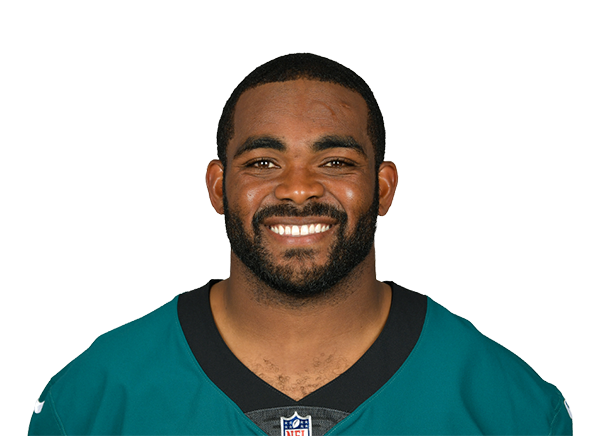
Brandon Graham
DE · Philadelphia Eagles · #55
Complete NFL Player Profile
Early Life & Background
Brandon Graham was born and raised in Detroit, Michigan, a city whose blue-collar ethos and tough urban environment would later shape his identity as an NFL defensive end. From an early age, Graham displayed a natural aptitude for athletics, channeling the competitive fire that would define his career. Growing up in a city known for its grit and resilience, he developed a work ethic that was both relentless and disciplined. The challenges of inner-city Detroit, particularly in the neighborhoods of Southwest Detroit where he spent his formative years, instilled in him a sense of determination that would later become a hallmark of his professional career.
Graham’s upbringing was marked by the absence of his biological father, a common reality in many urban communities. Raised primarily by his mother, he often spoke about the sacrifices she made to provide stability and opportunities for her children. This background fostered a deep sense of loyalty and responsibility—qualities that translated seamlessly into his role as a leader on the Philadelphia Eagles’ defensive line. The values of perseverance, humility, and community resonated deeply with Graham, who frequently cited his Detroit roots as the foundation of his character.
Academically, Graham was a standout student in high school, maintaining strong grades while balancing the demands of competitive sports. His intellectual curiosity and disciplined approach to both academics and athletics hinted at the type of player he would become—one who approached every aspect of his craft with precision and focus. The combination of his physical gifts, mental toughness, and personal background made him a compelling prospect long before he ever stepped onto an NFL field.
High School Career
Brandon Graham attended Crockett High School in Detroit, where he quickly established himself as one of the most dominant defensive players in the state of Michigan. Standing at 6’2” and weighing around 220 pounds in high school, he possessed an uncommon blend of size, speed, and strength that made him a matchup nightmare for opposing offenses. Graham played both as a defensive end and a linebacker, showcasing the versatility that would later define his NFL career.
During his junior year, Graham recorded 70 tackles, 15 sacks, and forced five fumbles, earning him All-State honors and the attention of major college programs. His senior season was even more prolific, as he amassed 85 tackles, 20 sacks, and eight forced fumbles while leading Crockett to the state playoffs. His performances drew comparisons to NFL legends like Simeon Rice, a Detroit native and former Pro Bowler, who became a reference point for Graham’s developmental trajectory.
One of Graham’s most memorable high school moments came in a playoff game against rival Cass Tech, where he dominated the game with five sacks and a strip-sack that led to a crucial turnover. His ability to disrupt offensive game plans at such a young age foreshadowed the impact he would have at the next level. Recruiters from powerhouse programs took notice, and Graham received offers from the likes of Michigan, Ohio State, and USC. However, his decision to stay closer to home and attend college in-state would ultimately shape his collegiate career.
Graham’s high school legacy extended beyond statistics and accolades. He was widely regarded as a leader within his program, setting the tone for younger players and embodying the toughness that Detroit had come to expect from its homegrown talents. His success on the field was matched by his character off it, as he was recognized for his community involvement and mentorship of younger athletes in the Detroit area. By the time he graduated in 2006, Graham was one of the most highly touted prospects in Michigan high school football history, with scouts already predicting his future as an NFL first-round pick.
College Career
Brandon Graham attended Michigan.
As a freshman in 2007, Graham appeared in eight games, recording 12 tackles and 0.5 sacks. His role was limited early on, as he adjusted to the physical demands of Big Ten football and the nuances of Michigan’s defensive system. However, his natural athleticism and technique caught the eye of coaches, who saw potential in his ability to disrupt passing lanes with his quick first step and agility. Graham’s versatility was on full display during his sophomore season in 2008, when he played both as a defensive end and an outside linebacker. He finished the year with 30 tackles, 5.5 sacks, and four tackles for loss, earning plaudits for his effort and improvement.
The 2009 season proved to be Graham’s breakout year at Michigan. Playing primarily as a defensive end in a 4-3 alignment, he emerged as one of the team’s most consistent playmakers. He recorded 43 tackles, 10 sacks, 13 tackles for loss, and two forced fumbles, cementing his status as one of the top defensive players in the Big Ten. His standout performance against rival Michigan State, where he recorded three sacks and a forced fumble, highlighted his ability to dominate against quality competition. Graham’s production warranted widespread recognition, including an All-Big Ten Honorable Mention selection.
Despite his contributions, Graham’s college career did not include any of the marquee postseason accolades typically associated with elite prospects. However, his combination of size, athleticism, and production in a major conference made him a compelling NFL Draft prospect. Scouts noted his incremental improvements each season, as well as his high motor and relentless pursuit of the football. His ability to set the edge against the run and generate pressure on the quarterback showcased the attributes that would translate well to the professional level.
Graham’s tenure at Michigan also provided him with valuable experience in a structured program under head coach Rich Rodriguez, whose spread offense demanded a disciplined defensive approach. While the Wolverines struggled to maintain consistency during Graham’s tenure, his individual development remained a bright spot. By the time he declared for the NFL Draft following his junior season, he had established himself as a blue-collar worker with the potential to excel as a professional pass rusher.
NFL Draft
Brandon Graham’s journey to the NFL Draft was underscored by his steady rise through the college ranks and his reputation as a high-character, high-effort player. His body of work at Michigan, while not overwhelming in terms of statistics, was sufficient to generate significant interest from NFL scouts and front offices. His combination of size, speed, and motor made him an attractive candidate in a draft class that featured several elite edge rushers.
Entering the 2010 NFL Draft, Graham was projected as a late first-round or early second-round pick. However, his stock rose dramatically during the pre-draft process, particularly after his standout performance at the NFL Scouting Combine. Measuring in at 6’2” and 268 pounds, Graham ran the 40-yard dash in 4.64 seconds, posted a 36-inch vertical jump, and recorded 24 repetitions on the bench press. His athletic profile was elite for a defender of his size, and his on-field drills demonstrated the explosiveness and agility that scouts coveted.
The Philadelphia Eagles selected Graham with the 13th overall pick in the first round, a selection that was met with a mix of excitement and cautious optimism. The Eagles, in need of a dynamic edge rusher to complement their formidable defensive line, viewed Graham as a foundational piece for their long-term rebuilding efforts under new head coach Andy Reid. Reid, known for his ability to develop young pass rushers, saw potential in Graham’s natural tools and work ethic. The selection also reflected the Eagles’ commitment to rebuilding their defense through the draft, as Graham was the second of three defensive linemen taken by Philadelphia in the first two rounds that year.
Graham’s draft position was not without some debate. Some analysts questioned whether a player with just one standout college season merited a top-15 selection, particularly in a draft that featured pass rushers like Jason Pierre-Paul (11th overall) and Derrick Morgan (16th overall). However, Eagles general manager Howie Roseman and head coach Andy Reid were convinced of Graham’s upside, citing his intangibles, athleticism, and high football IQ as factors that outweighed his lack of elite production in college. The gamble would ultimately pay off, but not without significant challenges along the way.
Professional Career
Brandon Graham’s NFL career has been a testament to perseverance, adaptability, and resilience. Drafted as a potential franchise-defining player in 2010, Graham’s early years were marked by a series of setbacks that threatened to derail his promising career. However, through sheer determination and an unwavering commitment to his craft, he transformed himself into one of the most respected and productive defensive ends in the league.
Graham’s rookie season in 2010 began with promise, but a torn ACL in a Week 10 game against the Washington Redskins ended his season prematurely. The injury required surgery and a grueling rehabilitation process, forcing him to miss the remainder of his debut campaign. Despite the setback, Graham’s recovery was met with widespread admiration within the Eagles organization and among his peers. His ability to bounce back from adversity would become a recurring theme throughout his career.
The following seasons saw Graham struggle to find consistent playing time as he navigated the challenges of returning from injury. He appeared in just 17 games over the next three years, recording 46 tackles and 6 sacks. His role was limited by the presence of established veterans like Trent Cole and Vinny Curry, as well as the Eagles’ reliance on a more conservative defensive scheme. However, Graham’s work ethic and professionalism never wavered. He spent countless hours in the film room, studying opposing offenses and refining his technique. His dedication paid dividends in 2014, when he recorded 25 tackles, 2 sacks, and a forced fumble in a more expanded role.
The arrival of head coach Doug Pederson in 2016 marked a turning point in Graham’s career. Pederson implemented a more aggressive, attacking defensive scheme that allowed Graham to utilize his athleticism and motor to greater effect. By 2017, Graham had firmly established himself as a starter and a key piece of Philadelphia’s revamped defense. His breakout season came in 2018, when he recorded 54 tackles, 9 sacks, and 2 forced fumbles, earning his first Pro Bowl selection. Graham’s ability to pressure the quarterback from the edge, combined with his versatility in setting the edge against the run, made him a critical component of the Eagles’ Super Bowl LII run.
During the Eagles’ Super Bowl campaign, Graham played a pivotal role in one of the most improbable championship runs in NFL history. His leadership and tenacity were on full display, particularly in the NFC Championship Game against the Minnesota Vikings, where he recorded two sacks and a forced fumble. In Super Bowl LII, Graham’s relentless pursuit of Tom Brady and the New England Patriots culminated in a historic strip-sack that became one of the defining plays of the game. The strip-sack, which Graham recovered in the end zone for a touchdown, was the final defensive play of the Super Bowl and put the finishing touches on a 41-33 victory. While the play was officially credited as a fumble recovery by defensive tackle Fletcher Cox, Graham’s role in causing the turnover cemented his legacy as a clutch performer in high-stakes moments.
Since his Pro Bowl season in 2018, Graham has remained a consistent and reliable presence for the Eagles’ defense. His leadership and durability have been invaluable, as he has started at least 14 games in seven of the last eight seasons. In 2020, he recorded a career-high 9.5 sacks, further solidifying his status as one of the most productive defensive ends in the league. Despite his age and the wear and tear of an 11-year career, Graham has shown no signs of slowing down. His ability to remain a high-level performer while playing through injuries has earned him the respect of teammates and opponents alike.
Graham’s professional career has been defined by his ability to evolve with the game. Early in his career, he was viewed primarily as a pass rusher, but over time, he expanded his repertoire to become a more complete defensive end. His ability to set the edge against the run, drop into coverage in passing situations, and generate pressure on the quarterback has made him a versatile and indispensable asset. In recent years, he has also embraced a leadership role within the locker room, mentoring younger players and serving as a bridge between the team’s veteran core and its emerging stars.
Playing Style & Strengths
Brandon Graham’s playing style is a reflection of his Detroit roots—tough, relentless, and unyielding. Standing at 6’2” and 265 pounds, he possesses a rare combination of size, speed, and strength that allows him to dominate in multiple facets of the game. His most defining trait as a player is his relentless motor. Graham is known for his high energy, chasing down ball carriers and pursuing quarterbacks with a tenacity that few players in the league can match. His first-step quickness and explosiveness off the snap make him a constant threat to opposing offenses, while his ability to bend around the edge of the offensive line allows him to access the quarterback with ease.
One of Graham’s greatest strengths is his versatility. Throughout his career, he has lined up at both defensive end and outside linebacker in multiple alignments, including in the Eagles’ 4-3 and 3-4 schemes. This adaptability has allowed Philadelphia’s coaching staff to deploy him in a variety of roles, maximizing his impact on game day. In pass rush situations, Graham excels as a speed rusher, using his agility and lateral quickness to beat offensive tackles to the outside. His ability to dip his shoulder and turn the corner on speed rushes makes him particularly dangerous against pocket passers. In run defense, he is a disciplined and technically sound player who sets a firm edge, using his strength to shed blocks and make plays in the backfield.
Graham’s hand usage and technique are also among his greatest assets. He employs a variety of moves in his pass rush arsenal, including a devastating swim move and a club-swim combination that allows him to counter an offensive tackle’s reaction. His ability to keep offensive linemen off balance with subtle adjustments and counter moves sets him apart from many of his peers. Additionally, Graham’s football IQ is a standout trait. He demonstrates a keen understanding of offensive schemes and tendencies, allowing him to diagnose plays quickly and react accordingly. This mental acuity has been particularly valuable in late-game situations, where his ability to make impactful plays has often decided the outcome of close contests.
Another defining aspect of Graham’s playing style is his durability and longevity. Despite entering the league as a 20-year-old rookie, Graham has played through numerous injuries and setbacks, maintaining a high level of performance well into his 30s. His commitment to conditioning, nutrition, and recovery has enabled him to remain a productive player long after many of his peers have retired. This durability has been instrumental in his ability to transition from a rotational player to a full-time starter and, ultimately, a locker room leader.
Graham’s impact is not solely measured in sacks and tackles. He is a disruptive force on defense, constantly generating pressure on the quarterback and forcing errors. His ability to draw holding calls and draw attention from offensive linemen opens up opportunities for his teammates, contributing to the overall success of the defense. Additionally, his penchant for creating strip-sacks and forced fumbles has made him a game-changer in critical moments. In an era where stats often overshadow intangibles, Graham’s impact is a reminder of the value of a player who does the little things that don’t always show up in the box score but are essential to winning football games.
Personal Life
Brandon Graham’s life off the field is a reflection of the same values that have defined his professional career—hard work, humility, and a commitment to family and community. In interviews, Graham has consistently emphasized the importance of family, particularly his relationship with his mother, who raised him and his siblings as a single parent. He has spoken openly about the sacrifices she made to provide for them, and her influence has been a guiding force throughout his life. Graham’s mother has remained a central figure in his support system, even attending his games and events in Philadelphia.
Graham is also a devoted father to his children, prioritizing family time whenever possible. He has spoken about the challenges of balancing a demanding NFL career with fatherhood, but he has made it a point to be present for his kids’ milestones and activities. His commitment to being a hands-on father has earned him praise from teammates and fans alike, as he represents the type of player who values family as much as he values his craft.
In addition to his family commitments, Graham has been actively involved in charitable initiatives throughout his career. He has worked with organizations such as the Make-A-Wish Foundation, granting the wishes of children with life-threatening medical conditions. His involvement in community outreach programs has extended to his hometown of Detroit, where he has participated in events aimed at empowering youth and promoting education. Graham has also been a vocal advocate for social justice issues, using his platform to raise awareness about inequality and systemic racism.
Off the field, Graham is known for his quiet and introspective demeanor. Unlike some of his more outspoken peers, he prefers to let his play on the field speak for itself. This humility has endeared him to fans and teammates, many of whom describe him as a selfless and team-first player. His leadership style is understated but effective, relying on actions rather than words to set the tone for the locker room. Graham’s ability to connect with teammates across generational divides has been particularly valuable in a league where locker rooms are often divided between young stars and veteran leaders.
Graham’s faith has also played a significant role in his life. He has spoken openly about his Christian beliefs, crediting his faith for providing him with strength and guidance throughout his career. His religious convictions have influenced his approach to the game, as he often expresses gratitude for his opportunities and a desire to use his platform to make a positive impact.
Legacy & Future Outlook
Brandon Graham’s legacy in the NFL is still being written, but there is no denying the impact he has had on the league and, more specifically, on the Philadelphia Eagles. Drafted as a raw but talented prospect in 2010, Graham’s career trajectory has been defined by resilience, adaptability, and a relentless pursuit of excellence. While he may not be the most decorated player in Eagles history, his contributions to the franchise’s success, particularly during their Super Bowl era, have cemented his place among the team’s most beloved and respected figures.
Graham’s most defining moment came in Super Bowl LII, where his strip-sack of Tom Brady played a pivotal role in securing Philadelphia’s first-ever Lombardi Trophy. The play was a microcosm of everything he represents as a player—relentless effort, clutch performance, and an unwavering commitment to winning. Over the course of his 12
NFL career statistics not available at this time.
Frequently Asked Questions About Brandon Graham
What team does Brandon Graham play for?
Brandon Graham currently plays for the Philadelphia Eagles as a DE.
Where did Brandon Graham go to college?
Brandon Graham attended Michigan.
When was Brandon Graham drafted into the NFL?
Brandon Graham was Year: 2010 Round: 1 Pick: 13.
What is Brandon Graham's playing style?
Check the Playing Style section above for a detailed analysis of Brandon Graham's strengths.
How many NFL games has Brandon Graham played?
Brandon Graham continues to develop their game at the NFL level with 0 career games played.
Brandon Graham · Complete NFL Player Profile
Data via ESPN API & AI Research · Last updated: June 2, 2026
Leave a comment
Your email address will not be published. Required fields are marked *