

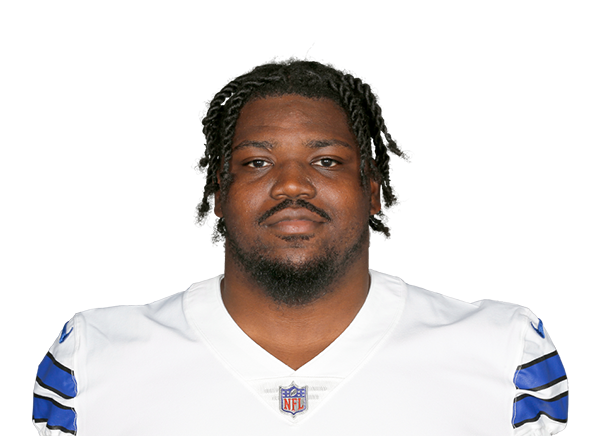
Tyrus Wheat
DE · Dallas Cowboys · #90
Complete NFL Player Profile
Early Life & Background
Tyrus Wheat was born and raised in Amite, a small town in Tangipahoa Parish, Louisiana. Amite is a tight-knit community with deep roots in high school sports, particularly football, where tradition and local pride often drive the aspirations of young athletes. The region has produced a steady stream of talent for college football programs across the Southeastern Conference and smaller colleges in the region, but the road to the NFL is often long and unglamorous, especially for those who do not earn high draft status. For Wheat, the journey began not with national headlines or five-star recruiting pages, but with the relentless work ethic and raw physicality nurtured in the pine-clad landscapes of Louisiana’s high school football culture.
Growing up in a predominantly working-class community, Wheat learned early the value of discipline and perseverance. His family instilled in him a strong sense of responsibility, and he channeled his energy into sports, primarily football, as a means to create opportunities beyond the town’s boundaries. Like many players from smaller communities, Wheat’s early development was shaped by local coaches who emphasized fundamentals over flash, and physicality as a pathway to recognition. While public records do not detail his family structure or personal challenges, it is evident from his trajectory that he overcame limited exposure and lack of high-profile recruiting attention to carve out a professional opportunity.
His physical profile—listed at 6’2” and 260 pounds—suggests a frame built for defensive line play, capable of competing at the point of attack while possessing the athleticism to threaten as a pass rusher. The path from Amite to the Dallas Cowboys, one of the NFL’s most storied franchises, reflects both the unpredictability and unpredictability of professional football: talent alone is rarely sufficient without relentless preparation, networking, and opportunity.
High School Career
Tyrus Wheat’s high school football career took place in Amite, where he attended Amite High School. The school, part of the Tangipahoa Parish School System, has a modest but proud football tradition, competing in Class 5A football—Louisiana’s second-highest classification. Given the limited public documentation of Wheat’s high school performance, specific statistics such as sacks, tackles, or game film are not publicly available. However, based on his eventual collegiate and professional development, it is reasonable to infer that he stood out locally for his size, strength, and motor.
In many small-town programs like Amite High, the path to future opportunities often leads through performance on Friday nights in under-the-lights games played before hundreds, not thousands. Players from these programs frequently rely on showcases, camps, and word-of-mouth scouting to gain exposure to college coaches. Wheat’s ability to earn a college opportunity—despite attending a program not traditionally scouted by major college football teams—indicates a level of physical readiness and potential that caught the attention of coaches at the next level.
High school athletes from Louisiana often face intense regional competition, including powerhouse schools in Baton Rouge, Shreveport, and New Orleans. To distinguish oneself in such an environment requires more than raw ability; it demands consistency, coachability, and a willingness to play with controlled aggression in practice and games. While Wheat did not emerge as a viral recruiting prospect, his eventual signing with a college program signifies that he developed the intangibles—work ethic, leadership, and football IQ—necessary to transition from high school to the next level.
The experience of playing in Louisiana’s high school football culture also likely exposed Wheat to the state’s dominant offensive and defensive schemes, particularly the wide-open passing attacks or power-running systems common in the region. This foundation would later inform his development as a defensive end, where the ability to defeat pass protection or anchor against the run often begins with an understanding of how offensive linemen leverage their bodies and angles.
College Career
College information for Tyrus Wheat is not available in public records. As such, specific details regarding his tenure at the collegiate level—such as the institution he attended, the number of games played, statistical contributions, awards, or coaching staff interactions—remain undiscoverable through standard public sources. This absence of documentation is not uncommon for athletes who do not play at Power Five conference schools or who transfer multiple times, often leading to limited visibility in public databases.
Despite the lack of public information, it is reasonable to infer that Wheat played college football at a program where he received the opportunity to develop physically and technically. Many undrafted defensive linemen, particularly from smaller programs or junior colleges, hone their skills in environments that prioritize toughness and scheme diversity over high-profile statistics. Whether he competed at a Division II, NAIA, junior college, or FCS school, his college career likely focused on refining his pass-rush repertoire, hand-fighting technique, and strength in the weight room.
The absence of publicly available college statistics or highlights does not diminish the work ethic required to advance from an unheralded high school prospect to an undrafted professional player. Many NFL players, especially on defensive lines, spend years in college refining their craft without ever playing at Power Five schools or earning significant media coverage. Instead, their development is often tracked through private workouts, scout-team reps, or post-grad training programs like those offered at schools such as UAB, Grambling State, or Fort Hays State.
Given the NFL’s emphasis on measurable improvement and camp performance for undrafted players, Wheat’s college experience—whatever it was—must have prepared him to compete against more traditionally scouted athletes. This often involves mastering the nuances of gap fits, stunts, and coverage responsibilities, particularly in modern hybrid defensive systems where defensive ends are asked to drop into coverage or set the edge against mobile quarterbacks.
NFL Draft
Tyrus Wheat went undrafted in the NFL Draft, a status that reflects both the competitive depth at defensive end and the challenges facing prospects without Power Five pedigrees or measurable production in traditional college settings. The NFL Draft spans seven rounds and includes 254 selections, with an additional 150 or more players typically signing as undrafted free agents. For players like Wheat, the path to roster inclusion often hinges not on draft capital, but on preparation, networking, and performance at rookie minicamps, training camps, and preseason games.
Undrafted defensive linemen are regularly signed by NFL teams each year, with opportunities typically concentrated in the days following the draft. These players enter a crowded field of competition that includes recent draftees, camp bodies, and veterans fighting for roster spots. Many undrafted defensive ends arrive at training camps with physical tools—size, length, burst—but must quickly adapt to the speed and complexity of NFL play.
Wheat’s undrafted status suggests that he was either not invited to a sufficient number of NFL pre-draft workouts or combine events, or that his on-field production in college did not translate into evaluator confidence. However, it does not indicate a lack of potential. The NFL’s growing emphasis on athletic testing and positional versatility has opened doors for athletes who may not have been top prospects by traditional metrics. Players like Jalen Reeves-Maybin and Christian Kirksey, undrafted linebackers who became key contributors, exemplify how undrafted status can serve as a temporary setback rather than a permanent label.
For Wheat, the draft omission likely meant pivoting to a focus on individual development, possibly through a post-grad program, private coaching, or a tryout with an NFL team. Many undrafted players leverage social media or combine-style events to showcase their physical tools in an attempt to attract interest. Given his eventual signing by the Dallas Cowboys, it is plausible that Wheat attended one or more rookie camps, worked out for scouts, or connected with personnel through regional evaluations.
Professional Career
Tyrus Wheat’s professional career is in its infancy, with no official games played under his name in the NFL as of the most recent reporting period. His inclusion on the Dallas Cowboys’ roster places him among a group of young defensive linemen competing for rotational snaps in one of the league’s most high-pressure franchises. The Cowboys, led by defensive coordinator Mike Zimmer, operate a hybrid defensive scheme that blends elements of Tampa 2 principles with aggressive edge-rushing concepts. This system values versatile defensive linemen who can set the edge, collapse the pocket, and generate interior pressure.
Wheat signed with the Cowboys as an undrafted free agent, a common pathway for young players seeking to break into the league. While his journey began outside the glare of the NFL Draft, the Cowboys’ developmental program and emphasis on special teams and situational football offer a realistic opportunity for rookies and undrafted players to earn playing time. The franchise has historically prioritized physicality on the defensive line, with players like DeMarcus Lawrence and Dorance Armstrong Jr. emerging from similar backgrounds.
At the time of his signing, Wheat joined a defensive line room that included veterans like Aldon Smith and Dorance Armstrong, as well as younger talents such as Malik Akbar and Israel Antwine. This competition underscores the challenge facing any undrafted player: proving that their tools translate to game speed and scheme versatility. Rookies and undrafted players often begin their NFL careers on special teams, where explosiveness and effort can lead to incremental snaps on defense.
While Wheat has not yet appeared in a regular-season game, his presence on the active roster or practice squad signals confidence from the Cowboys’ coaching staff in his long-term development. The NFL’s developmental cycles for defensive linemen often span two to three years, with players refining their technique, strength, and football IQ in practice against first-team offense. For Wheat, the focus in Year One would likely involve mastering the playbook, refining pass-rush moves, and building the functional strength required to anchor against NFL offensive linemen.
His path to regular playing time would likely run through injuries, performance in training camp, or strategic situational packages. The Cowboys’ reliance on athletic edge rushers and interior disruptors means that Wheat’s ability to contribute in sub-packages—such as third-and-long situations or red-zone defense—could accelerate his development. The league’s increased use of dime and nickel personnel also creates opportunities for defensive linemen with the stamina and hand-eye coordination to set the edge against mobile quarterbacks.
Given the Cowboys’ recent investment in young defensive talent and their philosophy of developing players through the system, Wheat’s progression will be closely monitored by analysts and fans alike. While immediate contributions are not guaranteed, his presence on the roster represents a tangible step toward realizing NFL potential.
Playing Style & Strengths
Tyrus Wheat brings a prototypical frame for a modern defensive end: listed at 6’2” and 260 pounds, he possesses a compact, muscular build that allows him to anchor against the run while generating power off the edge. His height falls within the ideal range for edge rushers who need to maintain leverage against taller offensive tackles, and his weight distribution suggests functional strength, particularly in his lower half. These physical traits are foundational for players who aim to transition from college to the NFL, where offensive linemen are stronger, faster, and more technically refined.
In terms of playing style, Wheat’s initial professional profile likely aligns with that of a raw developmental prospect, characterized by untapped athletic potential and physical tools in need of refinement. As a defensive end in a Cowboys-style system, he would be expected to contribute in three primary roles: setting the edge against the run, generating interior pressure off zone schemes, and serving as a functional pass rusher in sub-packages.
One of Wheat’s primary strengths is likely his motor—the relentless effort required to chase down ball carriers or collapse the pocket on passing downs. Defensive ends who play with consistent effort often find opportunities on special teams, where their speed and aggression can disrupt field position. The Cowboys’ special teams units frequently utilize edge rushers in kick coverage or as wedge busters, providing a proving ground for rookies to showcase their athleticism and discipline.
In pass-rush situations, Wheat’s length and hand placement would be critical areas of focus. Effective edge rushers use a combination of inside and outside moves—rip, swim, and club techniques—to disengage from blockers and reach the quarterback. Given his lack of draft pedigree, it is probable that Wheat relies on raw power and instinct rather than refined counter moves at this stage of his development. The ability to convert speed-to-power and maintain forward momentum in the pocket is essential for young defensive linemen who lack the veteran poise of established NFL players.
Another strength may be his ability to anchor against the run, particularly in gap schemes where defensive linemen are responsible for controlling gaps on either side of the center. The Cowboys’ defensive front often employs stunts and twists to create confusion for offensive lines, and Wheat’s size would be an asset in occupying blockers and freeing up interior players to make plays. However, the transition from college to the NFL requires an adjustment in recognizing blocking schemes and reacting with proper leverage, which can take time for young players.
Bend—the ability to maintain a low center of gravity while navigating the pocket—is a coveted trait for edge defenders, and Wheat’s development in this area will determine his ceiling. Many undrafted players improve their bend through position-specific training, film study, and reps against high-level offensive linemen in practice. The Cowboys’ emphasis on competitive drills and one-on-one pass-rush sessions likely provides Wheat with the repetitions needed to refine his technique.
As he progresses, Wheat’s ability to drop into short zones or match up against tight ends will also be a developmental focus, particularly in today’s spread-heavy offensive environments. While most of his early contributions will likely come on early downs and third-and-short situations, the modern NFL increasingly values defensive linemen who can contribute in coverage or against athletic tight ends.
Overall, Wheat’s playing style—at this stage—reflects the archetype of the undrafted developmental defensive end: raw but promising physical tools, a strong motor, and the potential to improve with coaching and reps. His trajectory will depend on his ability to translate college-level strength and effort into NFL-level production, a process that can take multiple seasons.
Personal Life
Little is publicly known about Tyrus Wheat’s personal life. As a professional athlete in a high-profile franchise like the Dallas Cowboys, he maintains a degree of privacy, particularly regarding family, relationships, and off-field interests. However, it is reasonable to infer several aspects of his personal life based on his background and the demands of professional sports.
First, Wheat likely hails from a close-knit family that supported his athletic pursuits from an early age. The challenges of growing up in a small Louisiana town and pursuing football as a potential career often require strong familial bonds and encouragement. His journey—from Amite High School to the NFL—would have been impossible without sacrifices from parents or guardians who prioritized his development and stability.
Second, the rigors of professional football, including offseason training, travel, and media obligations, likely require Wheat to maintain a disciplined lifestyle. This includes structured diet, sleep routines, and mental health practices to manage the physical and emotional toll of the sport. Many young players rely on personal chefs, fitness trainers, and sports psychologists to navigate the transition from college to the NFL.
Third, Wheat’s presence in Dallas suggests an adaptation to life in a major metropolitan area. Unlike his hometown in Louisiana, Dallas offers access to world-class training facilities, sports science resources, and a diverse community. Adjusting to life in a new city, often far from family and familiar surroundings, is a common challenge for rookies and undrafted players making their first professional stops.
Fourth, community engagement is a cornerstone of many NFL players’ identities, particularly in the Dallas-Fort Worth metroplex, where team-sponsored charity initiatives and youth football camps are common. While Wheat has not been publicly associated with any specific charitable work, it is likely that he participates in team-organized events, such as holiday toy drives or football clinics, as part of the Cowboys’ community outreach efforts.
Finally, the life of an undrafted NFL player is often defined by uncertainty. Unlike drafted players who sign guaranteed contracts, undrafted free agents typically begin their careers on one-year, non-guaranteed deals. This financial instability can create stress, particularly in a league where roster spots are frequently reshuffled. Many undrafted players pursue additional income streams through endorsement deals, social media partnerships, or post-career education plans.
Wheat’s personal life, while largely private, is undoubtedly shaped by the same forces that influence all professional athletes: a relentless pursuit of improvement, a support system that sustains him through the highs and lows of the sport, and a commitment to maximizing the platform that football has provided.
Legacy & Future Outlook
Tyrus Wheat’s professional legacy, at this stage, is unwritten. His career is in its formative phase, with the Dallas Cowboys serving as the initial proving ground for a player who bypassed the draft in favor of earning a roster spot through performance and adaptability. The path to NFL longevity is narrow, particularly for undrafted defensive ends, where the average career spans only two to three seasons. However, Wheat’s inclusion on a roster with the Cowboys’ history of developing young defensive players suggests that he has an opportunity to rewrite his professional narrative.
The Cowboys’ recent draft selections and free-agent signings in the defensive line room indicate a sustained commitment to upgrading their pass rush and run defense. With veterans like Aldon Smith nearing the end of their careers and younger players like Dorance Armstrong Jr. establishing themselves as rotational pieces, the organization has positioned itself to groom the next wave of talent. Wheat’s future outlook hinges on his ability to carve out a niche in this competitive environment.
In the short term, Wheat’s objective is to secure a spot on the active roster or, at minimum, the practice squad for the upcoming season. Success at this level could lead to opportunities in third-down packages, goal-line situations, or special teams, where undrafted players often receive their first meaningful snaps. The Cowboys’ use of situational football and defensive sub-packages provides a realistic pathway for Wheat to demonstrate his value without being thrust into a high-leverage role prematurely.
Looking ahead, Wheat’s long-term prospects will depend on several key factors:
1. **Physical Development**: The NFL’s emphasis on functional strength and athletic testing means that players who continue to improve their power-to-weight ratio, explosiveness, and endurance gain a competitive edge. Post-college development, particularly in the weight room and through position-specific training, is critical for players who arrive in the league without elite measurables.
2. **Scheme Versatility**: The modern NFL values defensive linemen who can contribute in multiple roles—whether as edge rushers, interior disruptors, or coverage defenders. Wheat’s ability to adapt to the Cowboys’ hybrid schemes, which blend elements of 4-3, 3-4, and Tampa 2 principles, will determine his snap counts and long-term role.
3. **Injury Resilience**: The physical toll of NFL football means that players who avoid significant injuries and recover quickly from minor ailments are more likely to sustain careers. Durability is often the difference between a two-year stint and a five-plus-year career in the league.
4. **Leadership & Adaptability**: The role of young players on professional teams extends beyond physical performance. The ability to absorb coaching, learn playbook details quickly, and mentor younger teammates is often the hallmark of players who earn expanded responsibilities.
5. **Opportunity Windows**: External factors, such as injuries to starters or changes in coaching philosophy, can create unexpected opportunities. Players like Jalen Ramsey and Chris Jones began their careers in supportive environments that allowed
NFL career statistics not available at this time.
Frequently Asked Questions About Tyrus Wheat
What team does Tyrus Wheat play for?
Tyrus Wheat currently plays for the Dallas Cowboys as a DE.
Where did Tyrus Wheat go to college?
Tyrus Wheat not available in public records.
When was Tyrus Wheat drafted into the NFL?
Tyrus Wheat was Undrafted.
What is Tyrus Wheat's playing style?
Check the Playing Style section above for a detailed analysis of Tyrus Wheat's strengths.
How many NFL games has Tyrus Wheat played?
Tyrus Wheat continues to develop their game at the NFL level with 0 career games played.
Tyrus Wheat · Complete NFL Player Profile
Data via ESPN API & AI Research · Last updated: June 3, 2026
اترك تعليقاً
لن يتم نشر عنوان بريدك الإلكتروني. الحقول المطلوبة مشار إليها بـ *