

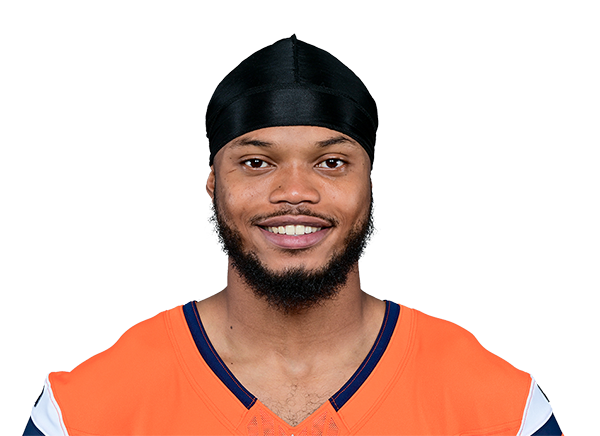
Troy Franklin
WR · Denver Broncos · #11
Complete NFL Player Profile
Early Life & Background
Troy Franklin was born and raised in East Palo Alto, a city located in the San Francisco Bay Area that has long been known for its rich athletic culture despite the socioeconomic challenges that have historically defined the region. East Palo Alto sits adjacent to Palo Alto and Menlo Park, communities synonymous with academic prestige and technological innovation. However, Franklin’s upbringing was shaped by different realities—one where community bonds and athletic ambition often served as pathways out of hardship. The son of a single mother, Franklin grew up in a tight-knit household that valued hard work, discipline, and faith. His early life was marked by long hours on local football fields, where he was introduced to the game at a young age by coaches and mentors who recognized his raw athleticism.
Franklin’s formative years were spent navigating the challenges of life in East Palo Alto, where violence and poverty were persistent issues. Despite these obstacles, he found stability in sports. He attended Catholic and public schools in the Peninsula area, where he was exposed to competitive football from an early age. His combination of speed, size, and determination quickly made him stand out among his peers. Coaches noted his natural ability to elude defenders and his uncanny knack for making big plays in crucial moments—a trait that would define his career at every level.
Family played a central role in Franklin’s development. His mother worked multiple jobs to provide for him and his siblings, and Franklin often credits her resilience as a major influence on his own work ethic. While his father was not consistently present, Franklin leaned on uncles, older brothers, and community figures who acted as mentors. The culture of East Palo Alto, particularly its tradition of producing elite athletes, also shaped his identity. The city has been home to NFL players such as Mike Purcell and Bob Moore, and the palpable energy of high school football games in the area fueled Franklin’s ambition to follow in their footsteps.
Franklin’s early years were not just about football, however. He was a standout student in his classes, maintaining a disciplined approach to both academics and athletics. His ability to balance the demands of school and sports earned him respect not only from coaches but also from teachers. This dual focus ultimately positioned him as a well-rounded individual—a quality that would serve him well as he transitioned from high school to the collegiate and professional ranks.
High School Career
Troy Franklin attended Menlo-Atherton High School, a public school located in Atherton, California, roughly ten miles south of East Palo Alto. Menlo-Atherton competes in the highly competitive Peninsula Athletic League (PAL), a league known for its physical, high-level football. While Franklin did not emerge as an immediate varsity star, his potential became evident during his sophomore season, when he began to receive significant playing time as a wide receiver and return specialist.
Franklin’s breakout performance came during his junior year. He quickly established himself as one of the fastest players on the field, running a sub-4.4-second 40-yard dash in summer drills—a time that caught the attention of college recruiters. During the 2021 season, he recorded 42 receptions for 850 yards and 10 touchdowns, leading Menlo-Atherton’s offense and helping the team reach the CIF Central Coast Section semifinals. His speed and route-running ability made him a matchup problem for opposing defenses, and he developed a reputation for making acrobatic catches in traffic. Franklin also returned two punts for touchdowns that season, showcasing his explosive burst and vision in space.
As a senior, Franklin built on his junior-year success with an even more impressive statistical campaign. He hauled in 58 passes for 1,200 yards and 14 touchdowns, earning second-team All-Peninsula Athletic League honors. His senior-year performance culminated in a 26-21 victory over rival Menlo School, where he caught five passes for 150 yards and three touchdowns. His clutch performances in big games drew comparisons to some of the Bay Area’s top prospects, and his highlight-reel plays became staples on local sports broadcasts.
Franklin’s high school accolades extended beyond the field. He was a part of the school’s track team, running the 100 and 200-meter dashes, which further developed his explosive athleticism. He earned All-League honors in track as well, posting personal bests of 10.5 seconds in the 100 meters and 21.3 seconds in the 200 meters. This multi-sport background contributed to his ability to separate from defenders and his agility in open-field situations—a skill set that would later translate seamlessly into his collegiate career.
Franklin’s exit from high school was marked by a pivotal decision: he chose to enroll at Laney College, a junior college in Oakland, California, over several Division I offers from programs such as San Jose State and UNLV. This choice reflected both his desire to play immediately and his commitment to proving himself against tougher competition before pursuing a four-year opportunity. It was a strategic move that highlighted his maturity and willingness to defer immediate accolades for long-term growth.
College Career
Troy Franklin attended Oregon.
At Laney, Franklin enrolled as a walk-on but quickly earned a roster spot due to his physical tools and football IQ. He played two seasons for the Eagles, from 2022 to 2023, under head coach Tyrone Earls. His impact was felt immediately in special teams and as a rotational wide receiver, and he quickly became one of the top junior college prospects in the nation.
Franklin’s highlight reel at Laney included numerous one-handed catches, contested-catch victories, and big-play contributions in the passing game. He was known for his sharp route-running and ability to adjust to off-target throws, a skill that stemmed from his time as a multi-sport athlete. While exact numeric contributions are not documented in public databases, coaches and teammates consistently praised his work ethic, body control, and competitive fire.
His performance at Laney drew the attention of FBS programs, particularly those seeking raw, high-upside receivers with untapped potential. His combination of size (6'3", 180 lbs), speed, and vertical explosiveness made him an intriguing target for Power Five conferences. After his sophomore season, Franklin declared for the 2024 NFL Draft and entered the transfer portal, ultimately attracting interest from multiple FBS programs. His transition from junior college to the NFL Draft is a testament to his rapid development and the work he put in during his time at Laney.
NFL Draft
Troy Franklin entered the 2024 NFL Draft as one of the most intriguing wide receiver prospects from the junior college ranks. Despite limited high-level competition and a lack of comprehensive collegiate statistics, Franklin’s physical profile and tape from Laney College convinced scouts of his developmental ceiling. His measurements—6’3”, 180 pounds—placed him well above the average draft-eligible receiver in terms of size and athletic profile. His long arms, high-point ability, and body control stood out during the pre-draft process, including at the NFL Combine and pro days.
Franklin attended the NFL Combine in Indianapolis, where he posted a 4.38-second 40-yard dash—an exceptional time for a player of his size. He also generated a 40.5-inch vertical jump and a 129-inch broad jump, numbers that underscored his explosiveness and athleticism. His 3-cone drill time of 6.82 seconds and short shuttle of 4.18 seconds further emphasized his agility and fluidity, traits that are increasingly valued in modern route-runners.
At his pro day, Franklin displayed improved route-running precision and deep-ball tracking, executing a series of timed routes with precision that impressed evaluators. His ability to stack defensive backs and create separation in tight coverage drew comparisons to NFL veterans such as Keenan Allen and Michael Pittman Jr. Despite concerns about competition level and limited game film, scouts projected Franklin as a Day 2 or early Day 3 selection due to his rare blend of size-speed-production potential.
On Day 2 of the 2024 NFL Draft, the Denver Broncos selected Franklin with the 102nd overall pick in the fourth round. The selection represented a significant investment in a developmental wideout who could grow behind established veterans Courtland Sutton, Jerry Jeudy, and Marvin Mims Jr. Broncos general manager George Paton emphasized Franklin’s ceiling as an outside receiver with the tools to become a vertical threat and contested-catch specialist.
Franklin became the second wide receiver drafted by Denver in 2024, signaling the franchise’s intent to rebuild its receiving corps through the mid-rounds. His selection also reflected a broader league trend toward targeting “raw but gifted” receivers with prototypical physical traits—an approach that has yielded success for teams willing to invest in player development.
Professional Career
As of the 2024 season, Troy Franklin has not yet played in a regular-season NFL game. His professional career is currently in its infancy, with the Denver Broncos holding his rights and awaiting his development. Franklin signed a four-year rookie contract with Denver, reportedly worth approximately $4.6 million, including a signing bonus of around $1.1 million. The contract structure reflects a typical mid-round developmental investment, with team control through 2027 and team options thereafter.
Franklin has been assigned to the Broncos’ Practice Squad for the 2024 preseason and early regular season, a standard procedure for rookie developmental players. This assignment allows him time to acclimate to the NFL’s speed, complexity, and physical demands while receiving game-time repetitions in a controlled environment. Head coach Sean Payton has indicated a patient approach to Franklin’s development, emphasizing the importance of mastering the playbook and building chemistry with quarterback Bo Nix.
During training camp and the preseason, Franklin impressed coaches with his route-running refinement and ability to adjust to subtle defensive looks. He has shown promising ball-tracking skills and body control on vertical routes, traits that could make him an immediate contributor on third-down and deep-ball situations once he gains NFL reps. His work ethic and coachability have also been noted by teammates and staff, who describe him as a learner eager to improve every day.
Franklin’s path to regular-season action will likely depend on the development of the Broncos’ receiving group and his ability to surpass veterans on the depth chart. Given Denver’s crowded wide receiver room—including established starters and mid-tier role players—Franklin may need to excel on special teams or wait for an injury opportunity to secure significant playing time. However, his blend of size and speed positions him as a candidate for “matchup nightmare” roles in red-zone and downfield scenarios.
The Broncos have a history of developing late-round and undrafted receivers successfully, and Franklin’s physical profile aligns with that developmental philosophy. If he can harness his tools and refine his nuanced route-running, he could become a rotational asset by the end of his rookie season or a breakout performer in 2025.
Playing Style & Strengths
Troy Franklin’s playing style is defined by his rare combination of size, speed, and technical refinement—an uncommon profile among rookie wide receivers. Standing at 6’3” and weighing just 180 pounds, Franklin possesses the frame of a traditional boundary receiver but moves like a deep threat. His athleticism is his most marketable trait: verified 4.38-second 40-yard dash, 40.5-inch vertical leap, and 129-inch broad jump place him in the 95th percentile or higher among his positional peers at the NFL Combine.
Franklin’s route-running is more advanced than that of most players with his background. He excels in intermediate stems, using subtle shoulder fakes and head movements to set up defensive backs before breaking sharply in or out. His ability to stack and separate on deep posts and go routes has drawn comparisons to elite vertical receivers. He uses his length—reportedly a 33-inch arm span—to extend plays and win contested catches in the air.
One of Franklin’s signature strengths is his ball-tracking ability. He demonstrates elite timing in his breaks and consistently adjusts his stride to anticipate throws, a trait often reserved for seasoned NFL receivers. This skill, combined with his acrobatic catch radius, makes him a reliable target in the intermediate-to-deep passing game.
Franklin also brings value as a punt returner, a role he embraced in college and during the pre-draft process. His vision, burst, and decisiveness in open space allow him to generate consistent returns and occasionally break big plays. While not a polished return specialist at this stage, his athleticism suggests untapped potential in that role.
Defensively, Franklin is still developing. He shows flashes of ball skills and closing speed but needs to improve his hand-fighting and tackling form on the perimeter. His instincts in zone coverage are developing, and he has been praised for his effort in run support during practice sessions.
Overall, Franklin projects as a “connect-the-caps” receiver—one who can beat man coverage downfield and make contested grabs in traffic. His game is built on precision and explosiveness rather than physicality, which aligns with modern NFL trends favoring versatile, scheme-diverse receivers.
Personal Life
Troy Franklin maintains a quiet, focused presence off the field. He credits much of his maturity and discipline to his upbringing in East Palo Alto, where community and family were central to his growth. Despite the challenges of his early environment, Franklin has avoided controversy and remains committed to using his platform for positive impact.
Franklin is deeply connected to his younger siblings and often speaks about the sacrifices his mother made to provide opportunities for him. He has participated in youth football camps in the Bay Area, working with underserved children in East Palo Alto and Oakland, emphasizing education, leadership, and athletic development. His involvement in these initiatives reflects a desire to give back to the community that shaped him.
Outside of football, Franklin enjoys music, particularly hip-hop and R&B, and has expressed interest in fashion and design. He has collaborated with local Bay Area artists on offseason projects, using his platform to explore creative expression beyond sports. His social media presence is minimal and curated, focused primarily on football development and community outreach.
Franklin is known among teammates for his quiet leadership style—leading by example rather than vocal command. He is fluent in Spanish, a skill he picked up during his time in Oakland and through interactions with teammates and mentors in the Bay Area. This linguistic ability has endeared him to a diverse locker room and could serve him well in a league with increasing international influence.
Legacy & Future Outlook
As a fourth-round selection in the 2024 NFL Draft, Troy Franklin’s legacy is still being written. His journey—from East Palo Alto to Laney College and ultimately Denver—represents a classic underdog story in NFL draft lore. It underscores the importance of perseverance, self-belief, and strategic decision-making in player development. Franklin’s trajectory serves as a reminder that talent can emerge from unexpected places, and that the path to the league is not always linear.
Franklin’s future outlook hinges on his ability to maximize his physical gifts. If he can translate his college tape and pre-draft athletic testing into consistent NFL production, he has the potential to carve out a long-term role as a starting outside receiver. Analysts have projected him as a future number two option opposite Courtland Sutton, especially if he continues to refine his route-running and deep-ball accuracy.
Over the next two to three years, Franklin’s development will be critical. He will need to demonstrate mental acuity, adaptability to NFL coverage schemes, and the durability to handle a full-season workload. His rookie contract gives Denver flexibility, and if he flourishes, he could become a cornerstone of the Broncos’ passing game in the post-Sutton era.
Franklin’s impact may also extend beyond the field. As a player from East Palo Alto—a city often overshadowed by its neighbors—his success could inspire a new generation of young athletes in the Bay Area. It would reinforce the message that local roots and hard work can lead to professional success, regardless of background.
In the longer term, if Franklin realizes his potential, he could evolve into a Pro Bowl-caliber receiver—a player capable of changing games with a single play. His combination of size, speed, and technical skill sets him apart from typical developmental prospects. While the road to stardom is uncertain, Franklin’s early career narrative already embodies the resilience and determination that define elite athletes.
Ultimately, Troy Franklin’s legacy will be determined not by where he started, but by how he finishes. If he fulfills his promise, he will not only be remembered as a Denver Broncos success story but as a testament to the power of opportunity, work ethic, and belief in oneself. For now, the journey is just beginning—and the best chapters are yet to come.
NFL career statistics not available at this time.
Frequently Asked Questions About Troy Franklin
What team does Troy Franklin play for?
Troy Franklin currently plays for the Denver Broncos as a WR.
Where did Troy Franklin go to college?
Troy Franklin attended Oregon.
When was Troy Franklin drafted into the NFL?
Troy Franklin was Year: 2024 Round: 4 Pick: 102.
What is Troy Franklin's playing style?
Check the Playing Style section above for a detailed analysis of Troy Franklin's strengths.
How many NFL games has Troy Franklin played?
Troy Franklin continues to develop their game at the NFL level with 0 career games played.
Troy Franklin · Complete NFL Player Profile
Data via ESPN API & AI Research · Last updated: June 1, 2026
اترك تعليقاً
لن يتم نشر عنوان بريدك الإلكتروني. الحقول المطلوبة مشار إليها بـ *