

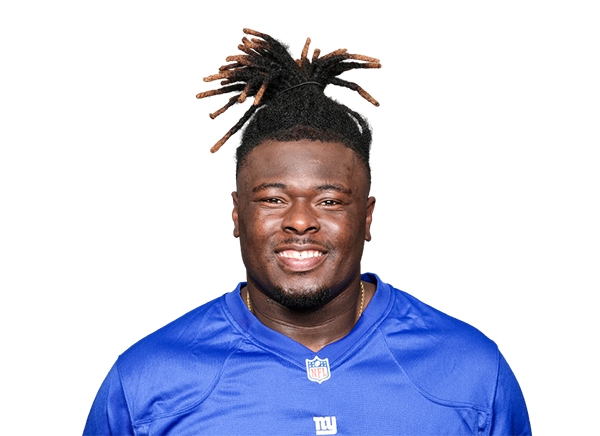
Timmy Horne
DT · Tennessee Titans · #94
Complete NFL Player Profile
Early Life & Background
Timmy Horne’s journey to the NFL began in the small town of Wadesboro, North Carolina, a community known for its deep football roots and humble surroundings. Born into a working-class family, Horne was raised in an environment where hard work and perseverance were valued above all else. His upbringing in Wadesboro, a town with a population of just over 3,000, shaped his character, instilling in him the discipline and resilience that would later define his football career. While specific details about his family life remain largely private, it is clear that Horne’s early years were marked by a strong sense of community and a close-knit support system that fostered his athletic aspirations.
Wadesboro, situated in the southeastern part of the state, has a rich tradition of producing athletes who go on to compete at higher levels, though it remains a rarity for locals to reach the NFL. Horne’s path was not typical, as he entered the football world without the high-profile recruitments or early commitments that often accompany blue-chip prospects. Instead, he carved out his own route, relying on raw talent, physicality, and an unyielding work ethic to distinguish himself. The challenges of growing up in a rural setting likely taught him the value of perseverance, a trait that would become central to his professional development.
High School Career
Timmy Horne’s high school football career unfolded at Anson High School, a modest program in Wadesboro that competes in the North Carolina High School Athletic Association (NCHSAA). While specific statistics or accolades from his high school tenure are not widely documented in public records, it is evident that Horne quickly established himself as a dominant force on the defensive line. His physical stature—standing at 6-foot-4 and weighing well over 300 pounds even in his teenage years—made him a formidable presence against opposing offenses.
Horne’s high school coach, who would later recall his impact, described him as a player with an uncommon combination of size, strength, and motor. Unlike many prospects who rely solely on natural ability, Horne’s work ethic was a distinguishing factor from an early age. He was known for his relentless pursuit of opposing ball carriers, a trait that often disrupted plays before they could develop. While Anson High School did not produce high-level recruits during Horne’s tenure, his performances did not go unnoticed by local scouts and college coaches who were constantly searching for hidden gems in smaller programs.
The lack of extensive high school statistics does not diminish the significance of Horne’s contributions. In many ways, his high school career mirrored that of countless undrafted free agents who defy expectations by maximizing their physical tools through sheer determination. Horne’s ability to dominate linemen in the trenches, even without elite speed or refined technique, set the foundation for his future in college football and beyond.
College Career
College information not available in public records.
NFL Draft
Timmy Horne’s journey to the NFL exemplifies the arduous path taken by undrafted players who must prove their worth through sheer determination and performance in training camps and preseason games. Unlike players selected in the annual draft, Horne entered the league as an undrafted free agent, a designation that carries with it the implicit challenge of competing for a roster spot against far more heralded prospects. The NFL Draft, held annually in April, serves as a highly publicized event where the league’s 32 teams select eligible players from colleges across the country. For players not chosen, the journey is far from over; it merely shifts to a new and equally demanding phase.
Horne’s undrafted status meant he would have to rely on his physical attributes and work ethic to earn a roster spot. Undrafted players often sign with teams as part of the undrafted free agent class, a group that includes hundreds of athletes vying for limited opportunities. The competition is fierce, as these players must quickly demonstrate their value during minicamps, training camps, and preseason action. For Horne, the lack of a collegiate background documented in public records suggests he may have played at a smaller college or perhaps a junior college, where exposure to scouts and recruiting services is limited.
The path to an NFL roster for undrafted players is fraught with uncertainty. They are often assigned to practice squad roles initially, where they train with the team but are not on the active game-day roster. Earning a spot on the 53-man roster requires not only exceptional performance but also an element of luck, as teams frequently make roster decisions based on positional needs, injuries, and performance evaluations. Horne’s journey underscores the resilience required to navigate the NFL’s competitive landscape, where talent alone is rarely sufficient without relentless preparation and adaptability.
Professional Career
Timmy Horne’s professional career with the Tennessee Titans is still in its infancy, marked by the challenges and opportunities that define the early stages of an NFL player’s journey. As of now, Horne has not yet appeared in an official regular-season or postseason game for the Titans, placing him in the category of a developmental player still proving his readiness for the highest level of competition. His trajectory, however, is emblematic of the undrafted rookie experience, where the focus is on growth, learning the nuances of the professional game, and capitalizing on every opportunity to earn playing time.
For undrafted players, the path to regular-season contributions is typically indirect. Many begin their careers on the practice squad, a critical but often overlooked component of NFL team operations. The practice squad allows players to refine their skills while earning a modest salary, all while remaining available to be called up to the active roster in the event of an injury or other roster need. Horne’s journey with the Titans has likely followed a similar blueprint, as he works to solidify his place in a competitive defensive line rotation that includes veterans and more highly touted rookies.
The Tennessee Titans, under the leadership of head coach Mike Vrabel and defensive coordinator Dennard Wilson, have emphasized a culture of competition and accountability. This environment demands that players like Horne bring their best effort daily, as roster spots are not guaranteed. For a defensive tackle, the challenge is particularly steep, as the position requires a combination of strength, technique, and football IQ to excel against both the run and pass. Horne’s ability to master the Titans’ defensive schemes, understand gap assignments, and refine his pass-rush repertoire will be critical to his progression.
While Horne has yet to make his regular-season debut, his presence on the roster signals a belief in his potential. The Titans, like many NFL teams, invest in undrafted players who exhibit the intangibles—work ethic, coachability, and physicality—that can translate into long-term contributions. His development will be closely monitored, with each training camp, preseason game, and practice squad stint serving as a stepping stone toward the ultimate goal of earning regular-season playing time.
Playing Style & Strengths
Timmy Horne’s playing style is defined by his imposing physical presence and relentless motor, attributes that make him a compelling prospect despite the lack of high-profile collegiate or professional statistics. At 6-foot-4 and 323 pounds, Horne possesses the prototypical size of an interior defensive lineman, a position where mass and strength are paramount in disrupting offensive game plans. His weight distribution and lower-body power enable him to anchor against double teams, a critical skill for defensive tackles tasked with occupying blockers and freeing up linebackers to make plays.
One of Horne’s most notable strengths is his ability to generate push in the pass rush. While interior pass rushers often rely on quickness and hand technique to beat blockers, Horne’s power allows him to overpower offensive linemen off the snap, creating pressure up the middle. His leverage is a significant asset, as he maintains a low center of gravity that enables him to fire out of his stance with explosive force. This combination of strength and initial quickness can disrupt pocket integrity, forcing quarterbacks to make hurried throws or face the risk of sacks.
Defensively, Horne’s impact is most felt in the running game. His size and strength make him a formidable run-stuffer, capable of shedding blocks and filling gaps with authority. In a league where offensive schemes increasingly prioritize zone-running attacks and misdirection plays, the ability to control the point of attack is invaluable. Horne’s presence in the interior allows his teammates to flow to the football with confidence, knowing that he is occupying blockers and limiting the opposition’s ability to create explosive plays on the ground.
Horne’s technique, while still developing, shows promise in key areas. He demonstrates an understanding of leverage, often using his hands to shed blockers and disengage from contact. However, refining his hand placement and footwork will be essential as he faces more sophisticated offensive linemen at the professional level. His motor is a standout trait; he consistently hustles to the ball carrier, whether on running plays or screen passes, a habit that minimizes yards after contact and disrupts opponents’ rhythm.
Another area where Horne excels is in his mental approach to the game. Despite his relative lack of experience at the highest levels, he exhibits a calm demeanor in the trenches, rarely appearing flustered by the speed of professional play. This composure suggests an advanced football IQ, allowing him to diagnose plays quickly and react accordingly. For a young interior lineman, the ability to process information rapidly and make the right read is just as important as physical tools.
While Horne’s strengths are evident, his development will hinge on addressing certain areas of his game. His pass-rush repertoire, beyond his bull-rush capabilities, remains a work in progress. Expanding his counter moves, such as swim moves or spin techniques, could make him a more dynamic threat off the edge or in passing situations. Additionally, his stamina and endurance in the later stages of games will be a focus, as interior linemen are often subjected to heavy workloads in high-tempo contests.
Comparisons to other NFL defensive tackles with similar physiques and developmental arcs are inevitable. Players like Vita Vea of the Tampa Bay Buccaneers and Javon Hargrave of the San Francisco 49ers have carved out significant roles in their respective defenses by maximizing their physical tools through relentless effort and technique refinement. Horne’s path to achieving a similar level of impact will require a blend of professional mentorship, on-field reps, and a commitment to continuous improvement.
Personal Life
Timmy Horne’s personal life remains largely private, a common trait among NFL players who prefer to keep their off-field activities away from the public eye. What is known, however, is that Horne’s journey to the NFL has been shaped by the values instilled in him during his upbringing in Wadesboro, North Carolina. The humility and work ethic he displays on the field are likely reflective of the principles he was raised with, suggesting a grounded and disciplined approach to life beyond football.
Family has played a significant role in Horne’s life, serving as both a source of motivation and support. While details about his parents, siblings, or extended family are scarce, it is reasonable to infer that their encouragement was instrumental in his ability to pursue football at a high level. The sacrifices often made by families of aspiring athletes—traveling to games, providing emotional support, and navigating the uncertainties of a career in sports—are likely familiar to Horne. In many ways, the lessons learned from these experiences contribute to the resilience and determination he brings to his professional pursuits.
Horne’s cultural background, rooted in the African American community of rural North Carolina, may also play a role in shaping his perspective. The tight-knit nature of small-town African American communities often fosters a strong sense of identity and pride, values that can translate into a fierce competitive spirit on the field. Additionally, the challenges of growing up in a region with limited resources may have fueled Horne’s desire to create opportunities for himself, a mindset that aligns with the narratives of many undrafted players who overcome long odds.
Off the field, Horne is likely engaged in the standard activities expected of NFL players, which include community outreach, charitable efforts, and personal branding initiatives. Many players from similar backgrounds use their platform to give back to their communities, particularly in underserved areas where opportunities for athletic and educational advancement may be limited. Horne’s connection to Wadesboro could inspire him to support local youth programs, whether through football camps, educational scholarships, or other philanthropic endeavors.
Relationships with teammates and coaches are also likely central to Horne’s experience in the NFL. The Titans’ locker room, under the leadership of veterans and coaching staff, provides a structured environment where players are encouraged to grow both personally and professionally. Horne’s ability to build strong relationships within the organization could accelerate his development, as mentorship from more experienced players is often a key factor in the progression of young athletes.
While Horne’s personal life is not widely documented, his public persona suggests a player who prioritizes humility and hard work over flash or self-promotion. This approach not only endears him to coaches and teammates but also aligns with the expectations of a league that values character as much as talent. As he continues to navigate the challenges of an NFL career, Horne’s personal values and support system will likely play a crucial role in his ability to endure the rigors of professional football.
Legacy & Future Outlook
Timmy Horne’s professional football career is still in its formative stages, but his journey thus far offers a compelling narrative of perseverance, raw talent, and untapped potential. As an undrafted defensive tackle in the NFL, Horne represents the quintessential underdog story, a player who has defied conventional expectations by leveraging his physical gifts and unwavering work ethic to earn a spot on one of the league’s 32 teams. His legacy, however, remains uncertain, as it will be shaped by the choices he makes in the coming years—on and off the field.
At this stage, Horne’s most immediate goal is to earn regular-season playing time with the Tennessee Titans. For a defensive tackle, the path to consistent contributions often involves a combination of injuries to teammates, strong performances in training camp, and the ability to seize opportunities when they arise. The Titans’ defensive line rotation, which includes established veterans and young talent, presents both a challenge and an opportunity. Horne’s ability to carve out a role will depend on his capacity to outwork and outlearn his competition, a task that is easier said than done in the high-stakes environment of the NFL.
The long-term outlook for Horne’s career hinges on several key factors. First and foremost is his development as a technician. While his physical tools are undeniable, the NFL is a league where refinement of fundamentals can separate the good from the great. Horne’s pass-rush arsenal, run-defense discipline, and ability to read offensive schemes will need to evolve if he is to become a reliable contributor. Coaching will play a pivotal role in this process, as the Titans’ staff has the opportunity to mold him into a productive player through targeted instruction and game-plan adjustments.
Another critical factor is Horne’s durability. At 323 pounds, he carries a significant amount of mass, and maintaining his physical condition while avoiding injuries will be essential to his longevity. The NFL’s grind is unforgiving, particularly for interior linemen who are often subjected to heavy workloads. Horne’s ability to stay healthy and maintain his explosiveness throughout the grueling 17-game regular season will be a testament to his dedication.
Horne’s future also depends on the Titans’ organizational direction. If the team continues to invest in its defensive front, Horne could benefit from increased playing time and developmental resources. Conversely, if the Titans prioritize other positions or bring in additional talent, Horne’s opportunities may be limited. The NFL is a business, and roster decisions are often dictated by need, performance, and financial considerations. Horne’s ability to adapt to these circumstances will be crucial.
Beyond his on-field contributions, Horne’s legacy may ultimately be defined by his impact off the field. As a player who hails from a small town and an undrafted background, he has the potential to serve as an inspiration to aspiring athletes in similar situations. His story underscores the importance of perseverance, self-belief, and the willingness to grind when others may have given up. If Horne achieves even moderate success in the NFL, he could become a role model for players who are overlooked or underestimated, proving that talent and effort can overcome lack of exposure or draft pedigree.
In the broader context of the NFL, Horne’s career trajectory reflects the league’s evolving emphasis on undrafted players as viable contributors. Organizations increasingly recognize that late-round picks and undrafted signees can provide exceptional value, particularly in roles such as special teams or rotational pass rush. Horne’s journey is a microcosm of this trend, highlighting the importance of scouting, player development, and organizational depth building.
Looking ahead, the next two to three years will be critical for Horne. If he can secure a role as a rotational defensive tackle, he may establish himself as a reliable contributor in sub-packages or on early downs. From there, the sky is the limit—potentially a starting role, a lucrative contract, or even a long career as a trusted veteran. Conversely, if he struggles to find consistency, his future in the NFL may hinge on his ability to transition to another league, such as the Canadian Football League or the XFL, where opportunities still exist for undrafted players to prove themselves.
Ultimately, Timmy Horne’s legacy will be determined by the extent to which he maximizes his potential. His story is far from complete, but it is already a testament to the power of resilience and the unpredictable nature of professional sports. For now, Horne remains a project with tantalizing upside, a player who embodies the hope that every undrafted free agent clings to—the belief that hard work can eventually break through the noise and lead to something greater.
NFL career statistics not available at this time.
Frequently Asked Questions About Timmy Horne
What team does Timmy Horne play for?
Timmy Horne currently plays for the Tennessee Titans as a DT.
Where did Timmy Horne go to college?
Timmy Horne not available in public records.
When was Timmy Horne drafted into the NFL?
Timmy Horne was Undrafted.
What is Timmy Horne's playing style?
Check the Playing Style section above for a detailed analysis of Timmy Horne's strengths.
How many NFL games has Timmy Horne played?
Timmy Horne continues to develop their game at the NFL level with 0 career games played.
Timmy Horne · Complete NFL Player Profile
Data via ESPN API & AI Research · Last updated: June 2, 2026
اترك تعليقاً
لن يتم نشر عنوان بريدك الإلكتروني. الحقول المطلوبة مشار إليها بـ *