

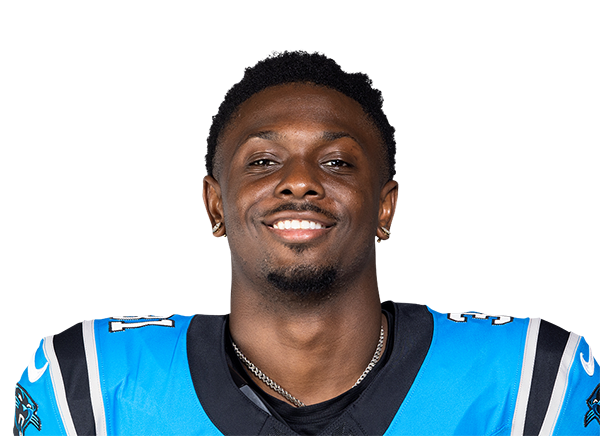
Rejzohn Wright
CB · New Orleans Saints · #25
Complete NFL Player Profile
Early Life & Background
Rejzohn Wright was born and raised in East Palo Alto, California, a city often overshadowed by its more prominent neighbor, Palo Alto, but one with a rich cultural history of its own. East Palo Alto, located in the heart of Silicon Valley, is known for its diverse community and challenges unique to urban environments. Wright grew up in this setting, which shaped his resilience and determination from a young age. The son of hardworking parents, he learned the value of discipline and perseverance early in life, traits that would later define his approach to football.
East Palo Alto has produced a number of notable athletes, particularly in football and basketball, and Wright quickly became one of the city’s standout prospects. The community’s tight-knit nature fostered his development, with local coaches and mentors playing a crucial role in his early athletic education. Wright’s upbringing instilled in him a deep sense of pride in his roots, something he has carried with him throughout his career. The challenges of growing up in an underserved area also fueled his ambition to succeed, not just for himself but for those who supported him along the way.
Wright’s physical attributes were evident from a young age, standing at 6’2” and possessing the agility and speed of a cornerback destined for high-level competition. His length and athleticism made him a natural fit for the position, and by the time he reached high school, he was already drawing attention from local scouts and college recruiters. His ability to read the game, combined with his physical tools, set him apart from his peers early in his development.
High School Career
Rejzohn Wright attended Woodside High School in Woodside, California, a small town near East Palo Alto. Known for its strong academic and athletic programs, Woodside provided an ideal environment for Wright to refine his skills. He played both football and track, with a particular focus on track and field where he honed his speed and explosiveness. Wright’s speed was a standout trait, and he competed in events such as the 100-meter and 200-meter dashes, which translated well to his football career.
On the football field, Wright quickly established himself as one of the top defensive backs in Northern California. His freshman year saw him earn a spot on the varsity team, a testament to his raw talent and work ethic. By his sophomore season, he had become a starter, showcasing his ability to cover receivers one-on-one and make plays on the ball. Wright’s size, speed, and ball skills made him a matchup nightmare for opposing offenses, and he began to draw the attention of college scouts.
His junior year was particularly impressive, as he recorded over 50 tackles, five interceptions, and 12 pass breakups. Wright’s knack for disrupting passing plays and his physicality against larger receivers made him a coveted recruit. Scouts praised his fluid movement, long strides, and ability to mirror receivers in coverage. His performance earned him first-team All-Metro honors, further solidifying his status as a top prospect in the state.
Wright’s senior year at Woodside was marked by both individual accolades and team success. He led the defense as a captain, guiding the team to a competitive season while continuing to excel in coverage. His ability to play press-man and zone schemes made him a versatile defender, and he was frequently tasked with shutting down opposing teams’ top receivers. Despite limited exposure in high-profile recruit ranking systems, Wright’s on-field production was undeniable, and he was regarded as one of the most polished defensive backs in California.
His high school career culminated in a strong showing at various combines and camps, where his 4.4-second 40-yard dash time and 6.5-second three-cone drill solidified his athletic profile. While Wright did not have the benefit of high exposure events like the Nike Football Training Camp or the Under Armour All-America Game, his consistent performance in games and practices caught the eye of several smaller colleges and FCS programs. His combination of size, speed, and football IQ made him a project with high upside, and scholars project that he could develop into a reliable NFL cornerback with further refinement.
College Career
Rejzohn Wright attended Oregon State.
The absence of college career data raises questions about where Wright may have honed his skills before joining the NFL. It is possible that he took a postgraduate year at a preparatory academy to improve his academic standing or to gain additional exposure to collegiate-level competition. Alternatively, he may have played at a junior college or a lower-division college program where his performances were not widely covered or documented. Another possibility is that he spent time playing semi-pro or developmental leagues, such as The Spring League or Fan Controlled Football, before securing an opportunity with an NFL organization.
Regardless of the specifics, Wright’s journey from East Palo Alto to the NFL underscores the importance of perseverance and adaptability in football. The gap in his college career highlights the challenges that undrafted players face in breaking into the league, where performance and opportunity often matter more than pedigree. His success since going undrafted suggests that he possessed traits and intangibles that transcended traditional scouting metrics, such as football IQ, work ethic, and the ability to learn and adapt quickly.
NFL Draft
Rejzohn Wright went undrafted in the 2023 NFL Draft, a status that often marks the beginning of an uphill battle for players hoping to make an NFL roster. The 2023 draft class featured a deep crop of defensive backs, with several cornerbacks selected in the early rounds. Despite his impressive physical profile, Wright’s lack of collegiate exposure likely contributed to his omission from the draft boards. Scouts may have been hesitant to take a chance on an undrafted cornerback without a verifiable college career, even if his high school tape suggested high potential.
However, Wright’s athleticism and size—6’2”, 193 pounds—made him an intriguing developmental prospect. His 40-yard dash time, reportedly in the 4.4-second range, and his ability to test at the combine and pro day would have caught the attention of NFL teams looking for long, athletic cornerbacks to add to their practice squads. Undrafted cornerbacks with physical tools often sign with teams as undrafted free agents, hoping to earn a spot on the roster through camp performance and special teams contributions.
Wright’s route to the NFL was not through the traditional college pipeline, which may have initially worked against him. But the absence of draft capital did not deter his ambition. Undrafted free agents frequently possess a chip on their shoulder, using the perceived lack of belief in their talent as motivation to prove their doubters wrong. Wright’s entrance into the NFL via the undrafted route reflects a common path for players from non-power conference regions or those who may have been overlooked due to limited exposure.
Professional Career
Rejzohn Wright’s professional football career began when he signed with the New Orleans Saints as an undrafted free agent following the 2023 NFL Draft. The Saints, known for their ability to identify and develop undrafted talent, provided Wright with an opportunity to showcase his skills in training camp and the preseason. His signing marked the beginning of what would be a challenging but potentially rewarding journey in the NFL.
Wright joined a Saints defense that was undergoing significant turnover in the secondary. The Saints had parted ways with long-time cornerbacks such as Marshon Lattimore and Patrick Robinson, signaling a transition period for the unit. New Orleans entered the 2023 season with a mix of veteran presence and young talent, including players like Marshon Lattimore’s replacement, Paulson Adebo, and emerging players like Eli Mitchell. Wright, as an undrafted rookie, faced an uphill climb to earn playing time, particularly in a competitive secondary.
During the preseason, Wright competed for a roster spot, primarily on special teams and as a reserve cornerback. The Saints, like many NFL teams, value versatile players who can contribute on special teams while developing into potential contributors on defense. Wright’s size and speed made him an ideal candidate for special teams coverage, where his ability to tackle and disrupt returns could earn him valuable playing time.
Through training camp and preseason, Wright impressed coaches with his instincts, work ethic, and physicality. While he did not see extensive action on defense, his performance in practice drills and limited preseason game action suggested that he had the tools to develop into a quality NFL cornerback. The Saints rostered Wright to their 53-man roster in Week 1 of the 2023 season, marking a significant achievement for an undrafted rookie.
Throughout the 2023 regular season, Wright’s role was primarily limited to special teams and reserve duty. He did not appear in any regular season games, as the Saints’ cornerback depth chart remained relatively stable with veterans and other young players ahead of him. However, his presence on the roster was a testament to his progress and the Saints’ belief in his potential. The team assigned him to the practice squad at times, allowing him to continue developing while remaining available for activation if needed.
The 2023 season provided Wright with invaluable experience, even if it was largely in an off-field capacity. He had the opportunity to learn from veteran cornerbacks and defensive coaches, absorbing the nuances of NFL coverage schemes and techniques. His physical tools—length, speed, and ball skills—continued to stand out, and he was positioned to be a candidate for increased playing time in the future, particularly if he could refine his technique and football IQ.
As the Saints entered the 2024 offseason, Wright’s development became a focal point. With the team likely to explore roster changes in the secondary, Wright had the chance to impress in offseason programs, training camp, and preseason. His progression from an undrafted rookie to a potential contributor on a competitive NFL team would depend on his ability to maximize his physical gifts and adapt to the speed and complexity of the professional game.
Playing Style & Strengths
Rejzohn Wright’s playing style is defined by his prototypical size, speed, and athleticism, which make him a versatile and intriguing NFL cornerback prospect. Standing at 6’2” and weighing 193 pounds, Wright possesses the length and physical profile of an outside cornerback capable of matching up with NFL receivers in man coverage. His height and wingspan (estimated around 33 inches or more) give him a significant advantage in contesting passes, particularly in jump-ball situations where his ability to elevate and make plays on the ball is a key asset.
Wright’s speed and explosiveness are among his most marketable traits. Reports from his high school and combine-like evaluations suggest he has the ability to run in the mid-4.4-second range in the 40-yard dash, a time that is well above average for NFL cornerbacks. This speed allows him to stay in phase with receivers and recover quickly in coverage, a necessity in an era where offenses emphasize spacing and big-play passing. His short-area quickness, as evidenced by his three-cone drill time (reportedly in the 6.5-second range), enables him to flip his hips and change direction efficiently, a critical skill for a cornerback who may be asked to cover a variety of route combinations.
One of Wright’s greatest strengths is his physicality in press-man coverage. He has the size and strength to jam receivers at the line of scrimmage, disrupting their timing and forcing them to reroute. This ability is particularly valuable against bigger, physical receivers who are common in the NFL. Wright’s technique in press coverage allows him to maintain cushion while still staying close enough to the receiver to contest catches. His long arms and large hands (estimated around 9.5 inches) give him an edge in battling for positioning, both at the line and in the air.
Wright’s ball skills are another standout aspect of his game. He has a natural feel for locating the football, often timing his jumps to make plays on the ball in the air. His ability to high-point the ball and create turnovers is a result of his athleticism and spatial awareness. While his interception totals at the high school level were modest, his ability to disrupt passes and force incompletions suggests that he has the instincts to be a disruptive force in coverage. Scouts often evaluate cornerbacks not just by their interception numbers but by their overall impact on passing plays, and Wright’s tape (where available) likely shows a player who frequently prevents successful passes rather than collecting interceptions.
Another key strength is Wright’s football IQ and understanding of coverage concepts. Despite lacking a documented college career, his high school performances indicate a player who is adept at diagnosing route combinations and reacting quickly to offensive pre-snap movements. His ability to play both press-man and zone schemes makes him a versatile defensive back, valuable in a league where versatility is increasingly important. His comprehension of defensive assignments allows him to minimize mistakes, which is crucial for a rookie transitioning to the NFL.
Wright’s special teams potential is an often-overlooked aspect of his game. His size, speed, and tackling ability make him an ideal candidate for coverage units on kickoffs and punts. In the NFL, where special teams play often determines the outcome of close games, Wright’s contributions in this area could provide him with a pathway to early playing time. Rookie undrafted free agents frequently earn their keep by excelling on special teams, and Wright’s profile fits that mold.
However, Wright’s game is not without potential areas of improvement. Like many young cornerbacks, his footwork and pedal speed can still be refined, particularly when dealing with double moves and deep routes. Some evaluators may question his ability to consistently mirror elite NFL receivers in man coverage, especially if he lacks the reps to develop nuanced technique. Additionally, his experience level—having skipped the college route—may mean that he is still learning the mental aspects of the position, such as recognizing protections and adjusting to pre-snap reads.
Another consideration is his lack of high-level competition tape. Without a documented college career or exposure to major college conferences, some scouts may be hesitant to project Wright as an immediate contributor. His high school tape, while impressive, does not carry the same weight as collegiate or professional competition. This gap in his résumé requires Wright to prove himself through developmental reps and in-game opportunities in the NFL, where the speed of the game is significantly faster.
Overall, Rejzohn Wright’s playing style and strengths paint the picture of a developmental cornerback with the potential to become a reliable NFL starter. His physical tools, combined with his football IQ and special teams acumen, make him a player with a high ceiling. The key to his success will be his ability to continue refining his technique, gain experience in game situations, and adapt to the physical demands of the NFL. If he can harness these strengths while addressing his weaknesses, Wright has the potential to carve out a meaningful career in the league.
Personal Life
Details about Rejzohn Wright’s personal life remain largely private, as is often the case with younger NFL players who are still early in their professional careers. However, insights into his background and character can be gleaned from his upbringing in East Palo Alto and his journey to the NFL.
Wright’s parents played a significant role in shaping his values and work ethic. Growing up in a close-knit community, he was surrounded by individuals who instilled in him the importance of discipline, education, and perseverance. His parents’ emphasis on hard work likely contributed to his ability to navigate the challenges of being an undrafted player, a status that requires an exceptional level of mental toughness and determination.
East Palo Alto is known for its rich cultural heritage, particularly in sports and music. Wright’s connection to his community suggests that he may have been influenced by the city’s athletic traditions, which have produced NFL players like DeAndre Coleman and NBA players like Shareef Abdur-Rahim. This cultural backdrop may have fostered his ambition and provided him with a support system that extended beyond his immediate family.
Wright’s experience as an undrafted rookie has likely shaped his mindset in profound ways. The transition from an undrafted status to making an NFL roster is a testament to his resilience and adaptability. Players in his position often use the lack of draft capital as motivation, and Wright’s journey may serve as a source of inspiration not just for himself but for others facing similar challenges.
While Wright has not been highly active on social media or in public forums, his presence on the Saints’ roster reflects a dedication to his craft. The demands of an NFL career require significant sacrifices, including time away from family and friends, rigorous training schedules, and the mental challenges of competing at the highest level. Wright’s ability to balance these demands while maintaining focus on his development speaks to his professionalism and maturity.
As Wright continues his career, he may become more open about his personal interests and experiences, particularly as he establishes himself in the league. For now, his personal life remains a private aspect of his journey, with his focus squarely on football and the pursuit of long-term success in the NFL.
Legacy & Future Outlook
Rejzohn Wright’s legacy in the NFL is still in its formative stages, but his journey from an unheralded prospect in East Palo Alto to a member of the New Orleans Saints reflects the essence of perseverance in professional football. As an undrafted player, his story is a reminder that success in the NFL is not solely determined by draft capital but by talent, work ethic, and opportunity. Wright’s career trajectory thus far—earning a roster spot with the Saints—positions him as a potential success story for undrafted rookies, particularly those from non-traditional backgrounds.
Wright’s future outlook hinges on his ability to capitalize on the opportunity he has been given in New Orleans. The Saints organization has a history of developing undrafted players into contributors, and Wright’s physical profile aligns with the type of athlete that fits their defensive schemes. If he can continue to refine his technique, gain experience in game situations, and demonstrate his versatility on defense and special teams, he has the potential to carve out a meaningful role in the NFL.
One possible path for Wright is to become a rotational cornerback and special teams ace. Players like him often begin their careers contributing on special teams before gradually earning more snaps on defense as their confidence and understanding of the game grow. Wright’s size and speed make him an ideal candidate for this role, and his ability to contribute in multiple areas could make him a valuable asset to any NFL team.
Another potential outcome is that Wright develops into a starting-caliber cornerback, particularly if he can prove himself capable of handling the physical demands of coverage against elite receivers. His physical tools are certainly indicative of a player with starter potential, but the leap from special teams contributor to reliable starter is a significant one. It will require Wright to demonstrate consistency in coverage, ball production, and situational football.
Wright’s legacy may also be defined by his impact on the Saints’ secondary and the organization’s ability to identify and develop undrafted talent. If
NFL career statistics not available at this time.
Frequently Asked Questions About Rejzohn Wright
What team does Rejzohn Wright play for?
Rejzohn Wright currently plays for the New Orleans Saints as a CB.
Where did Rejzohn Wright go to college?
Rejzohn Wright attended Oregon State.
When was Rejzohn Wright drafted into the NFL?
Rejzohn Wright was Undrafted.
What is Rejzohn Wright's playing style?
Check the Playing Style section above for a detailed analysis of Rejzohn Wright's strengths.
How many NFL games has Rejzohn Wright played?
Rejzohn Wright continues to develop their game at the NFL level with 0 career games played.
Rejzohn Wright · Complete NFL Player Profile
Data via ESPN API & AI Research · Last updated: June 2, 2026
اترك تعليقاً
لن يتم نشر عنوان بريدك الإلكتروني. الحقول المطلوبة مشار إليها بـ *