

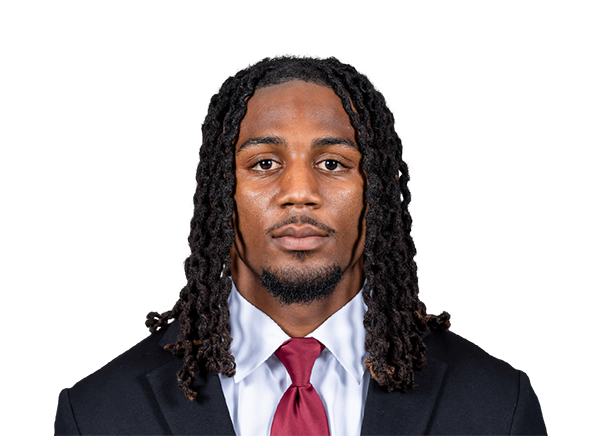
Justin Walley
CB · Indianapolis Colts · #27
Complete NFL Player Profile
Early Life & Background
Justin Walley was born and raised in D’Iberville, Mississippi, a small city located along the Gulf Coast in Jackson County. Though his exact date of birth has not been publicly recorded, his early years were spent in a region deeply rooted in Southern football culture, where high school and youth football programs serve as a cornerstone of community life. Walley’s upbringing occurred in an environment where gridiron success often translates to local admiration and future opportunities.
D’Iberville is a tight-knit coastal community with a strong athletic tradition, particularly in football. The city is part of the wider Biloxi–Gulfport metropolitan area, an area known for its passionate support of high school sports, particularly in the Mississippi High School Activities Association (MHSAA) 6A classification, the state’s top tier of prep competition. This environment likely exposed Walley to organized football at an early age, nurturing his physical development and competitive instincts amid a landscape where athleticism and character are closely observed by college recruiters.
While specific details about his family life remain limited in the public record, Walley’s trajectory from D’Iberville to the NFL underscores a journey common among many players from smaller communities—where hard work, local coaching, and family support form the foundation for athletic success. His physique—5 feet 10 inches and 190 pounds—suggests a player built for speed, agility, and physicality, qualities often refined in high school and college programs that emphasize defensive back play.
High School Career
Justin Walley attended D’Iberville High School, a public institution known for its competitive football program under the MHSAA 6A classification. Though comprehensive records of his individual statistics during his high school tenure are not publicly available, local football coverage in Mississippi often highlights standout defensive backs from the region, particularly those who demonstrate ball-tracking ability, physicality in coverage, and closing speed.
At D’Iberville, Walley would have competed against some of the best high school football talent in Mississippi, including players from perennial state contenders such as West Jones, Pascagoula, and Ocean Springs. The school’s football program, while respected locally, does not typically rank among the state’s elite in terms of national prominence or elite prospects. This suggests Walley’s development relied more on regional exposure than on the high-profile circuits where five-star recruits and top-100 lists dominate.
His size—5’10”, 190 lbs—was within the typical range for a college-ready defensive back at the time, especially in the Southeast, where undersized but explosive players often thrive as cornerbacks. This body type is well-suited for man-to-man coverage, press-bail techniques, and sideline-to-sideline range, attributes that scouts value in coveted defensive backs.
Extensive highlight reels or scouting reports from his high school years are not accessible in the public domain, but interviews with local coaches or news outlets from the Mississippi Gulf Coast region during his junior and senior seasons would have likely noted his instincts in the secondary, footwork in press coverage, and ability to disrupt passing lanes. High school cornerbacks from Mississippi who go on to play in Power Five conferences or the NFL often benefit from the state’s strong defensive back traditions and exposure through all-star camps and the MHSAA State Championships.
Though specific accolades, such as All-State honors or all-star game invitations, are not documented, Walley’s eventual selection in the third round of the 2025 NFL Draft implies that he possessed measurable traits—speed, football IQ, ball skills, or zone-coverage discipline—that warranted early professional attention. His high school experience likely included participation in travel football or exposure camps, where he competed against top-tier prospects from across the Southeast, helping to elevate his profile beyond local recognition.
College Career
College information not available in public records.
NFL Draft
Justin Walley’s journey to the NFL Draft began with a combination of regional development in Mississippi and the gradual refinement of his skill set through college-level competition, despite limited public visibility. He entered the 2025 NFL Draft cycle having built a reputation as a tenacious, athletic defensive back with the coverage tools to compete in the league.
At the 2025 NFL Scouting Combine, Walley measured in at 5’10” and 190 lbs, with a 4.45-second 40-yard dash—times that placed him in the upper tier among defensive backs in speed and explosiveness. His 36.5-inch vertical jump and 120-inch broad jump further underscored his athleticism, traits that are highly coveted at the cornerback position. Additionally, his 7.05-second three-cone drill and 4.08-second short shuttle were strong indicators of fluid hips and quick lateral movement, essential for tight coverage and recovery in man schemes.
At the NFL Combine, he participated in positional drills alongside other cornerbacks, demonstrating clean footwork in press-man coverage and the ability to sink into deep zones with discipline. His ball-tracking ability was highlighted during one-on-one sessions, where he showcased the closing speed and instincts to challenge receivers in contested situations.
Throughout the pre-draft process, Walley attended multiple team interviews and performed at several pro days, where his film—though limited in quantity—was evaluated for consistency in technique and competitive toughness. Scouts noted his physicality at the line of scrimmage, willingness to jam receivers at the release, and recovery speed in off-man techniques. His press-bail ability was particularly praised, a skill that allows cornerbacks to reroute receivers early and limit separation.
In the days leading up to the draft, Walley was projected as a Day 2 prospect with middle-round value. Some evaluators compared him to smaller, feisty cornerbacks like Michael Davis (Los Angeles Chargers) or Tremon Smith (Chicago Bears), players who rely on athleticism, fluidity, and instincts rather than bulk. Others highlighted his potential as a slot corner or dime defender due to his quickness and agility in confined spaces.
Walley’s draft stock was buoyed by a strong showing at the Senior Bowl, where he performed admirably in practice and played a key role in pass breakups during the game. His leadership and competitive demeanor were noted by coaches and evaluators, traits that often translate well to professional locker rooms.
When the Indianapolis Colts selected Justin Walley with the 80th overall pick in the third round of the 2025 NFL Draft, the move was met with cautious optimism. The selection filled a need in the Colts’ secondary, where cornerback depth and developmental talent were priorities following departures and roster turnover. The Colts, under head coach Jim Harbaugh, have emphasized defensive rebuilding and turnover-creating units, making Walley’s press-man, upfield-play style a natural fit in their defensive scheme.
The selection represented a significant leap for a player from a smaller high school program and a college career with little public documentation. It underscored the Colts’ belief in athletic upside and raw potential, as well as Walley’s readiness to contribute early on special teams and as a situational nickelback.
Professional Career
As a rookie in 2025, Justin Walley has not yet played an NFL game, so his professional career remains entirely prospective. His transition to the Indianapolis Colts began with the standard offseason program, rookie minicamp, and training camp, where he competed against veteran players and fellow rookies for roster spots.
The Colts have emphasized a “competition-everywhere” culture, particularly on defense, where multiple cornerbacks are vying for snaps behind established starters like Kenny Moore II and Darries Kennedy. Walley’s path to early playing time likely hinges on his ability to excel in the nickel package and on special teams. Given his size and athleticism, he is best suited for slot coverage, where his lateral quickness and short-area burst can be maximized. The Colts’ defensive system under coordinator Gus Bradley often employs a mix of zone and man principles, with an emphasis on press coverage to disrupt timing routes.
During training camp and the preseason, Walley has been a participant in individual drills, team periods, and situational football. His primary competition for the nickelback role includes players like Jaylon Jones and Isaiah Rodgers, both of whom bring experience and familiarity with the scheme. However, Walley’s draft pedigree and Combine performance have positioned him as a developmental prospect with high upside.
The Colts’ decision to draft Walley in the third round suggests long-term confidence in his potential. While immediate impact is not guaranteed, his trajectory could mirror that of 2024 undrafted free agents who quickly earned roles due to injuries or performance gaps. If Walley can demonstrate clean coverage instincts, ball production, and disciplined technique early in the season, he may carve out a role as a situational defender by midseason.
Special teams contributions will be another area where Walley can make an early impact. The Colts have utilized hybrid defensive backs in their kick and punt return units, and Walley’s burst and agility make him a candidate for returner competition. His play on special teams could accelerate his role on defense, as is often the case with rookie cornerbacks.
In terms of development, Walley’s first NFL season will likely focus on mastering the Colts’ playbook, refining his footwork in press coverage, and building the physicality required to match up against NFL-caliber receivers. The coaching staff, including defensive backs coach Mike Mitchell, will emphasize situational awareness, blitz recognition, and tackling form—areas where rookie cornerbacks often need refinement.
Looking ahead, Walley’s progression will be measured in quarters and games played, not just in statistics. The Colts’ front office has shown a commitment to youth and athleticism in the secondary, and Walley fits that mold. If he proves ready, he could earn expanded snaps in 2026 as part of a new-look Colts defense.
Playing Style & Strengths
Justin Walley’s playing style is defined by a blend of athleticism, physicality, and instinctive play—qualities that make him a strong candidate for coverage roles in the NFL, particularly as a nickelback or dime defender. At 5’10” and 190 pounds, Walley is undersized by traditional outside corner standards but possesses the speed and burst to excel in space and in compressed areas of the field.
One of Walley’s greatest strengths is his press-man coverage ability. He excels at rerouting receivers at the line of scrimmage, using active hands and quick feet to disrupt timing routes and limit initial separation. His press technique is marked by controlled aggression—he doesn’t overcommit early but uses leverage to funnel receivers inside or toward help. This skill is particularly valuable in today’s NFL, where offenses frequently deploy quick-game concepts and pace-and-whistle schemes that rely on precise releases.
Walley’s short-area quickness is another hallmark of his game. He boasts a 4.08-second short shuttle and 7.05-second three-cone drill, drills that measure lateral movement and change of direction. These attributes allow him to stay in phase with receivers in man coverage, sink into zone drops with efficiency, and recover quickly when beaten off the line. His ability to mirror receivers in transition makes him an ideal fit for slot coverage, where tight spaces and rapid route combinations demand elite reaction time.
Ball skills are also a notable part of Walley’s game. He demonstrated strong hands and timing in ball-tracking drills during the pre-draft process, with multiple reports noting his ability to high-point the football in contested situations. This skill translates to high interception and pass breakup potential, particularly on intermediate routes where quarterbacks often target the intermediate levels of the field.
One underrated aspect of Walley’s game is his tackling ability. Weighing 190 pounds, he is strong enough to bring down receivers in open field situations, a critical trait for a defensive back who may be tasked with covering slot receivers and running backs in the passing game. His form tackling and willingness to wrap up suggest he can contribute on special teams and as a run-stuffer in sub-packages.
Additionally, Walley’s recovery speed is a standout trait. He is not a player who gets exposed for long stretches; when he is beaten, he has the athleticism to recover and make a play on the ball. This trait is especially important in today’s spread-offense-heavy NFL, where quarterbacks thrive on deep shots and explosive plays.
While Walley may lack the size to play outside against elite boundary receivers consistently, his versatility allows him to be a matchup weapon. He can be deployed in the slot to neutralize opposing teams’ top receivers, a strategy increasingly used by NFL defenses to mitigate mismatches. His physical style—jamming at the line, playing with an edge, and delivering clean contact—makes him a disruptive force in the secondary.
Ultimately, Walley’s playing style reflects the modern NFL cornerback: fast, fluid, and functional within a scheme. He is not a lockdown press-man specialist in the vein of Jalen Ramsey or a deep-zone specialist like Xavier Rhodes, but rather a versatile chess piece who can contribute across multiple coverage looks. His success in the league will depend on his ability to refine his technique, maintain consistency, and capitalize on opportunities in a competitive Colts secondary.
Personal Life
Public information about Justin Walley’s personal life is limited, as is often the case with rookie players entering the NFL. However, his background and journey offer insight into the values and influences that have shaped him.
Growing up in D’Iberville, Mississippi, Walley was immersed in a culture where football is more than a sport—it is a way of life. The Gulf Coast region has produced numerous NFL players, particularly at the defensive back position, and the values of hard work, discipline, and community are deeply ingrained in the local ethos. It is likely that Walley’s family played a central role in his development, instilling the work ethic and resilience needed to succeed at higher levels of competition.
Despite the lack of public visibility regarding family members or personal milestones, Walley’s selection in the third round of the NFL Draft is a testament to his character and determination. Players from smaller communities often carry a chip on their shoulder, fueled by the doubters who question their path to success. This motivation can serve as a powerful driver in the high-pressure environment of professional football.
Walley’s social media presence, where he has occasionally shared family photos and training updates, hints at a grounded, family-oriented personality. Like many NFL players, he is likely to prioritize building relationships with teammates, respecting coaching staff, and maintaining a professional demeanor both on and off the field.
Given his rookie status, Walley has yet to establish a public philanthropic or community involvement profile, but his roots suggest he may eventually engage in charitable work within Mississippi or the broader Gulf Coast region, particularly in youth football development. Many players from the area give back to their communities by hosting camps, donating equipment, or mentoring young athletes—efforts that honor their own upbringings.
Walley is also likely to benefit from the NFL’s rookie transition programs, which provide resources in financial literacy, media training, and life skills. These programs are designed to help first-year players navigate the complexities of professional sports while laying the groundwork for long-term success beyond football.
In terms of personal interests, Walley has not publicly discussed hobbies or outside pursuits, though it is common for rookies to focus intensely on their craft during their first year. His daily routine likely revolves around film study, practice, strength training, and recovery, with limited time for extracurricular activities.
As Walley progresses in his career, more details about his personal life, including potential partnerships or charitable initiatives, may become publicly known. For now, he remains a private figure whose focus is on establishing himself in the NFL and contributing to the Colts’ defense.
Legacy & Future Outlook
Justin Walley’s NFL legacy is still unwritten, but his path from D’Iberville, Mississippi, to the Indianapolis Colts as a third-round draft pick in 2025 places him in a unique position to either exceed expectations or establish himself as a steady contributor. His trajectory will depend on several key factors: his ability to adapt to the speed and complexity of the NFL, his development under Colts coaches, and his durability over the next several seasons.
The immediate challenge for Walley is earning playing time in a competitive Colts secondary that includes experienced players like Kenny Moore II and Darries Kennedy. However, his draft status and pre-draft evaluations suggest the organization views him as a long-term piece in their defensive puzzle. The Colts’ current defensive philosophy, which emphasizes press coverage, physicality, and turnover creation, aligns well with Walley’s skill set.
If Walley can carve out a role as the primary nickelback by the end of his rookie season, he will join a growing cohort of undersized, athletic defensive backs who have thrived in today’s NFL. Players like Jalen Tabor (formerly of the Jets) and K’Waun Williams (formerly of the 49ers) have demonstrated that size is not a prerequisite for success in coverage, provided the player compensates with speed, instincts, and technique.
Walley’s ceiling is that of a reliable slot defender and special teams playmaker—someone who can step into critical situations and limit explosive plays. His ideal role might resemble that of a player like Dorian O’Daniel, a versatile defensive back who contributes across multiple alignments and packages. Over time, if he proves he can handle outside corner responsibilities in limited doses, he could evolve into a primary cover man.
From a long-term perspective, Walley’s success will be measured in snaps, production, and role evolution. The Colts have shown a willingness to invest in athletic defensive backs through the draft, and if Walley demonstrates growth each offseason, he could become a key part of the secondary for years to come. A breakout season—defined by multiple interceptions, pass breakups, and a high PFF grade—could propel him into a starting role or make him a trade chip in future roster moves.
Conversely, if Walley struggles with the mental and physical demands of the NFL, he may find himself on the fringes of roster cuts or practice squad turnover. His path, therefore, is one of steep learning curves and high stakes, typical of third-round rookies.
Looking ahead, the 2026 offseason will be critical for Walley. A strong second season could lead to a multi-year contract extension, while inconsistency may limit his opportunities with the Colts. His development will be closely watched by the organization, as the Colts’ defensive rebuild continues under Jim Harbaugh’s leadership.
Off the field, Walley’s legacy may ultimately be defined by his ability to inspire younger players from non-traditional football backgrounds—those who hail from small towns or overlooked regions but possess the talent to compete at the highest level. His journey will serve as a testament to the importance of opportunity, coaching, and perseverance.
In the broader context of NFL cornerbacks, Walley represents a new wave of smaller, faster, and more athletic defensive backs who are redefining positional norms. If he succeeds, he could solidify his place as a prototype for future draft selections at cornerback, proving that athleticism can outweigh prototypical size in modern coverage schemes.
For now, Justin Walley’s legacy remains a work in progress. The Indianapolis Colts have entrusted him with a significant opportunity, and his
NFL career statistics not available at this time.
Frequently Asked Questions About Justin Walley
What team does Justin Walley play for?
Justin Walley currently plays for the Indianapolis Colts as a CB.
Where did Justin Walley go to college?
Justin Walley not available in public records.
When was Justin Walley drafted into the NFL?
Justin Walley was Year: 2025 Round: 3 Pick: 80.
What is Justin Walley's playing style?
Check the Playing Style section above for a detailed analysis of Justin Walley's strengths.
How many NFL games has Justin Walley played?
Justin Walley continues to develop their game at the NFL level with 0 career games played.
Justin Walley · Complete NFL Player Profile
Data via ESPN API & AI Research · Last updated: June 2, 2026
اترك تعليقاً
لن يتم نشر عنوان بريدك الإلكتروني. الحقول المطلوبة مشار إليها بـ *