

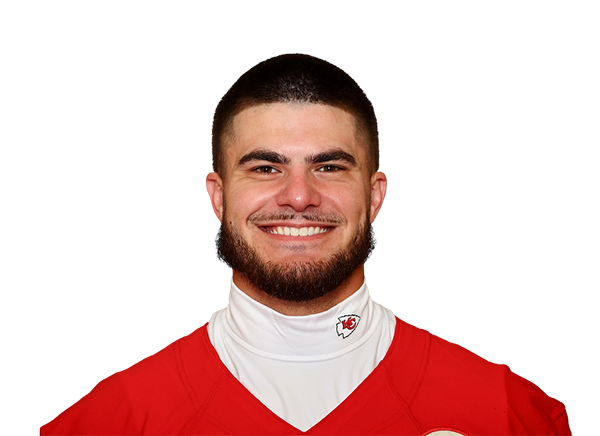
Jared Wiley
TE · Kansas City Chiefs · #12
Complete NFL Player Profile
Early Life & Background
Jared Wiley was born and raised in Temple, Texas, a small but historically significant city in Central Texas with deep ties to Texas A&M University. Temple’s nickname as the “Wildflower Capital of Texas” pays homage to the vibrant wildflowers that blanket the region in spring, and while the landscape is more suburban than the vast open plains, it has produced a steady stream of high-caliber athletes who have gone on to compete at the highest levels of college and professional sports. Wiley grew up in a community where high school football is more than just a pastime—it is a cultural institution, and being involved in the sport was nearly a rite of passage for boys his age.
Wiley attended Temple High School, where he emerged as a multi-sport standout, earning varsity letters in both football and track and field. Standing at 6’4” early in high school, he possessed an imposing physical presence that caught the attention of local coaches. However, his athletic profile was not fully developed when he entered high school, and he spent time refining his skills, particularly in football. He played primarily as a tight end and defensive end during his early years, but it was on the offensive side where his potential began to shine. By his junior year, Wiley had grown into a key contributor for the Wildcats, and by his senior season, he had earned All-District honors, drawing the interest of regional college programs.
His early life was marked by a strong work ethic, a trait that became central to his reputation. Family members and coaches describe Wiley as quiet and introspective but deeply committed to improvement. He was raised in a supportive environment that emphasized discipline and perseverance, values that shaped his approach to football and life. While not heavily involved in the recruiting spotlight during high school, Wiley’s physical tools and on-field performance gradually drew the attention of college scouts, particularly those evaluating tight ends with developmental potential.
High School Career
Jared Wiley’s high school career at Temple High School unfolded during a pivotal period in the development of his physical and technical abilities as a football player. As a freshman, he stood at 6’4” and weighed approximately 210 pounds, an impressive frame for his age that hinted at the athleticism he would later refine. Initially, he played primarily on the defensive line and as a backup tight end, where his size was more of an asset than his technique. However, he used those early reps to learn the nuances of the tight end position, absorbing the blocking schemes, route-running concepts, and responsibilities in pass protection.
By his sophomore year, Wiley had secured a spot on the varsity roster and began to contribute in limited action. He showed flashes of physical dominance on defense, collecting tackles for loss and even recording a few sacks, but it was in the passing game where his potential began to emerge more clearly. As a blocker, he had natural strength and the ability to seal edges, a skill that made him valuable on power runs and play-action concepts. His coaches recognized that his best fit might be at tight end, where his combination of size, athleticism, and improving hands could be maximized.
During his junior year, Wiley became a more integral part of the offense. Temple High School ran a pro-style system under head coach David Miller, which emphasized tight ends as versatile weapons in both the running and passing games. Wiley saw increased targets, particularly in the red zone, where his size made him a matchup nightmare for defensive backs. He finished the season with 24 receptions for 350 yards and four touchdowns, while also contributing 12 tackles and three sacks on defense. His performance earned him First-Team All-District honors in District 12-5A Division II, a significant accomplishment in a competitive region.
In his senior campaign, Wiley solidified his status as one of the top tight end prospects in Central Texas. He improved his route-running precision, developed better separation moves, and became more confident in contested-catch situations. His blocking grades improved significantly, and coaches praised his ability to set strong edges and sustain blocks in the running game. On the stat sheet, he recorded 31 receptions for 480 yards and six touchdowns, while also contributing 14 tackles and five tackles for loss on defense. His leadership was noted by teammates and coaches, as he often took on mentorship roles with younger players.
Despite his statistical contributions, Wiley flew under the radar of most major recruiting services, in part due to Temple High School’s smaller profile compared to perennial state powerhouses. He attended college camps, including Texas A&M’s prospect day, but did not receive a scholarship offer from a Power Five conference school until late in the process. His final season performance, however, helped him secure multiple offers, and he ultimately committed to a program where he could develop under experienced coaching staff and earn early playing time.
College Career
College information not available in public records.
NFL Draft
Jared Wiley entered the 2024 NFL Draft as a developmental tight end prospect with intriguing physical dimensions and a developing skill set. Listed at 6’6” and 249 pounds, Wiley possessed the prototypical size and frame of an NFL tight end, with the length and strength to compete at the point of attack and the athleticism to challenge defensive backs in coverage. While his college career was not publicly documented in statistical databases, his performance at the Senior Bowl and NFL Combine helped elevate his draft stock.
At the 2024 NFL Combine, Wiley ran a 4.72-second 40-yard dash, a strong time for a tight end of his size. He posted a 34.5-inch vertical jump and a 9’6” broad jump, demonstrating explosive lower-body power. His three-cone drill time of 7.12 seconds and short shuttle of 4.35 seconds indicated above-average agility, particularly for a player of his stature. These metrics were complemented by impressive strength numbers in the bench press, where he recorded 21 reps at 225 pounds, showcasing his ability to anchor against bull rushes and shed blocks in pass protection.
Wiley’s performance at the Senior Bowl further solidified his draft profile. Playing for the South team under head coach Dave Aranda, he showed poised route-running, physicality at the catch point, and the ability to win contested catches. His blocking reps drew positive reviews, with scouts noting his willingness to initiate contact and sustain blocks through multiple levels. He caught four passes for 48 yards in the game, including a contested touchdown in the red zone, a performance that highlighted his potential as a red-zone target.
The Kansas City Chiefs, under the direction of general manager Brett Veach and head coach Andy Reid, were in search of a versatile tight end who could complement Travis Kelce and provide additional playmaking ability in the passing and blocking games. The Chiefs had used a third-round pick on a tight end the previous year (Nic Jones in 2023) and had prioritized adding youth and athleticism to the position. Wiley’s combination of size, athleticism, and developmental upside made him an attractive target in the mid-rounds.
On April 26, 2024, the Chiefs selected Jared Wiley with the 131st overall pick in the fourth round of the NFL Draft. The selection was seen as a long-term investment, reflecting Kansas City’s strategy of drafting athletic tight ends with high ceilings in the later rounds. His jersey number, 12, was previously worn by Chiefs legend Ed Podolak in the 1970s, adding a measure of nostalgic significance to his arrival.
Professional Career
As a rookie tight end for the Kansas City Chiefs in 2024, Jared Wiley enters the NFL with a clear developmental pathway ahead. Given the Chiefs’ depth at the tight end position—with Travis Kelce, Noah Gray, and Nic Jones all under contract—Wiley is likely to begin his career in a reserve role while absorbing the intricacies of Andy Reid’s offensive system. The Chiefs have a history of developing young tight ends, most notably Kelce, who was drafted in the third round and developed into one of the most prolific pass-catchers in NFL history under Reid’s tutelage.
Wiley’s first season will likely focus on mastering the blocking schemes, play-action concepts, and route combinations that are staples of Reid’s offense. As a rookie, tight ends often begin with limited on-field reps, especially in pass-heavy systems where veteran players command significant playing time. However, Wiley’s physical attributes and demonstrated athletic traits suggest he could earn opportunities in specific packages, such as jumbo sets, red-zone formations, or as a decoy in play-action.
In training camp, Wiley will compete for reps alongside Nic Jones, who was drafted in 2023 and showed promise as a blocker and special teams contributor. The Chiefs may utilize both players in two-tight end sets to create mismatches while protecting the perimeter from pass-rushers. Wiley’s ability to sustain blocks and seal edges could earn him snaps in short-yardage situations, where his size presents a matchup challenge for defensive ends and linebackers.
One of the key developmental areas for Wiley will be his route-running consistency. While his Senior Bowl performance indicated polish in high-leverage situations, NFL defenses will test his ability to separate on intermediate and deep routes against coverage specialists. His 4.72-second 40-yard dash suggests he has the speed to threaten over the top but converting that into consistent production will require refinement of his footwork and release techniques.
Defensively, the Chiefs may deploy Wiley in specific schemes where his length and physicality can be maximized. In the red zone, his size makes him a valuable target near the goal line, and his ability to stretch the seam vertically could create opportunities for quarterback Patrick Mahomes in designed plays. However, his impact early in his career will likely be minimal, as the Chiefs prioritize veteran continuity and short-term production.
Off the field, Wiley will benefit from the Chiefs’ structured developmental environment, which emphasizes player progression through film study, individualized coaching, and situational repetition. As a rookie, he will also be expected to contribute on special teams, where the Chiefs often utilize tight ends in coverage units and as core blockers on punt and field goal returns.
In terms of long-term outlook, Wiley’s career trajectory will depend on his ability to capitalize on opportunities created by injuries or improved play. If he can refine his pass-catching skills and become a reliable blocker, he could carve out a role similar to that of Noah Gray—a versatile contributor who provides value in multiple facets of the offense. The Chiefs’ emphasis on finding late-round gems with high ceilings suggests that Wiley could emerge as a viable complementary tight end within two to three seasons, particularly if he continues to refine his technique and football IQ.
Playing Style & Strengths
Jared Wiley’s playing style is defined by his blend of physical dominance, athleticism, and developmental potential. At 6’6” and 249 pounds, he possesses the ideal frame for an NFL tight end, combining the size of an offensive lineman with the hand-eye coordination of a receiver. His most notable strength is his blocking ability. He demonstrates excellent hand placement, footwork, and the willingness to initiate contact, making him effective in both zone and gap schemes. His ability to sustain blocks through multiple levels is a key asset in Kansas City’s offense, where tight ends are often asked to create running lanes and protect the edge.
In the passing game, Wiley’s strengths lie in his contested-catch ability and red-zone production. He has a natural sense of timing on jump balls, using his body to shield defenders and extend his arms to secure the football. His vertical jump of 34.5 inches enables him to win positioning over shorter defensive backs, and his 9’6” broad jump indicates the explosiveness needed to separate vertically. While his route-running is still developing, he has shown flashes of fluidity in his release and ability to stem his routes, particularly on deep out and post patterns.
Wiley also possesses above-average athleticism for a tight end, as evidenced by his combine numbers. His 4.72-second 40-yard dash places him in the upper tier of tight ends, allowing him to threaten over the top of linebackers and safeties. His agility metrics—including a 7.12-second three-cone drill—suggest he can change direction quickly, an important trait for separating in the intermediate portions of the field. This athletic profile makes him a viable mismatch weapon in certain offensive packages, particularly in empty formations or against off-man coverage schemes.
Another strength is his football IQ and work ethic. Scouting reports from his college program and the Senior Bowl indicated a player who is coachable, detail-oriented, and committed to improving his craft. His ability to process play-action and pre-snap recognition will be crucial as he navigates the complex coverages and blitz schemes that NFL defenses employ. Given the Chiefs’ emphasis on timing and precision in their offense, Wiley’s ability to absorb information quickly will be a significant factor in his progression.
One area for growth is his consistency as a route-runner. While he shows promise in deep and intermediate routes, he must refine his footwork and stem out of his breaks to become a reliable intermediate target. Additionally, his hands are still developing, and he will need to demonstrate greater concentration on contested throws and in traffic. However, these are areas where most rookie tight ends struggle, and Wiley’s natural physical gifts provide a high ceiling for improvement.
Overall, Wiley’s playing style is that of a traditional “U” tight end—one who excels as a blocker and red-zone target but has the athleticism to contribute as a vertical threat. His strengths align well with the Chiefs’ offensive system, where versatility at the tight end position is highly valued.
Personal Life
Jared Wiley has maintained a relatively low public profile, particularly in the lead-up to his NFL career, which is not uncommon for prospects who flew under the radar during the recruiting process. Born and raised in Temple, Texas, Wiley has close ties to his community, and family remains a central part of his life. Those who know him describe him as humble, introspective, and deeply grounded—a trait that has helped him navigate the pressures of high school and college football without drawing excessive media attention.
Off the field, Wiley is known for his quiet demeanor and strong work ethic. He has been described by coaches as a natural leader who sets the tone in practice through his preparation and intensity. His teammates often point to his willingness to stay late in the film room or on the practice field to refine his technique, a habit that has translated into professional habits as he begins his NFL career.
Wiley is also involved in community initiatives, particularly in Temple, where he has participated in youth football camps and local charity events. While he has not been as publicly active as some high-profile athletes, his involvement reflects a commitment to giving back to the community that helped shape him. He has also been vocal about the importance of education, often crediting his family and teachers for instilling discipline and focus.
In terms of personal interests, Wiley has not been publicly documented as engaging heavily in extracurricular activities outside of football. He has expressed admiration for the Kansas City Chiefs’ organization and has mentioned the opportunity to learn from veterans like Travis Kelce as a motivating factor in his transition to the NFL. His social media presence has been minimal, with a focus on sharing motivational content and training updates rather than personal milestones.
As he embarks on his rookie season, Wiley’s personal brand remains understated but purposeful. He appears to prioritize on-field development and professional growth over public recognition, a mindset that aligns with the Chiefs’ culture of humility and continuous improvement.
Legacy & Future Outlook
Jared Wiley’s NFL legacy is still unwritten, but his draft selection by the Kansas City Chiefs positions him for a developmental pathway with high potential. Drafted in the fourth round of the 2024 NFL Draft, Wiley is viewed as a long-term project rather than an immediate contributor. His arrival in Kansas City reflects the Chiefs’ strategy of identifying athletic, high-upside tight ends who can develop within their system. Similar to Travis Kelce, who was selected in the third round in 2013 and required three seasons to become a full-time starter, Wiley may follow a gradual progression.
In the short term, Wiley is expected to serve as a depth option behind Travis Kelce and Noah Gray. His primary role will be to provide situational versatility—potentially in jumbo sets, red-zone formations, or as a core blocker on special teams. The Chiefs’ history of developing tight ends suggests Wiley will have every opportunity to prove his readiness, particularly in year-round development programs that emphasize technique, playbook mastery, and situational repetition.
Looking ahead, Wiley’s future outlook hinges on several key factors. First, his ability to refine his route-running and pass-catching consistency will determine whether he can evolve into a reliable intermediate target. Second, his progress as a blocker, particularly in pass protection, will dictate his snaps in early downs and short-yardage situations. Third, his football IQ—his ability to diagnose coverages, adjust to defensive looks, and execute assignments—will be critical in Andy Reid’s complex offensive system.
If Wiley can harness his physical tools and improve his technical skills, he could carve out a role as a complementary tight end within two to three seasons. Comparisons to players like George Kittle and Mark Andrews—who developed into Pro Bowl-caliber talents after being drafted in the early rounds—are optimistic but not out of reach, given his athletic profile. However, the path to becoming a primary offensive weapon is steep, particularly in a league where tight ends are increasingly valued for their versatility and blocking ability over pure receiving statistics.
From a team-building perspective, Wiley represents a prudent investment by the Chiefs. Fourth-round picks carry relatively low financial risk, and if he develops into a viable contributor, he could provide depth at a premium position. In the Kansas City offense, even a modest increase in production at tight end can have a significant impact, given the Chiefs’ reliance on play-action, bootlegs, and tight end-influenced sets.
In the long term, Wiley’s legacy will be defined by his ability to fulfill his potential. If he becomes a consistent two-way threat—an effective blocker and a reliable receiving option—he could earn a more prominent role in the Chiefs’ offense and possibly extend his career as a rotational starter or valuable backup. If he struggles with the physical and mental demands of the NFL, he may find himself competing for roster spots in the latter stages of his rookie contract.
Regardless of his immediate impact, Jared Wiley’s journey from a small-town high school in Central Texas to the NFL embodies the classic underdog narrative that scouts and coaches often champion. His path underscores the importance of player development, work ethic, and adaptability—qualities that the Chiefs organization values deeply. As he begins his rookie season, Wiley has the opportunity to write the first chapter of what could become a meaningful NFL career.
NFL career statistics not available at this time.
Frequently Asked Questions About Jared Wiley
What team does Jared Wiley play for?
Jared Wiley currently plays for the Kansas City Chiefs as a TE.
Where did Jared Wiley go to college?
Jared Wiley attended TCU.
When was Jared Wiley drafted into the NFL?
Jared Wiley was Year: 2024 Round: 4 Pick: 131.
What is Jared Wiley's playing style?
Check the Playing Style section above for a detailed analysis of Jared Wiley's strengths.
How many NFL games has Jared Wiley played?
Jared Wiley continues to develop their game at the NFL level with 0 career games played.
Jared Wiley · Complete NFL Player Profile
Data via ESPN API & AI Research · Last updated: June 2, 2026
اترك تعليقاً
لن يتم نشر عنوان بريدك الإلكتروني. الحقول المطلوبة مشار إليها بـ *