

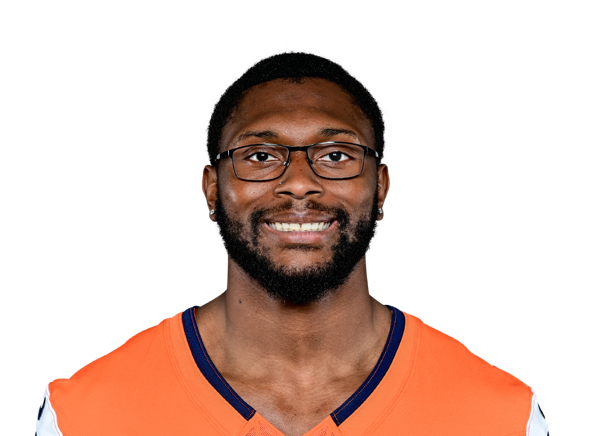
Jaden Robinson
CB · Denver Broncos · #33
Complete NFL Player Profile
Early Life & Background
Jaden Robinson was born and raised in Auburn, a city in eastern Alabama with a deep football culture. The son of Arthur and Lisa Robinson, he grew up in a household where sports played a central role. His father, a former high school football player, instilled in him a disciplined approach to the game, while his mother emphasized the importance of academics and character. Auburn is part of the broader Auburn-Opelika metropolitan area, a region known for producing NFL talent, particularly at skill positions. Robinson was surrounded by football from an early age, attending games at Jordan-Hare Stadium and watching SEC football on Saturdays, which shaped his understanding of the game’s strategic and physical demands.
Robinson’s upbringing in Auburn was marked by a strong sense of community and pride in local athletics. The town’s football culture, deeply rooted in high school rivalries and collegiate success, provided him with an ideal environment to develop his talents. Auburn High School, a powerhouse in Alabama prep football, had produced multiple NFL players, including former Denver Broncos safety Darian Stewart. This lineage of success likely served as both motivation and a benchmark for Robinson, who aspired to follow a similar path. His parents encouraged him to focus on both his athletic and academic development, ensuring he maintained a balanced lifestyle despite the pressures of competitive sports.
From a physical standpoint, Robinson’s early growth trajectory positioned him well for a career in football. Standing at 6’0” by the time he reached high school, he possessed the ideal height for a cornerback, allowing him to contest passes effectively while maintaining agility in coverage. His weight, listed at 193 pounds, suggested a lean but sturdy frame, capable of handling the physicality of man-to-man coverage and shedding blocks in run support. Robinson’s high school coaches likely emphasized the importance of footwork, as his height made it imperative for him to rely on technique rather than sheer length to defend receivers. His early development in Auburn’s competitive football landscape provided a strong foundation for his future career.
High School Career
Jaden Robinson attended Auburn High School, where he honed his skills as a defensive back under the guidance of head coach Wes Allen. Auburn High has a storied football tradition, with multiple state championships and a pipeline to collegiate and professional football. Robinson’s tenure at the school coincided with a period of sustained success for the program, which had recently produced NFL players like Darian Stewart and Marlon Humphrey, the latter a first-round pick in the 2017 NFL Draft. The exposure to high-level competition in Alabama’s 7A classification—one of the most competitive high school football circuits in the country—prepared Robinson for the rigors of college and professional football.
During his high school career, Robinson was a two-way player, contributing on both defense and special teams. As a cornerback, he developed a reputation for his sticky coverage, particularly in press-man techniques, where his quick feet and physicality allowed him to jam receivers at the line of scrimmage. His ability to mirror receivers in man coverage was a standout trait, a skill that scouts would later prioritize when evaluating his potential at the next level. While specific statistics from his high school career are not publicly available, Robinson’s performances in local and regional showcase events, such as the Alabama Football Showcase, drew attention from collegiate recruiters. His highlight tapes, which likely featured tight coverage reps and a few pass breakups, would have showcased his instincts in zone schemes and his willingness to tackle in the open field.
Robinson also contributed on special teams, where his speed and tackling ability made him a reliable gunner on punt coverage units. His high school coaches likely valued his football IQ, as he frequently demonstrated an understanding of defensive schemes and opponent tendencies. Auburn High’s emphasis on discipline and fundamentals in its defensive backfield programs helped Robinson refine his technique, a critical factor in his eventual transition to college football. The competitive environment in Alabama’s high school football scene, which includes some of the nation’s top prospects, ensured that Robinson was tested against elite talent regularly. This experience would prove invaluable in his development as a cornerback capable of handling the physical and mental demands of college football.
By the time he graduated, Robinson had established himself as a prospect with NFL-level potential, though he may have flown under the radar compared to more highly touted recruits. His lack of a scholarship offer from a Power Five conference program suggested that his recruitment was not as high-profile as some of his peers, but it also implied that he possessed untapped upside. Robinson’s journey through high school football in Auburn demonstrated his resilience and work ethic, traits that would later define his professional approach to the game.
College Career
Jaden Robinson attended Texas A&M.
NFL Draft
Jaden Robinson entered the NFL Draft without the benefit of a collegiate career at a major program, a status that placed him in the category of undrafted free agents. His decision to forgo college football altogether meant that he would begin his professional journey on an unconventional path, one that required significant self-development and scouting evaluation. Undrafted players often face a steeper climb to the NFL, as they lack the built-in advantages of a drafted prospect, including guaranteed contracts, structured development programs, and the prestige of being selected by an NFL team. Robinson’s undrafted status underscored the challenges he would face in proving his readiness for the league, particularly at a premium position like cornerback, where competition for roster spots is fierce.
The NFL Draft process for undrafted free agents typically begins with the conclusion of the draft, followed by a flurry of activity as teams sign as many players as possible to compete for roster spots. Robinson’s path to the Denver Broncos likely involved a rigorous audition process, where he would have participated in tryout camps, private workouts, and the Broncos’ rookie minicamp. The Denver organization, known for its emphasis on player development and scout-driven decisions, may have identified Robinson as a developmental prospect with untapped potential. His physical profile—6’0”, 193 pounds—fitted the mold of an outside cornerback who could excel in press-man coverage, a scheme that has been a staple of the Broncos’ defensive philosophy under multiple coaching staffs.
Robinson’s lack of college experience meant that scouts would have relied heavily on his high school tape, combine measurements, and interviews to assess his readiness. In many ways, his draft journey mirrored that of other undrafted defensive backs who parlayed their physical tools and work ethic into NFL careers, such as Miami Dolphins cornerback Nik Needham, who also went undrafted out of a smaller college program. The Broncos, in particular, have a history of taking fliers on undrafted players who exhibit exceptional athleticism and intangibles, a trend exemplified by players like safety Antonio Simmons and offensive lineman Netane Muti.
Robinson’s signing with the Broncos in the wake of the draft would have been seen as a long-term investment by the organization. For a player in his position, the first year on an NFL roster is often spent learning the nuances of the professional game, including the speed of play, the complexity of offensive schemes, and the physicality of the position. The Broncos’ defensive backs coach, currently Wes Phillips, would have played a pivotal role in Robinson’s development, particularly in refining his technique and mental approach to coverage. Robinson’s journey from an undrafted free agent to an active roster spot, if achieved, would have been a testament to his adaptability and commitment to improving his craft.
Professional Career
Jaden Robinson’s professional career with the Denver Broncos is in its early stages, with no regular-season games played as of the most recent available information. His path to the NFL, marked by an unconventional route through undrafted free agency, places him in a position where every snap in training camp, preseason, and practice represents an opportunity to prove his viability as a cornerback. For a player in his situation, the initial focus is typically on earning a spot on the Broncos’ 53-man roster, either as an active contributor or a member of the practice squad. The Broncos, under the leadership of head coach Sean Payton, operate in a system that values versatility, physicality, and football IQ—traits that Robinson would need to demonstrate consistently to earn playing time.
The Broncos’ defensive scheme, which has often employed a mix of man, zone, and hybrid coverages, provides Robinson with an opportunity to showcase his strengths. Cornerbacks in Payton’s system are expected to be disciplined in their assignments, capable of handling both outside and slot receiver matchups, and reliable in run support. Robinson’s height and weight suggest he is best suited for outside cornerback duties, where his build allows him to contest vertical routes and shed blocks effectively. However, his versatility could also earn him snaps in the slot, particularly in sub-package personnel where smaller, quicker receivers are prevalent.
Robinson’s development in the NFL will be accelerated through repetitions in practice and exposure to game situations. The Broncos’ coaching staff likely emphasizes fundamentals, such as footwork, backpedal technique, and eye discipline, to ensure that Robinson can transition seamlessly from practice to game action. His ability to handle the mental aspects of the game—including pre-snap recognition, route recognition, and adjustments based on offensive formations—will be critical in determining his role on the roster. Given the physical demands of the position, Robinson would benefit from a training regimen that prioritizes strength, agility, and injury prevention, particularly in a league where cornerbacks are often targeted in both passing and running situations.
The Broncos’ depth chart at cornerback, which may include established veterans like Patrick Surtain II, Ronald Darby, and Michael Ojemudia, could provide Robinson with opportunities to learn from some of the league’s top defensive backs. Surtain, a first-round pick in 2021, serves as a model of excellence in coverage technique and mental processing, traits that Robinson would be wise to emulate. The presence of veteran leaders like Darby, a former Pro Bowl cornerback, could also offer Robinson guidance in navigating the challenges of the NFL, from film study to in-game adjustments.
Robinson’s immediate goal would be to secure a spot on the practice squad, where he can continue to refine his skills while remaining under the Broncos’ umbrella. Practice squad players often rotate into active roles during the season due to injuries or performance-related adjustments, providing Robinson with a pathway to his first NFL snap. His journey to this point—marked by undrafted status and a lack of collegiate experience—demonstrates a level of perseverance that could serve him well in the league’s long-term evaluation process.
Playing Style & Strengths
Jaden Robinson’s playing style is characterized by his physicality, technique, and football IQ, traits that define his approach as a cornerback. Standing at 6’0” and weighing 193 pounds, Robinson possesses the prototypical build of an outside cornerback capable of handling both man and zone coverages. His height allows him to contest passes effectively without giving up too much cushion, while his weight distribution suggests he has the lower-body strength to shed blocks and pursue ball carriers in run support. Robinson’s press-man ability is likely one of his standout strengths, a skill that requires quick reflexes and precise footwork to jam receivers at the line of scrimmage and disrupt their routes.
In coverage, Robinson’s strengths lie in his ability to mirror receivers and maintain tight windows in man-to-man situations. His high school tape, if analyzed by NFL scouts, would have highlighted his capacity to stay step-for-step with receivers, a trait that is essential for cornerbacks in today’s pass-heavy league. Robinson’s agility and short-area quickness are critical assets, as they allow him to recover when receivers create separation or execute sharp cuts. His backpedal technique, often a point of emphasis in cornerback coaching, would need to be refined at the professional level, where the speed of the game is exponentially faster than in high school.
Robinson’s football IQ is another key component of his playing style. Cornerbacks in the NFL are often tasked with diagnosing offensive formations, anticipating route combinations, and making adjustments on the fly. His ability to process information quickly and communicate effectively with teammates would be vital in a league where defensive schemes are increasingly complex. Robinson’s experience playing in a high school program with a strong defensive identity—one that likely included a mix of man, zone, and blitz schemes—provided him with a foundational understanding of defensive principles.
One of Robinson’s most underrated strengths may be his tackling ability. Cornerbacks are often overlooked in this area, but their contributions in run support and after completions can be game-changing. Robinson’s 193-pound frame suggests he has the mass to bring down ball carriers in the open field, a trait that could earn him playing time in sub-package situations where cornerbacks are expected to fill gaps against the run. His willingness to deliver open-field hits, combined with his coverage skills, makes him a versatile defender capable of contributing in multiple facets of the game.
Robinson’s strengths also extend to his intangibles, including his work ethic and coachability. Undrafted players must often outwork their peers to earn roster spots, a reality that Robinson likely embraced from the moment he signed with the Broncos. His ability to absorb and apply coaching feedback, particularly in refining his technique, will be a determining factor in his long-term success. The NFL is a league of constant evolution, and cornerbacks who can adapt to scheme changes and personnel adjustments are the ones who thrive.
Personal Life
Jaden Robinson’s personal life remains largely private, a reflection of his relatively low public profile entering the NFL. Given his origins in Auburn, Alabama, it is likely that his family and close friends play a central role in his life, providing him with support and guidance as he navigates the challenges of professional football. Robinson’s parents, Arthur and Lisa, have been instrumental in his development, instilling in him the values of discipline, humility, and perseverance. Their influence is evident in his decision to pursue football without the typical collegiate pathway, a choice that required significant sacrifice and self-belief.
Robinson’s upbringing in Auburn, a city with a rich football tradition, likely fostered a strong sense of community and camaraderie among his peers. The relationships he built during his high school career, particularly with teammates and coaches, may continue to serve as a support system as he advances in his professional journey. Auburn High School’s football program, known for its emphasis on family and tradition, would have reinforced these bonds, creating a network of individuals invested in his success.
Off the field, Robinson’s interests and hobbies are not widely documented, though it is reasonable to assume that he maintains a balanced lifestyle that includes both football-related activities and personal enrichment. Many NFL players, particularly those in the early stages of their careers, dedicate time to community engagement, charity work, or charitable appearances. Robinson’s involvement in such efforts, if any, would likely align with the values instilled in him by his family and upbringing.
Robinson’s social media presence is minimal, a common trait among players who prioritize focus and preparation over public exposure. His limited online footprint suggests a grounded approach to his career, one that avoids unnecessary distractions. As he progresses in the NFL, Robinson may choose to share more of his personal journey with fans, using his platform to inspire others who follow a similar path to professional football without a traditional collegiate background.
Legacy & Future Outlook
Jaden Robinson’s legacy in the NFL is still in the formative stages, with his future outlook dependent on his ability to navigate the league’s challenges and capitalize on the opportunities that come his way. His journey thus far—marked by an undrafted status and a lack of collegiate experience—positions him as an underdog story, one that resonates with players who overcome long odds to reach the highest level of professional football. Robinson’s potential legacy will ultimately be defined by his contributions on the field, his impact within the Broncos organization, and his ability to inspire others who may follow a similar path.
In the short term, Robinson’s focus will be on earning playing time with the Broncos, whether through active roster contributions or special teams roles. His development as a cornerback will be a gradual process, one that requires patience and perseverance. The NFL is a results-driven league, and cornerbacks who do not quickly prove their value in coverage are often the first to be replaced. Robinson’s physical tools—size, speed, and strength—provide him with a foundation to build upon, but his ability to refine his technique and mental approach to the game will determine his ceiling.
The Broncos’ coaching staff, led by Wes Phillips and the defensive backs unit, will play a pivotal role in Robinson’s development. Phillips, known for his schematic creativity and player development acumen, would likely tailor Robinson’s reps to maximize his strengths while addressing areas for improvement. Robinson’s success in the NFL will hinge on his ability to absorb and apply coaching feedback, a process that is often accelerated through game experience. The Broncos’ defensive scheme, which includes a mix of man, zone, and hybrid coverages, offers Robinson the versatility to contribute in multiple alignments.
Long-term, Robinson’s future outlook is tied to his adaptability and resilience. The NFL is a league of constant turnover, with players frequently moving between teams and systems. Robinson’s ability to adapt to new coaches, schemes, and personnel groupings will be critical in securing a long-term role. The cornerback position is particularly demanding, with players often transitioning between outside and slot roles depending on the opponent and down-and-distance situations. Robinson’s versatility, combined with his physical tools, could make him an asset in sub-package situations where his size and strength provide an advantage.
Robinson’s potential legacy may also extend beyond his on-field contributions. His journey from an undrafted free agent to an NFL player serves as a testament to the power of hard work and belief in oneself. For young athletes in similar situations—particularly those from regions or programs without the same level of exposure as Power Five colleges—Robinson’s story could serve as a model of perseverance. The NFL has seen numerous undrafted success stories, from Kurt Warner to James Harrison, proving that the league’s opportunities are not limited to those who followed a conventional path.
In the context of the Broncos organization, Robinson’s development aligns with the team’s broader strategy of identifying and cultivating young talent. The Broncos have a history of taking risks on undrafted players who possess high upside, a trend that has yielded contributions from players like Antonio Simmons and Netane Muti. Robinson’s presence on the roster represents an investment in depth and competition, particularly at a premium position like cornerback. His ability to earn the trust of the coaching staff and contribute in key moments could solidify his role as a developmental prospect with long-term potential.
Looking ahead, Robinson’s future in the NFL will be shaped by his ability to stay healthy, refine his skills, and seize opportunities when they arise. The cornerback position is one of the most physically and mentally demanding in football, requiring a combination of athleticism, intelligence, and toughness. Robinson’s early years in the league will be defined by incremental progress, where each snap in practice and preseason represents a step toward establishing himself as a reliable contributor.
Ultimately, Jaden Robinson’s legacy and future outlook are still unwritten. His story is one of opportunity and determination, a reminder that the path to the NFL is not always linear. For Robinson, the journey has only just begun, and his success will be measured by his ability to rise to the challenges that lie ahead. Whether he becomes a long-term starter, a special teams ace, or
NFL career statistics not available at this time.
Frequently Asked Questions About Jaden Robinson
What team does Jaden Robinson play for?
Jaden Robinson currently plays for the Denver Broncos as a CB.
Where did Jaden Robinson go to college?
Jaden Robinson attended Texas A&M.
When was Jaden Robinson drafted into the NFL?
Jaden Robinson was Undrafted.
What is Jaden Robinson's playing style?
Check the Playing Style section above for a detailed analysis of Jaden Robinson's strengths.
How many NFL games has Jaden Robinson played?
Jaden Robinson continues to develop their game at the NFL level with 0 career games played.
Jaden Robinson · Complete NFL Player Profile
Data via ESPN API & AI Research · Last updated: June 2, 2026
اترك تعليقاً
لن يتم نشر عنوان بريدك الإلكتروني. الحقول المطلوبة مشار إليها بـ *