

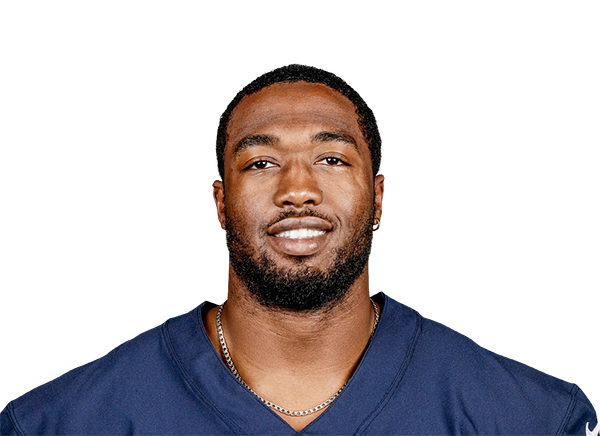
Dominique Robinson
DE · Houston Texans · #97
Complete NFL Player Profile
Dominique Robinson Player Profile
Early Life & Background
Dominique Robinson was born and raised in Canton, Ohio, a city with deep ties to American football history as the home of the Pro Football Hall of Fame. Growing up in a region where football culture permeates daily life, Robinson was immersed in the sport from an early age. Canton’s high school and collegiate football programs have produced numerous players who have gone on to professional careers, creating a competitive environment that fosters athletic development. Robinson’s upbringing in such an environment likely contributed to his early interest in the game. While specific details about his family background, upbringing, or early athletic influences remain limited in public records, his connection to Canton suggests he was exposed to football’s foundational values—discipline, teamwork, and perseverance—from childhood. These values would later become pillars of his athletic journey. Robinson’s physical attributes, including his height of 6’5” and weight of 275 pounds by the time he entered the NFL, indicate he developed a frame conducive to playing defensive end at a high level. His stature would have made him a standout in youth and high school leagues, where size and athleticism often translate to dominance on the field. Robinson’s path from Canton to the NFL is a testament to the region’s ability to cultivate athletic talent, even if his early years lack the public documentation seen with some prospects.
High School Career
Dominique Robinson’s high school football career unfolded in Canton, Ohio, where he attended McKinley High School, one of the area’s most storied programs. McKinley has a reputation for producing NFL talent, including players who have gone on to careers as linemen, linebackers, and skill-position athletes. While specific statistics or accolades from Robinson’s high school tenure are not publicly available, his eventual success at the collegiate and professional levels suggests he was a standout performer in his local league. High school performance metrics for defensive linemen can be difficult to track, particularly for players who may not have received extensive media coverage or recruiting rankings. However, Robinson’s eventual selection in the fifth round of the 2022 NFL Draft indicates that college scouts recognized his potential during his high school years. His 6’5”, 275-pound frame would have made him an imposing figure along the defensive line, capable of generating push against offensive linemen and disrupting plays in the backfield. Additionally, high school defensive ends who project to this size often possess traits such as quickness off the snap, functional strength, and the ability to anchor against double teams—skills that would later define Robinson’s collegiate and professional play. Canton’s high school football culture emphasizes physicality and toughness, traits that Robinson likely developed during his time at McKinley. His progression from a high school prospect to an NFL player underscores the effectiveness of Ohio’s high school football pipeline, which has historically fed talent to both Power Five conferences and professional teams.
College Career
Dominique Robinson attended Miami (OH).
NFL Draft
Dominique Robinson’s journey to the NFL culminated in his selection in the fifth round of the 2022 NFL Draft. The Houston Texans chose Robinson with the 174th overall pick, marking a significant milestone in his career. The 2022 draft class for defensive ends was highly competitive, with scouts evaluating players based on a combination of physical attributes, production, and projected versatility in NFL schemes. Robinson’s selection in the fifth round placed him among a cohort of prospects who were viewed as developmental talents with the potential to contribute in rotational roles or special packages. At the time of the draft, scouting reports on Robinson likely highlighted his 6’5”, 275-pound frame as a favorable trait for a defensive end, particularly in schemes that prioritize size along the edge or in three-man fronts. His height-to-weight ratio suggested the strength necessary to set the edge against the run while also providing a disruptive presence as a pass rusher. However, the Texans’ decision to draft Robinson in the fifth round indicated that they viewed him as a project player rather than an immediate contributor. This is not uncommon for defensive linemen, who often require additional development time to refine their pass rush techniques and gain functional strength against NFL-caliber offensive linemen. Robinson’s selection by the Texans, a team in the midst of a roster rebuild under head coach Lovie Smith, reflected a commitment to building defensive depth along the line. The Texans’ 2022 draft class included several defensive line prospects, signaling a long-term investment in the unit’s development. Robinson’s rookie season coincided with a transitional period for the Texans, who were integrating new leadership and a revamped defensive scheme. His lack of NFL game experience at the time of the draft meant he entered the league as a raw but high-upside prospect, a common profile for defensive ends selected in the mid-rounds of the draft.
Professional Career
As of the latest available information, Dominique Robinson has yet to appear in a regular-season NFL game. His professional career is currently in its earliest stages, with the Houston Texans retaining his rights while he continues to develop in training camp and preseason environments. The 2022 NFL Draft class often faces an adjustment period as players acclimate to the speed and physicality of professional football. For defensive ends, this process can be particularly challenging due to the technical precision required to beat NFL offensive tackles. Robinson’s transition from college to the NFL has likely involved refining his pass rush repertoire, improving his hand usage, and adding strength to his lower body to generate power in his rushes. The Texans’ defensive coaching staff, led by defensive coordinator Matt Burke, has emphasized a multi-pronged approach to generating pressure, which could provide Robinson with opportunities to earn playing time as a situational pass rusher or rotational defender. His size and length make him a natural fit for schemes that utilize hybrid defensive ends, including those that deploy him as a stand-up edge rusher in passing situations. Robinson’s professional development has been shaped by the Texans’ organizational priorities, which include building a competitive defensive line corps capable of supporting a unit that aims to control the trenches. While he has not yet played a regular-season snap, his presence in Houston’s training facility and offseason programs suggests he is progressing toward contributing at the NFL level. The Texans’ depth chart at defensive end features established veterans alongside younger prospects, creating competition for playing time that could accelerate Robinson’s development. His path mirrors that of many fifth-round defensive ends who require patience and seasoning before earning a consistent role. Organizations often prioritize the development of interior defensive linemen over edge defenders due to the positional value placed on disrupting the interior pocket, but Robinson’s potential as a situational pass rusher could earn him opportunities in sub-packages or third-down situations.
Playing Style & Strengths
Dominique Robinson’s playing style is defined by his combination of size, length, and athleticism, traits that project favorably in a league increasingly emphasizing versatile defensive linemen. At 6’5” and 275 pounds, Robinson possesses the physical profile of a traditional defensive end who can set a strong edge against the run while also contributing as a pass rusher. His height and wingspan allow him to disrupt passing lanes and contest throws over the middle, a skill that could be utilized in both base and nickel defenses. Robinson’s primary strength lies in his ability to use his length to keep offensive linemen at bay, a trait that is particularly valuable in schemes that prioritize containment against mobile quarterbacks. His pass rush repertoire is still developing, but he projects as a player who could generate pressure with a combination of speed-to-power moves and late burst off the snap. Scouts have noted that Robinson’s initial quickness and flexibility in his lower body enable him to threaten the interior pocket, a trait that aligns with modern NFL defensive schemes that emphasize interior pressure to disrupt timing in the passing game. Additionally, his size allows him to anchor effectively against double teams, a skill that could make him a reliable run defender in gap schemes. Robinson’s strength and leverage give him the potential to hold up at the point of attack, which is crucial for a defensive end who may be asked to set the edge in both 4-3 and 3-4 schemes. His ability to shed blocks and pursue ball carriers to the perimeter could make him a valuable asset in run-stopping situations. However, Robinson’s development as a pass rusher will be critical to his long-term success. The NFL is increasingly prioritizing edge rushers who can win with speed and bend around the corner, and Robinson’s lack of college production data makes it difficult to assess whether he possesses these traits in full. His projection as a developmental edge defender suggests that he will need to refine his hand usage, footwork, and counter moves to become a consistent threat off the edge. Robinson’s strengths are best suited for a role as a situational pass rusher or a rotational defensive end in schemes that utilize him in specific alignments. His versatility could allow him to contribute in a variety of defensive packages, including those that deploy him as a stand-up rusher in nickel formations. As he gains experience in the NFL, Robinson’s ability to refine his technique and add functional strength will determine whether he evolves into a rotational player or a full-time contributor along the defensive line.
Personal Life
Dominique Robinson’s personal life remains largely private, as is the case with many NFL players who prioritize maintaining a low public profile away from the field. Given his roots in Canton, Ohio, it is reasonable to infer that he has maintained connections to his hometown and the local community, though specific details about his personal interests, hobbies, or charitable endeavors have not been widely reported. Robinson’s journey from a high school prospect in Ohio to an NFL player has likely been shaped by the support of family members and mentors who played a role in his athletic development. The tight-knit nature of Ohio’s high school football culture often fosters long-lasting relationships between players, coaches, and communities, meaning Robinson may have cultivated strong bonds with individuals who have influenced his career. Off the field, Robinson’s focus has likely been on adapting to the demands of professional football, which include rigorous training regimens, film study, and media obligations. The NFL lifestyle can be demanding, particularly for players who are working to establish themselves in the league, and Robinson’s professional environment in Houston has provided him with resources to support his growth. While public information about his personal life is scarce, Robinson’s professional demeanor and work ethic suggest he is committed to maximizing his potential as a player. The Texans organization has emphasized character and professionalism as key components of roster construction, making Robinson’s fit within the team’s culture a positive indicator of his personal qualities. As his career progresses, opportunities may arise for him to engage in community initiatives or charitable work, particularly given the Texans’ involvement in Houston-area outreach programs. However, at this stage of his career, Robinson remains a private individual with a singular focus on establishing himself as a contributor to the Texans’ defensive unit.
Legacy & Future Outlook
Dominique Robinson’s legacy in the NFL remains unwritten, as he has yet to log a regular-season snap. His future outlook hinges on his ability to develop the technical and physical traits necessary to carve out a role in a league where defensive line depth is often prioritized for its versatility. The Texans’ investment in Robinson as a fifth-round selection signals their belief in his long-term potential, particularly as a developmental edge defender who could contribute in sub-packages or rotational roles. His size and length provide a foundation for growth, but the transition from college to the NFL is fraught with challenges, particularly for defensive linemen who must refine their craft against elite offensive linemen. Robinson’s future will likely be defined by his capacity to add functional strength, improve his pass rush repertoire, and develop a consistent motor. The NFL’s emphasis on edge rushers who can win with speed and technique means he will need to demonstrate improvement in his bend, hand placement, and leverage to become a reliable contributor. The Texans’ defensive coaching staff, including coordinator Matt Burke, will play a pivotal role in Robinson’s development, as will the organization’s commitment to investing in its young talent. Robinson’s path mirrors that of many mid-round defensive ends who gradually earn playing time through performance and opportunity. His potential as a situational pass rusher could make him a valuable asset in third-down situations or two-minute drills, where his size and length could disrupt passing lanes. Additionally, his ability to set the edge against the run could earn him opportunities in gap and wide-9 defensive schemes. As the Texans continue to build their roster around a core of young talent, Robinson’s development will be closely monitored. If he can establish himself as a reliable rotational player, he could evolve into a key piece of Houston’s defensive front. However, the lack of college production data and his unproven status in the NFL mean that his legacy is still in its formative stages. Robinson’s future outlook is one of cautious optimism, with the potential to carve out a career as a situational edge rusher or rotational defensive end. His success will depend on his ability to refine his technique, add strength, and capitalize on the opportunities presented to him in Houston’s defensive scheme. Should he achieve these milestones, Robinson could leave a lasting impact as a testament to the value of developmental talent in the NFL’s defensive trenches.
NFL career statistics not available at this time.
Frequently Asked Questions About Dominique Robinson
What team does Dominique Robinson play for?
Dominique Robinson currently plays for the Houston Texans as a DE.
Where did Dominique Robinson go to college?
Dominique Robinson attended Miami (OH).
When was Dominique Robinson drafted into the NFL?
Dominique Robinson was Year: 2022 Round: 5 Pick: 174.
What is Dominique Robinson's playing style?
Check the Playing Style section above for a detailed analysis of Dominique Robinson's strengths.
How many NFL games has Dominique Robinson played?
Dominique Robinson continues to develop their game at the NFL level with 0 career games played.
Dominique Robinson · Complete NFL Player Profile
Data via ESPN API & AI Research · Last updated: June 2, 2026
اترك تعليقاً
لن يتم نشر عنوان بريدك الإلكتروني. الحقول المطلوبة مشار إليها بـ *