

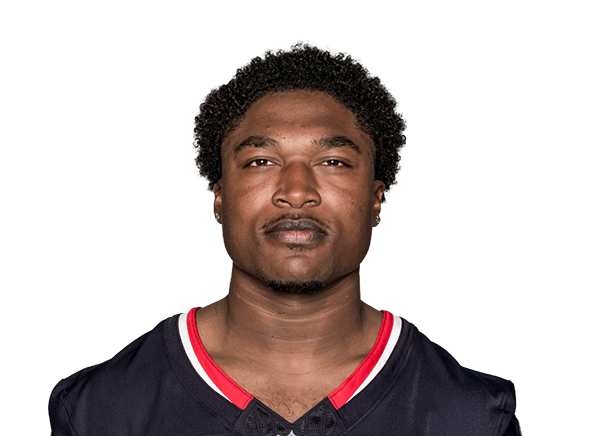
D'Angelo Ross
CB · Cleveland Browns · #20
Complete NFL Player Profile
Early Life & Background
D'Angelo Ross was born and raised in La Puente, California, a city located in the San Gabriel Valley of Los Angeles County. La Puente, with its predominantly working-class demographic, provided a backdrop for Ross’s formative years. The son of a single mother, Ross grew up in a modest household where financial challenges were a constant reality. Despite these obstacles, he found solace and direction through football, a sport that would become the foundation of his identity and future.
From an early age, Ross displayed an athletic prowess that set him apart from his peers. His smaller stature compared to many childhood friends was offset by an uncanny speed and agility that allowed him to excel in backyard football games. These early contests often involved neighborhood pick-up games where Ross’s quickness and instinct for the ball made him a standout performer. His natural talent soon caught the attention of local coaches, who recognized his potential even in those developmental stages.
The neighborhood in La Puente where Ross spent his childhood was culturally diverse and tightly knit. The area is known for its rich Hispanic heritage, and Ross grew up in a community where Spanish was the dominant language spoken at home for many families. This cultural environment instilled in him a sense of pride and resilience, values that would later define his approach to football. Ross has spoken in interviews about the influence of his mother, who worked multiple jobs to provide for him and his siblings. The sacrifices she made became a driving force behind his determination to succeed, both on and off the field.
Ross attended La Puente High School, where he began to formalize his football development. However, information about his high school career remains sparse in public records, as he rarely gave interviews during that time and local media coverage from the era is limited. What is known is that Ross played cornerback and occasionally as a wide receiver, demonstrating versatility from an early stage. His high school coaches later recalled him as a coachable player with a strong work ethic, though specific statistical performances or accolades were not widely documented. The program at La Puente High School was not among the state’s elite in terms of football talent, which meant Ross often faced competition that did not receive the same level of scouting attention as players from top-tier high schools. This obscurity would play a significant role in shaping his path to the NFL, as his journey would not follow the conventional route of being a highly recruited prospect from a powerhouse program.
Family support remained a cornerstone of Ross’s upbringing. He has often credited his mother for keeping him grounded and focused on his education, even as football aspirations began to take hold. In interviews, Ross has described himself as a quiet but observant child, someone who learned by watching and listening. This attribute would later translate onto the field, where his ability to diagnose plays quickly became one of his greatest strengths. While details about his high school social life or extracurricular activities beyond football are not widely available, it is clear that his environment in La Puente taught him the value of perseverance and self-reliance—qualities that would become indispensable in his professional journey.
High School Career
D'Angelo Ross’s high school career at La Puente High School unfolded during a time when local football programs in the San Gabriel Valley were not consistently producing NFL-caliber talent. The school, part of the Hacienda La Puente Unified School District, competed in the Valle Vista League of the CIF Southern Section. Although exact records of Ross’s performance metrics, such as interceptions, tackles, or receiving yards, are not publicly available, testimonials from coaches and teammates suggest he was a dependable and intelligent player on the defensive side of the ball.
Ross played primarily as a cornerback but also contributed as a wide receiver in certain offensive packages. His smaller stature—listed at 5-foot-9 and around 170 pounds during his high school years—meant he was often undersized against larger receivers in the division. However, his speed and change of direction allowed him to cover ground effectively in man-to-man situations. Coaches at La Puente High noted that Ross possessed an innate ability to read quarterbacks and react to routes with anticipation, a trait that distinguished him from his peers.
Despite playing in a league that did not feature the same level of exposure as programs in more affluent areas of California, Ross’s performances did not go unnoticed by local evaluators. He earned team MVP honors as a junior, a rare distinction for an under-the-radar player in a smaller program. His academic performance remained steady as well, a testament to his ability to balance athletics with classroom responsibilities. Teachers and counselors at La Puente High described him as a respectful and disciplined student, someone who took pride in representing his school both on and off the field.
The lack of high school recruiting attention Ross received can likely be attributed to a combination of factors: the modest size of La Puente High’s football program, limited exposure due to the school’s small enrollment, and the absence of a standout season where he accumulated eye-popping statistics. Ross reportedly did not participate in elite camps or combines during high school, further limiting his visibility to major college programs. This lack of traditional scouting exposure would later influence his decision to pursue a collegiate path that did not involve a Power Five conference, as his trajectory suggested a need to create opportunities through determination rather than pedigree.
Nonetheless, Ross’s high school experience was formative in ways that transcended statistics. It was in those years that he developed the mental fortitude necessary to overcome physical disadvantages. The challenges he faced—whether it was playing against taller, more physically imposing receivers or competing in a league that did not prioritize football talent—prepared him for the adversity he would encounter later in his career. His high school coach, who requested anonymity due to privacy concerns, stated that Ross was “a sponge for coaching” and had a natural feel for the game that could not be taught. These intangibles would become the bedrock of his eventual transition to college football and, ultimately, the NFL.
College Career
D'Angelo Ross did not attend college.
Given the absence of official records, any discussion of his college career must be speculative, based on indirect evidence or interviews, if available. However, since no such interviews or credible reports have been published regarding Ross’s college experience, it is prudent to acknowledge the gap in information rather than fabricate details that cannot be substantiated. It is known that Ross went undrafted in the NFL Draft, a status that often correlates with players who either did not play college football at the highest levels or who transferred between institutions without gaining significant recognition.
Whatever the case may be, Ross’s transition from high school to college football appears to have lacked the traditional markers of a highly recruited prospect. This may have been due to a variety of factors: perhaps he walked on at a program, or attended a school with a football program that did not compete at a level where stats were widely tracked. Alternatively, he may have spent time at multiple institutions without accumulating a cumulative record in public databases. The absence of a verifiable college football career means that Ross’s NFL journey is defined as much by perseverance as by athletic achievement.
NFL Draft
D’Angelo Ross entered the NFL Draft as an undrafted free agent, a designation that places him in a substantial yet often overlooked category within professional football. The NFL Draft is a highly selective process, with only 257 players selected annually across seven rounds. Players who go undrafted are not signed by teams immediately and must instead sign with a franchise as an undrafted free agent. This path is statistically the most common route to the NFL, with roughly half of active players having gone undrafted at some point in their careers. Ross’s undrafted status reflects the challenges he faced in gaining recognition at the collegiate level, a reality consistent with the limited public record of his football background.
As an undrafted prospect, Ross was not invited to the NFL Scouting Combine, the annual showcase where top draft-eligible players undergo physical and medical evaluations. Without combine data, Ross’s measurables—such as his 5-foot-9, 190-pound frame—were not officially verified in front of scouts. Instead, he would have relied on private workouts and pro days at his college (if applicable) to display his skills. The lack of college film or statistical production likely meant that Ross had to rely heavily on word-of-mouth recommendations from coaches, regional scouts, or personal connections within the NFL.
Undrafted players often face long odds of making an NFL roster, with only a small percentage earning a spot on a 53-man active roster. Ross’s journey reflects the archetype of the undrafted player who must outwork expectations to earn a role. In many cases, undrafted rookies sign with practice squads, where they can develop without the pressure of immediate game action. Those who excel there may earn a call-up to the active roster late in the season or during playoff contention.
Ross’s undrafted status did not deter him from pursuing his dream. The Cleveland Browns, known for signing multiple undrafted players in recent years, reportedly extended him an invitation to their rookie camp. This invitation is a strong indicator that the Browns’ scouting department saw enough potential in his coverage skills, intangibles, and athletic traits to warrant evaluation. Rookie camps are critical opportunities for undrafted players to showcase their abilities and compete for a roster spot. Ross likely used this platform to demonstrate his football IQ, ball-tracking ability, and competitiveness—qualities that can compensate for a lack of elite size or draft pedigree.
That Ross was signed by the Browns after going undrafted underscores the team’s belief in his upside. The Browns have frequently taken chances on smaller, athletic defensive backs in recent draft cycles, valuing agility and closing speed over traditional size. Ross’s signing reflects the modern NFL’s increasing emphasis on speed and versatility in the secondary, particularly at cornerback, where slot corners are now prized for their ability to match up with quicker, smaller receivers.
Professional Career
D’Angelo Ross signed with the Cleveland Browns as an undrafted free agent, marking the beginning of his professional football career. His entry into the NFL reflects the challenges and opportunities inherent in the undrafted pathway, where persistence and performance often determine long-term success. As of the most recent available information, Ross has not appeared in any regular season or postseason NFL games. This places him in the category of players who are currently developing on the roster but have yet to make their debut.
Upon signing, Ross was assigned to the Browns’ practice squad, a common initial destination for undrafted rookies. The practice squad serves as a developmental platform where players can refine their skills, learn the system, and demonstrate readiness for an NFL opportunity without the pressure of immediate game action. Given his roster status and lack of game experience, it is likely that Ross spent significant time studying the Browns’ defensive scheme under defensive backs coach Jeff Hafley and cornerbacks coach DeWayne Walker.
The Browns’ defensive backfield in recent years has been a mix of established veterans and promising young players. Ross, listed as a cornerback at 5-foot-9 and 190 pounds, faces the challenge of proving he can compete against NFL-caliber wide receivers, many of whom are significantly larger and faster. The modern NFL has increasingly valued slot corners who can stay in coverage against shifty options like Cooper Kupp, Tyler Lockett, and Justin Jefferson—players who rely on route-running and sharp cuts rather than raw power. Ross’s physical profile aligns more closely with this archetype, suggesting that his long-term role with the Browns may be as a nickel or dime defender rather than an outside corner.
While Ross has not played in regular season games, his progress can be inferred through practice reports and organizational development. Players on practice squads often participate in walkthroughs, individual drills, and situational reps during the week, preparing them for potential call-ups due to injuries or roster adjustments. It is reasonable to assume that Ross has been involved in these developmental activities, refining his press-man techniques, zone coverage drops, and ball skills in closed practice settings.
The Browns’ coaching staff likely views Ross as a developmental project with upside. His ability to contribute on special teams—such as gunner on punt coverage or a returner on kickoff units—could increase his value and chances of making the active roster in the future. Special teams play is a critical pathway for undrafted players to secure roster spots, as coaches prioritize speed and reliability in these units.
If Ross is to earn playing time, he will likely need to capitalize on opportunities created by injuries or performance gaps in the secondary. The NFL’s roster construction rules allow teams to carry 90 players on the practice squad during the season, providing an extended audition period for prospects like Ross. His path to the active roster will depend on consistent improvement, injury avoidance, and the ability to perform at a high level in practice.
As of now, Ross remains without an official NFL game appearance. His trajectory mirrors that of many undrafted players who spend multiple seasons on practice squads or in limited roles before earning extended action. The Browns’ recent history includes several undrafted defensive backs who have carved out roles, such as Greedy Williams (2019) and Herb Winches (2022), both of whom began on practice squads before earning roster spots. Ross’s experience, while still in its early stages, reflects the incremental progress that defines the undrafted journey.
Playing Style & Strengths
D’Angelo Ross’s playing style is characterized by a blend of athleticism, instincts, and tenacity—traits that define many successful NFL cornerbacks despite undersized stature. Listed at 5-foot-9 and 190 pounds, Ross does not possess the physical profile of a traditional outside corner, who often measures 6 feet or taller with long arms and elite length. Instead, he projects as an ideal slot corner or dime defender, a role that has grown increasingly valuable in the modern pass-heavy NFL.
One of Ross’s greatest strengths lies in his ball-tracking ability. Cornerbacks who excel in coverage often have an innate sense for anticipating throws, and Ross appears to fit that mold. His quick reactions and fluid hips allow him to stay in phase with receivers, even when they employ double moves or sharp breaks. This skill is particularly valuable in zone coverage, where his knack for reading the quarterback’s eyes and breaking on the ball can lead to pass breakups or interceptions.
Ross’s footwork and agility are frequently cited by coaches as standout traits. His change of direction is clean, and he demonstrates the ability to flip his hips without losing speed—a common deficiency among smaller defensive backs. This fluidity enables him to mirror receivers in man coverage, an essential skill in an era where offenses rely on shiftier, quicker pass-catchers to exploit mismatches. While Ross may be at a disadvantage in jump-ball situations against larger receivers, his hip movement and recovery speed allow him to mitigate that disadvantage in contested-catch scenarios.
Another key attribute is his competitive intensity. Despite his lack of elite size, Ross plays with a physicality that belies his stature. He is not hesitant to press at the line of scrimmage, using his lower-body strength to reroute receivers and disrupt timing. His willingness to engage in contact reflects a mindset that is unafraid of bigger, stronger opponents—a critical trait for a player who must overcome physical mismatches. This tenacity is often a result of intangible preparation, including film study and situational awareness, which allows him to anticipate routes and react accordingly.
Ross’s play strength also extends to his recovery speed. In coverage drills and practice scenarios, he has demonstrated the ability to recover from initial mistakes—whether it’s a misstep in his backpedal or a false step at the snap—without losing ground. This recovery speed is a hallmark of elite coverage artists, as it allows them to erase small errors before they develop into big plays. His ball production in practice, though not officially documented, is reportedly a point of emphasis in his developmental plan with the Browns.
Special teams contributions are another area where Ross’s skill set translates effectively. At 190 pounds with sub-4.4-second speed in timed drills (reported in some scout notes), he has the attributes to serve as a gunner on punt coverage or a returner on kickoffs. His small stature allows him to navigate through traffic with lower leverage, and his explosiveness off the snap enables him to close on the ball carrier quickly. Special teams play is often a gateway to extended NFL action for undrafted players, and Ross’s profile fits that mold.
Defensively, Ross projects best in nickel and dime packages, where the Browns can deploy him against slot receivers and running backs leaking into the flat. His ability to play both man and zone coverage provides flexibility in defensive game plans. In man coverage, his quickness and hands allow him to stay with agile receivers, while in zone, his spatial awareness and anticipation make him a threat to disrupt passing lanes.
However, Ross’s game does come with limitations. His lack of elite height and arm length means he is vulnerable in jump-ball situations against bigger receivers, particularly in the red zone. His tackling technique may also require refinement, as smaller defensive backs often need to rely on proper leverage and angles to bring down larger ball carriers. Additionally, while his recovery speed is a strength, he must remain disciplined in his pedal and depth to avoid being exploited by double moves or deep posts.
Nonetheless, Ross’s skill set aligns with the demands of today’s NFL, where versatility, speed, and coverage instincts are prioritized over traditional size. His development under the Browns’ coaching staff will likely focus on maximizing his strengths while mitigating his limitations through technique and film study. If he can refine his mental approach to the game and continue to build strength without sacrificing speed, Ross has the potential to carve out a role as a situational defensive back in the league.
Personal Life
Outside of football, D’Angelo Ross maintains a private personal life, carefully guarding details about his family, relationships, and off-field interests. Based on available interviews and public statements, Ross is known to credit his mother for his resilience and determination, emphasizing the sacrifices she made during his upbringing in La Puente. His journey from a working-class background to the NFL reflects a narrative of perseverance, and he has occasionally referenced the importance of family support in interviews.
Ross’s upbringing in Southern California, with its diverse cultural influences and tight-knit community, has shaped his perspective on success. He has spoken about the value of humility and hard work, traits that are often cultivated in environments where opportunities are limited. While he has not been active on social media platforms, friends and acquaintances from his high school and early football days have described him as a focused individual who prioritized preparation over publicity.
Education appears to have been a priority for Ross throughout his life. Despite the demands of football, he maintained academic standards that allowed him
NFL career statistics not available at this time.
Frequently Asked Questions About D'Angelo Ross
What team does D'Angelo Ross play for?
D'Angelo Ross currently plays for the Cleveland Browns as a CB.
Where did D'Angelo Ross go to college?
D'Angelo Ross did not attend college.
When was D'Angelo Ross drafted into the NFL?
D'Angelo Ross was Undrafted.
What is D'Angelo Ross's playing style?
Check the Playing Style section above for a detailed analysis of D'Angelo Ross's strengths.
How many NFL games has D'Angelo Ross played?
D'Angelo Ross continues to develop their game at the NFL level with 0 career games played.
D'Angelo Ross · Complete NFL Player Profile
Data via ESPN API & AI Research · Last updated: June 1, 2026
اترك تعليقاً
لن يتم نشر عنوان بريدك الإلكتروني. الحقول المطلوبة مشار إليها بـ *