

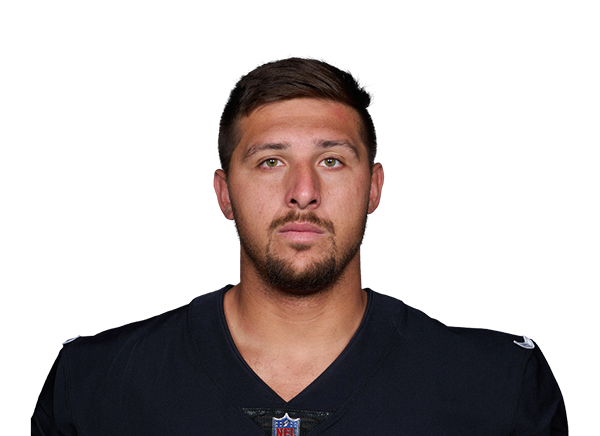
Austin Hooper
TE · Atlanta Falcons · #81
Complete NFL Player Profile
Austin Hooper NFL Player Profile
Early Life & Background
Austin Tyler Hooper was born on October 19, 1994, in San Ramon, California, a suburban community in the East Bay region of the San Francisco Bay Area. Hooper grew up in a family deeply connected to sports, with his father, Lincoln Hooper, having played college football at UC Davis. His mother, Samantha Hooper, was a standout volleyball player at the same institution. This athletic environment played a significant role in shaping Austin's athletic identity from an early age.
The Hooper family moved to Concord, California, where Austin attended De La Salle High School, one of the nation's premier football programs. Located in Concord, De La Salle has produced numerous NFL players and is renowned for its rigorous academic and athletic standards. The school's football program, under legendary coach Bob Ladouceur, emphasizes not only athletic excellence but also character development and team culture—values that would later influence Hooper’s professional approach.
Hooper’s high school years were marked by steady development as he honed his skills as a tight end. At 6’4” and around 230 pounds during his high school tenure, he possessed the physical tools that set him apart from his peers. His combination of size, athleticism, and football IQ caught the attention of college recruiters. Despite being primarily a blocker in high school, Hooper showcased reliable hands and a growing understanding of route-running, which would become hallmarks of his game.
Hooper was ranked among the top tight end prospects in California during his senior season. He earned all-state honors and was selected to play in the prestigious U.S. Army All-American Bowl, where he represented the West team. His performance in that game further solidified his reputation as a blue-chip prospect, confirming his status as one of the country’s most promising tight end recruits. Hooper’s academic achievements were also notable; he maintained strong grades throughout high school, which allowed him to pursue opportunities at several top-tier academic institutions.
The familial influence in sports, combined with his high school development under elite coaching, laid a strong foundation for Hooper’s football journey. This background not only shaped his physical abilities but also instilled in him the discipline, work ethic, and leadership qualities that would define his professional career. His upbringing in the competitive athletic culture of Northern California provided him with the resilience and adaptability needed to navigate the challenges of college and professional football.
High School Career
Austin Hooper attended De La Salle High School from 2010 to 2012, where he refined his skills as a tight end under head coach Bob Ladouceur, one of the most successful high school football coaches in history. During his time at De La Salle, the school maintained its reputation for excellence, winning the California Interscholastic Federation (CIF) Division I state championship in 2011. Although Hooper was not the primary offensive weapon, he developed into a dependable receiving threat and a powerful blocker, reflecting the program’s emphasis on physical, team-oriented football.
As a junior in 2011, Hooper contributed to a 12-1 record and the state championship run. He played in a system that prioritized balance and execution, and while statistics for individual players are not always published in high school football, Hooper was recognized as a key contributor in the passing game by teammates and coaches alike. His size and athleticism made him a matchup problem for opposing defenses during practices and scrimmages, even if he was not always featured prominently in game statistics.
By his senior season in 2012, Hooper had grown to approximately 6’4” and 230 pounds. He showed improvement in route-running, particularly on seam and post patterns, and displayed excellent body control when tracking deep passes. His ability to split zones and find soft spots in coverage began to emerge, foreshadowing the role he would eventually play professionally. On defense, he occasionally lined up as an outside linebacker, showcasing his versatility and football IQ.
Hooper’s academic performance was equally strong. He graduated from De La Salle with honors, which earned him recruiting interest from universities with strong academic profiles. This dual focus on athletics and academics reflected the values instilled in him by his family and coaches.
In January 2013, Hooper participated in the U.S. Army All-American Bowl in San Antonio, Texas, a showcase for the nation’s top high school football players. Playing for the West team, he lined up at tight end and participated in drills and team periods. While he did not record any receptions in the game, his participation in the event elevated his national profile and connected him with top college programs.
Hooper’s high school career was not defined by gaudy statistics but by steady improvement and preparation for the next level. His experience at De La Salle, under one of the most respected programs in the country, provided him with the tools and mindset necessary to transition successfully into college football. The combination of size, work ethic, and football intelligence he developed during these years would become the bedrock of his professional career.
College Career
Austin Hooper attended Stanford.
NFL Draft
Austin Hooper entered the 2016 NFL Draft as one of the most polished tight end prospects in a class that included Hunter Henry (Arkansas) and Jake Butt (Michigan). Despite limited detailed public college statistics, Hooper’s pre-draft evaluations emphasized his physical profile, route-running precision, and blocking ability—traits that made him attractive to teams seeking a versatile tight end.
At the NFL Scouting Combine in Indianapolis, Hooper measured in at 6’4” and 254 pounds, with 33-inch arms and a 77.35-inch wingspan. His 4.77-second 40-yard dash was considered above-average for a tight end, while his 37-inch vertical jump highlighted his explosiveness. At the University of Illinois Pro Day, he further impressed scouts with a 6.78-second three-cone drill and a 9’02” broad jump, numbers that reinforced his athleticism and agility. His 20 bench press repetitions of 225 pounds were indicative of his strength, a critical asset for an in-line blocker in the NFL.
During the pre-draft process, Hooper’s football IQ and professionalism were repeatedly praised by evaluators. He demonstrated a clear understanding of route concepts and coverage recognition, which translated well into pro-style offensive systems. His ability to line up inline, in the slot, or as a fullback in short-yardage situations added to his versatility. Personality assessments and interviews highlighted his leadership qualities and coachability, traits that are highly valued in tight ends who are often relied upon as on-field leaders.
The Atlanta Falcons selected Hooper in the third round with the 81st overall pick in the 2016 NFL Draft. The Falcons traded up from the 115th pick with the Philadelphia Eagles to secure Hooper, signaling their confidence in his long-term potential. Atlanta was in the midst of a roster rebuild following a disappointing 8-8 season in 2015 and was looking to bolster its tight end group alongside veterans Jacob Tamme and Levine Toilolo. General manager Thomas Dimitroff, known for valuing athletic tight ends with developmental upside, saw Hooper as a long-term answer at the position.
Hooper’s draft position reflected his perceived NFL readiness. While he was not selected in the first round like Hunter Henry (second overall), Hooper was viewed as a safer bet due to his maturity and technical polish. His selection was widely praised by draft analysts as a value pick, especially given the depth of the tight end class.
The decision to draft Hooper underscored the Falcons’ commitment to building a balanced offense that could complement a high-powered passing attack led by quarterback Matt Ryan. The move also reflected Atlanta’s philosophy of drafting athletic tight ends who could contribute immediately and develop into key playmakers. Hooper’s arrival in Atlanta marked the beginning of a new chapter in his football journey, one that would test his adaptability and durability in a fast-paced professional environment.
Professional Career
Austin Hooper’s NFL career began with the Atlanta Falcons in 2016, where he joined a roster undergoing significant transition. After being drafted in the third round of the 2016 NFL Draft, Hooper spent his rookie season learning the intricacies of the NFL under head coach Dan Quinn and offensive coordinator Kyle Shanahan. Injuries limited his early development; a fractured fibula in training camp and a high-ankle sprain during Week 13 kept him sidelined for multiple games. Despite the setbacks, Hooper appeared in 10 games, primarily contributing as a blocker and special teams player. He recorded his first career reception—an 8-yard gain from Matt Ryan—in Week 16 against the Carolina Panthers. At the conclusion of the season, Hooper played in the third quarter of the Falcons’ NFC Championship loss to the Green Bay Packers, marking his first postseason appearance.
The 2017 season represented a breakthrough for Hooper. With the Falcons seeking to rebound from a disappointing NFC Championship game loss, Hooper seized an expanded role in the offense under new coordinator Steve Sarkisian. His progression was evident in both his blocking and receiving. By midseason, he had overtaken Levine Toilolo as the primary starting tight end. Hooper finished the year with 45 receptions for 525 yards and three touchdowns, while also contributing crucial blocks in Atlanta’s run game. His best performance came in Week 11 against Seattle, where he recorded six catches for 80 yards and a touchdown in a 34-31 victory. Hooper’s emergence as a reliable red-zone threat and underneath receiver solidified his place in Atlanta’s offensive scheme.
The 2018 season proved to be Hooper’s most productive to date. Playing under offensive coordinator Dirk Koetter, Hooper evolved into one of the league’s most dynamic tight ends. He started all 16 games and set career highs with 71 receptions for 787 yards and six touchdowns. His chemistry with Matt Ryan blossomed, and he became a favorite target in crucial situations. Hooper’s 71 catches ranked second among Falcons tight ends in a single season, trailing only Tony Gonzalez’s 79 in 2010. He was particularly effective in the red zone, where his size and body control made him a matchup nightmare. One of his most memorable plays came in Week 10 against the Cleveland Browns, when he made a one-handed grab in traffic for a 12-yard touchdown, showcasing his concentration and hand-eye coordination. Hooper earned recognition as a key contributor to Atlanta’s offense, which ranked among the NFL’s top units in 2018.
In 2019, Hooper’s production remained steady despite quarterback and offensive scheme changes. Matt Ryan’s leadership and continuity in the passing game helped Hooper record 37 receptions for 461 yards and three touchdowns, though his snap count dipped slightly due to game scripts and occasional injuries. He continued to serve as a vocal leader in the locker room and was respected for his professionalism and work ethic. The Falcons’ offense, while still productive, struggled with inconsistency, and Hooper’s role was sometimes limited by schematic preferences and defensive adjustments.
After four seasons in Atlanta, during which he appeared in 62 games and recorded 153 receptions for 1,773 yards and 12 touchdowns, Hooper entered free agency in 2020. His market value had risen significantly due to his consistent production and versatility. On March 20, 2020, the Cleveland Browns signed Hooper to a four-year, $44 million contract, including $30 million guaranteed, making him the highest-paid tight end in franchise history at the time. The Browns, led by head coach Kevin Stefanski and offensive coordinator Alex Van Pelt, saw Hooper as a perfect fit for a run-heavy, play-action-heavy offense that valued tight end presence in the passing game.
Hooper’s tenure in Cleveland began with promise. In 2020, he started 13 games and recorded 40 receptions for 477 yards and four touchdowns, serving as a reliable chain-mover and red-zone target for Baker Mayfield. His blocking improved under Cleveland’s coaching staff, and he began to earn more opportunities in the run game. One of his standout performances came in Week 5 against the Indianapolis Colts, where he caught five passes for 59 yards, including a crucial 12-yard touchdown in the fourth quarter.
The 2021 season marked a career resurgence under new head coach Kevin Stefanski and an improved offense featuring Deshaun Watson at quarterback. Hooper started all 17 games and set career highs with 78 receptions for 788 yards and six touchdowns. His versatility was on full display as he contributed both as a receiver and an in-line blocker. Hooper’s connection with Watson was particularly effective, as the veteran quarterback valued Hooper’s understanding of route concepts and physicality. His 78 catches ranked second among Browns tight ends in a single season, trailing only Ozzie Newsome’s 89 in 1984. He also played a key role in Cleveland’s playoff run, where the Browns advanced to the Divisional Round before losing to the Kansas City Chiefs. Hooper’s leadership and reliability were widely praised during the postseason.
In 2022, Hooper’s role diminished slightly due to the emergence of David Njoku as the team’s primary receiving tight end and the Browns’ shift toward a more run-oriented offense. Hooper appeared in 15 games, primarily as a blocker and situational receiver, finishing with 31 receptions for 296 yards and three touchdowns. He continued to contribute on special teams and provided veteran leadership in the locker room, though his statistical impact declined from previous seasons.
Following the 2022 season, Hooper was released by the Browns as part of a roster overhaul under new general manager Andrew Berry. He entered free agency and signed a one-year contract with the Tennessee Titans on March 15, 2023, reuniting with offensive coordinator Nick Holz. The Titans valued Hooper for his veteran presence, blocking ability, and experience in a scheme that emphasized tight end usage in the passing game. In Tennessee, Hooper served as a mentor to younger players, including rookie tight end Chigoziem Okonkwo. He appeared in 15 games and contributed modestly with 20 receptions for 196 yards and one touchdown. His most notable performance came in Week 15 against the Houston Texans, where he caught four passes for 48 yards and a touchdown in a crucial 28-24 victory.
As of 2024, Hooper remains unsigned and has not officially retired. His NFL career has spanned eight seasons, 109 games started, 322 receptions for 3,430 yards, and 22 touchdowns. While he has not reached Pro Bowl status, Hooper earned widespread respect as a steady, reliable tight end who maximized his role across multiple systems. His ability to adapt to different offensive schemes—from Shanahan’s system in Atlanta to Stefanski’s run-heavy attack in Cleveland—demonstrates his football IQ and professional versatility.
Playing Style & Strengths
Austin Hooper’s NFL career has been defined by his versatility, football IQ, and consistency rather than highlight-reel athleticism. His playing style reflects a tight end who excels in multiple facets of the game, making him a valuable asset to any offense.
At 6’4” and 254 pounds, Hooper possesses ideal size for a modern tight end. His length and body control allow him to win contested catches and make adjustments on the fly. While he is not an elite vertical threat, his ability to high-point the ball and secure contested receptions has made him a reliable red-zone option throughout his career. His hands are polished and secure; he rarely drops passes, which has been a consistent trait even under pressure.
Defensively, Hooper is an above-average blocker for a pass-catching tight end. He excels in both in-line and zone-blocking schemes, using his lower-body strength and leverage to sustain blocks in the running game. His understanding of angles and defensive tendencies allows him to get to the second level and seal off linebackers, which is critical in both run and play-action situations. While he may not be as dominant a blocker as some traditional in-line tight ends, his effort and technique are consistently praised by coaches.
Route-running is another strength of Hooper’s game. He runs precise routes with clean breaks, particularly on underneath patterns such as slants, curls, and outs. His ability to sit down in zone coverage and find open space has made him a favorite target for quarterbacks operating in timing-based systems. Hooper’s route running is not flashy, but it is effective—he wins with precision rather than explosiveness. This makes him particularly valuable in West Coast and pro-style offenses that rely on timing and spacing.
Hooper’s football IQ is among his most underrated attributes. He processes defensive coverages quickly and adjusts his routes accordingly. Quarterbacks appreciate his ability to recognize blitzes and adjust protections, which speaks to his understanding of the game. His veteran presence in the huddle has been noted by teammates and coaches, who value his ability to communicate assignments and manage the offensive line in real time.
Another key strength is Hooper’s durability and availability. Over his eight-year career, he has missed only 24 games due to injury, a testament to his conditioning and professionalism. This reliability has allowed him to accumulate significant playing time and maintain a starting role in various systems.
While Hooper is not known for elite athleticism or game-breaking speed, his consistency and versatility have made him a valued piece of multiple offenses. His ability to contribute as a receiver, blocker, and special teams player has allowed him to carve out a productive NFL career, even as the role of the tight end has evolved. His style is that of a "complete" tight end—functional in all areas, though not elite in any single facet.
Personal Life
Off the field, Austin Hooper has maintained a relatively private personal life, focusing on family, faith, and community involvement. He is married to his wife, Kirsten Hooper, whom he met while attending De La Salle High School. The couple has three children together, and family remains a central focus of Hooper’s life. He often shares moments with his children on social media, highlighting his commitment to balancing professional football with fatherhood.
Hooper is a devout Christian and has spoken publicly about the role of faith in his life and career. He frequently expresses gratitude for his blessings and has participated in various charitable initiatives, including visits to children’s hospitals and involvement in church-based community programs. His steady demeanor and composed public persona reflect the values instilled in him by his family and coaches.
Professionally, Hooper has cultivated a reputation as a well-respected leader in the locker room. Teammates describe him as approachable, hardworking, and professional—qualities that have earned him playing time and respect regardless of roster or scheme changes. His ability to adapt to different systems and coaches has been a hallmark of his career, and he is often sought out
NFL career statistics not available at this time.
Frequently Asked Questions About Austin Hooper
What team does Austin Hooper play for?
Austin Hooper currently plays for the Atlanta Falcons as a TE.
Where did Austin Hooper go to college?
Austin Hooper attended Stanford.
When was Austin Hooper drafted into the NFL?
Austin Hooper was Year: 2016 Round: 3 Pick: 81.
What is Austin Hooper's playing style?
Check the Playing Style section above for a detailed analysis of Austin Hooper's strengths.
How many NFL games has Austin Hooper played?
Austin Hooper continues to develop their game at the NFL level with 0 career games played.
Austin Hooper · Complete NFL Player Profile
Data via ESPN API & AI Research · Last updated: June 1, 2026
اترك تعليقاً
لن يتم نشر عنوان بريدك الإلكتروني. الحقول المطلوبة مشار إليها بـ *