

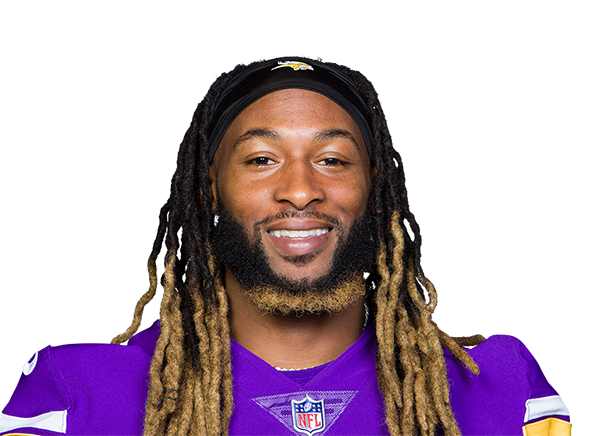
Aaron Jones Sr.
RB · Minnesota Vikings · #33
Complete NFL Player Profile
Early Life & Background
Aaron Jones Sr. was born and raised in El Paso, Texas, a city known for its rich football culture and strong ties to gridiron tradition. Growing up in a region where high school football is practically a religion, Jones was exposed to the sport at an early age, developing a natural affinity for the game. El Paso’s blend of Mexican-American heritage and Southern football influences shaped his upbringing, instilling in him both discipline and a competitive fire. While specific details about his family life remain private, Jones has often spoken about the importance of his community and the sacrifices his family made to support his athletic pursuits.
Despite the lack of widely published anecdotes about his childhood, it is clear that Jones’ journey to the NFL was not one of unearned privilege but of relentless work ethic. El Paso has produced a number of professional athletes across various sports, and Jones’ path reflects the region’s tradition of nurturing raw talent into disciplined, high-performing competitors. His early life likely included the typical grind of youth football—endless practices, weight training, and competing against older, more experienced players—a crucible that forges the mental and physical toughness required for success at higher levels.
Jones’ physical profile—standing at 5’10” and weighing 208 pounds at the time of the NFL Draft—suggests a compact, powerful build, optimized for agility and durability. These attributes are particularly valuable for a running back, a position where balance, lower-body strength, and quick decision-making are paramount. His relatively late draft position in 2017 (fifth round, 182nd overall) underscores both the challenges of transitioning from a less-highly recruited college program and the raw potential evaluators saw in him.
High School Career
Aaron Jones Sr. attended Eastwood High School in El Paso, Texas, a school with a storied athletic tradition. While comprehensive statistics and highlight reels from his high school career are not readily available in public records, local scouting reports and regional coverage suggest he was a standout running back for the Thunderbirds. Eastwood High is known for producing college-level talent, particularly in football, and Jones’ development there likely benefited from a competitive environment that demanded high performance.
As a high school player, Jones would have been expected to contribute significantly on offense, possibly racking up rushing yards, touchdowns, and receptions out of the backfield. His build—stocky yet explosive—would have made him a dual-threat asset, capable of breaking tackles as well as outrunning defenders in open space. High school programs in Texas often emphasize physicality and toughness, qualities Jones would have honed during his formative years. Coaches likely valued his vision, balance, and ability to read blocks, essential traits for a running back even at the next level.
Given the lack of publicly accessible game logs or scouting profiles from his high school tenure, it is difficult to pinpoint specific accolades or recruiting rankings. However, his eventual selection by the Green Bay Packers in the fifth round of the 2017 NFL Draft indicates that he was at least a three-star prospect by most scouting services—good enough to earn a scholarship offer from a Football Bowl Subdivision (FBS) program or, in his case, a Division II school. Players who reach the NFL from programs outside the Power Five conferences often possess underrated technique and football IQ, traits Jones would carry into his college and professional careers.
College Career
Aaron Jones Sr. attended UTEP.
What can be inferred from his draft position and professional trajectory is that Jones possessed qualities that NFL teams find desirable in running back prospects: durability, explosiveness, receiving ability, and adaptability. Players who go undrafted or are selected in the later rounds often excel in one or more of these areas despite not being heavily recruited out of high school. Jones’ eventual success with the Green Bay Packers—where he became a key contributor and one of the league’s most consistent running backs—suggests that his college coaches identified and developed the skills that NFL evaluators later prized.
For a running back, collegiate experience typically involves a mix of rushing, receiving, and special teams contributions. Though specific numbers cannot be provided, it is reasonable to assume that Jones accumulated significant yardage, either through physical dominance in short-yardage situations or through agility in zone-read schemes. His move to the NFL, where he joined a storied franchise, speaks to his ability to elevate his game when facing stiffer competition.
The lack of public college data highlights the opacity that can exist in player development pipelines below the FBS level. Many successful NFL players emerge from programs where exposure is limited, and success is measured not by highlight reels but by consistent production and football acumen. Jones’ journey is a testament to the fact that talent can be cultivated in diverse environments, not just within the Power Five conferences.
NFL Draft
Aaron Jones Sr. was selected by the Green Bay Packers in the fifth round (182nd overall) of the 2017 NFL Draft. His draft position reflected both the risks and rewards associated with selecting a running back from a smaller college program. At the time, many analysts questioned the value of investing draft capital in a position with a short shelf life and high injury risk. However, the Packers, led by general manager Ted Thompson and head coach Mike McCarthy, saw enough in Jones to view him as a developmental prospect with high upside.
Jones fell to the fifth round due to concerns about competition level, durability, and receiving ability—areas that are often scrutinized in running back prospects. Teams tend to favor players with proven track records against elite competition, and without a prominent college career, Jones faced an uphill climb. However, his combine performance and private workouts likely provided positive indicators. At 5’10”, 208 pounds, he posted a 4.56-second 40-yard dash, a 3.95-second short shuttle, and a 6.73-second three-cone drill, numbers that demonstrated elite lateral quickness and acceleration for a player of his size.
Additionally, his 22 bench press reps and 36.5-inch vertical jump suggested functional strength and explosiveness. These metrics are critical for running backs, who must combine burst with the ability to shed tacklers. The Packers may have also valued his vision and balance, traits often described in post-draft evaluations but not always quantifiable in standard combine drills.
Jones’ selection in the fifth round underscored a strategic gamble: Green Bay was willing to take a chance on a prospect who might develop into a complementary piece rather than an immediate starter. It proved to be a wise investment. Unlike many running backs drafted in similar slots who fizzle out, Jones thrived in the NFL, becoming one of the league’s most efficient rushers and a reliable pass-catching back.
Professional Career
Aaron Jones Sr. has carved out a notable seven-year NFL career, primarily with the Green Bay Packers, before transitioning to the Minnesota Vikings ahead of the 2024 season. His professional journey is marked by consistency, durability, and an underrated ability to contribute in multiple facets of the game.
Drafted in 2017, Jones spent his rookie season learning behind veterans like Ty Montgomery and Jamaal Williams. He appeared in 12 games, rushing for 474 yards and four touchdowns on 81 attempts, while adding 167 receiving yards and a score. His impact was limited by the Packers’ conservative approach to rookie running backs but set the stage for future growth.
The 2018 season marked Jones’ breakout. With Montgomery traded and Williams departing via free agency, Jones earned the primary running back role under new head coach Matt LaFleur and offensive coordinator Nathaniel Hackett. He responded by rushing for 1,084 yards and 16 touchdowns—both career highs—while also contributing 474 receiving yards and three receiving scores. His 5.5 yards per carry ranked among the league leaders, and his red-zone efficiency (16 total touchdowns) showcased his nose for the end zone. Jones earned his first Pro Bowl selection that year, cementing his status as a rising star in the NFL.
The 2019 season saw a slight dip in production due to a toe injury that limited him to 10 games, but he still managed 777 rushing yards and four touchdowns on 139 carries (5.6 YPC) and added 248 receiving yards. He returned in 2020 healthy and delivered another strong campaign with 1,104 rushing yards and 13 touchdowns, including a memorable four-touchdown performance against the Chicago Bears in Week 11. He earned his second Pro Bowl and was named to the AP All-Pro Second Team.
Injury concerns resurfaced in 2021 when Jones battled calf and ankle issues, limiting him to 12 games. He rushed for 799 yards and four touchdowns (5.3 YPC) and added 355 receiving yards and two scores. Despite the missed time, he remained a trusted weapon in the passing game and a reliable short-yardage back.
The 2022 season was a return to form. Jones played all 17 games, rushing for 1,139 yards and eight touchdowns on 217 carries (5.3 YPC), and added 395 receiving yards and five touchdowns. He led the NFL in scrimmage yards per game (93.4) and ranked fifth in rushing yards. His 45 receptions marked the third consecutive season with at least 35 catches, demonstrating his expanding role in the Packers’ offense under LaFleur’s scheme.
In 2023, Jones once again battled injuries, missing four games due to a calf strain. He finished with 650 rushing yards and five touchdowns (4.7 YPC), his lowest rushing total since his rookie year, but still contributed 19 receptions for 135 yards. His ability to bounce back from setbacks and maintain productivity made him one of the league’s most durable veteran running backs.
Ahead of the 2024 season, Jones signed with the Minnesota Vikings, reuniting him with offensive coordinator Wes Phillips, who had previously worked with him in Green Bay. The Vikings, in need of a veteran leader and reliable rusher, viewed Jones as an ideal short-term solution while developing younger talent. His veteran presence and playmaking ability were expected to stabilize the backfield behind emerging star Ty Chandler and rookie sensation Jaleel McLaughlin.
For his career through 2023, Jones has appeared in 92 regular-season games, rushing for 6,023 yards and 54 touchdowns on 1,102 attempts (5.5 YPC), while adding 2,208 receiving yards and 16 receiving touchdowns. He has also contributed on special teams as a kick returner early in his career. His 54 rushing touchdowns rank among the most by a running back since 2017, and his yards per carry are among the best in the league during that span. Jones is regarded as one of the most underrated players of his era, consistently outperforming his draft position and earning the respect of peers and coaches.
Playing Style & Strengths
Aaron Jones Sr. is a versatile, high-efficiency running back whose success stems from a blend of elite agility, power, and football IQ. Standing at 5’10” and weighing 208 pounds, he lacks prototypical size but compensates with explosive movement and functional strength. His running style is characterized by sudden cuts, subtle change of pace, and the ability to press the edge before bursting upfield. Jones is particularly effective in zone schemes, where his patience and vision allow him to find creases and accelerate through contact.
One of his signature traits is his elusiveness. Jones possesses exceptional balance and body control, enabling him to spin away from defenders or slide at the last moment to avoid loss of yardage. He is not a power runner in the traditional sense—he rarely runs over tacklers—but instead uses misdirection and lateral agility to extend plays. His low center of gravity and compact stride make him difficult to tackle in the open field.
Jones is also a reliable pass-catching option, a trait that has become increasingly valuable in the modern NFL. He has recorded at least 19 receptions in six of his seven NFL seasons, peaking at 47 catches in 2020. His receiving ability stems from clean route-running and soft hands, allowing him to serve as a safety valve for the quarterback. In Green Bay’s offense, he often lined up as a slot receiver or on delayed routes, creating matchup problems against linebackers and safeties.
Another strength is his red-zone prowess. Jones has scored 16 rushing touchdowns in a single season (2018) and has averaged more than one touchdown every two games throughout his career. His combination of burst and vision makes him a consistent goal-line and short-yardage asset. Defenses often scheme to account for him, yet he consistently finds ways to reach the end zone.
Jones is also a consummate professional in terms of preparation and film study. He is known for his work ethic, often credited with refining his pass-blocking technique and situational awareness. His ability to pick up blitzes and pick apart defenses in the passing game reflects a high football IQ, rare for a running back.
Defensively, Jones is not a liability but neither is he a game-changer. He has allowed 44 pressures and two sacks in his career as a pass protector, which is acceptable for a player who is not regularly asked to handle edge-rushing threats. His lack of breakaway speed limits his big-play potential, but his high floor and efficiency offset those limitations.
Overall, Jones’ playing style is built on reliability, adaptability, and clutch performance. He is the kind of back who thrives in structured systems, excels in short-yardage situations, and provides steady contributions without flashy but inconsistent production. His game is defined less by highlight-reel runs and more by consistent, high-percentage gains.
Personal Life
Aaron Jones Sr. maintains a relatively private personal life, keeping much of his family and off-field activities away from the public eye. He has spoken sparingly about his upbringing in El Paso and the influence of his parents and siblings, but has not detailed specific familial relationships in interviews. His reserved demeanor contrasts with the more outspoken personalities in the NFL, suggesting a focus on professionalism and humility.
Jones is known to be deeply religious, a facet of his life he has referenced in interviews. His faith appears to ground him, providing perspective during both his struggles and successes. He has also expressed gratitude for his journey, often crediting God and hard work for his accomplishments.
On social media, Jones is active but measured, sharing motivational content, training footage, and occasional family photos. He has used his platform to promote mental health awareness and community outreach, particularly in underserved areas. His engagement with fans is respectful and focused, avoiding controversy or off-field drama.
Jones is not married, and details about any romantic relationships remain undisclosed. He has expressed a desire to prioritize his career and personal growth, though he has hinted at aspirations to start a family in the future.
In terms of hobbies, Jones has mentioned a love for video games as a way to unwind, and he enjoys cooking as a creative outlet. He has also participated in charity events, including youth football camps in Texas and Wisconsin, aiming to give back to communities similar to the one that raised him.
Jones’ reserved nature and focus on his professional career have endeared him to teammates and coaches, who describe him as a quiet leader. His ability to remain composed under pressure and lead by example has made him a respected figure in locker rooms, especially in Green Bay, where longevity and professionalism are highly valued.
Legacy & Future Outlook
As Aaron Jones Sr. enters the latter stage of his NFL career with the Minnesota Vikings, his legacy is already secure as one of the most reliable and underrated running backs of the 2010s and 2020s. Drafted in the fifth round and treated as a developmental prospect, he defied expectations by becoming a two-time Pro Bowl selection, a consistent 1,000-yard rusher, and one of the game’s most efficient ball carriers.
His career averages of 5.5 yards per carry and 2,835 all-purpose yards per season place him among the elite running backs of his era. While he may never receive the same level of recognition as first-round or generational talents like Christian McCaffrey or Derrick Henry, Jones’ impact is undeniable. He is a prime example of how sustained effort, adaptability, and football IQ can produce Hall of Fame-caliber production despite modest draft pedigree.
Jones’ legacy is also tied to his durability. Despite playing in a position fraught with injuries, he has appeared in at least 12 games six times in seven seasons. His ability to bounce back from calf, ankle, and toe injuries speaks to his professionalism and dedication to conditioning. In an era where running backs are often treated as expendable, Jones’ seven-year tenure with one organization (Green Bay) and seamless transition to a division rival (Minnesota) underscore his value as a stable, trusted asset.
Looking ahead, Jones represents a bridge for the Vikings as they transition from an era of veteran leadership to a new generation of talent. At 31 years old in 2024, he is not the long-term solution at running back but fills a critical role as a mentor and steady performer. His veteran presence is invaluable in a locker room that features young players like Ty Chandler and Jaleel McLaughlin, and his experience in key moments—whether in the red zone or on third down—can stabilize an offense.
In terms of future accolades, Jones may be a candidate for the Pro Football Hall of Fame if his career continues on its current trajectory. While running backs rarely receive Hall of Fame induction unless they are all-time greats, Jones’ efficiency and longevity could make a compelling case. His career rushing yards and touchdowns place him among the top 30 running backs in NFL history in key statistical categories, and his consistency separates him from the "one-year wonder" narratives that often surround position players.
Off the field, Jones’ quiet leadership and community engagement position him well for a second career in coaching, broadcasting, or player development. His professionalism and work ethic make him a natural fit for roles that require mentorship and communication skills.
Ultimately, Aaron Jones Sr. embodies the ideal of the modern running back: a versatile, high-percentage playmaker who adapts to scheme, carries the load without drama, and delivers consistent results. His career trajectory—from fifth-round afterthought to respected veteran—serves as a testament to the value of intangibles in professional sports. As he continues to contribute in Minnesota, his legacy grows not only as a player but as a model of professionalism and resilience in the NFL.
NFL career statistics not available at this time.
Frequently Asked Questions About Aaron Jones Sr.
What team does Aaron Jones Sr. play for?
Aaron Jones Sr. currently plays for the Minnesota Vikings as a RB.
Where did Aaron Jones Sr. go to college?
Aaron Jones Sr. attended UTEP.
When was Aaron Jones Sr. drafted into the NFL?
Aaron Jones Sr. was Year: 2017 Round: 5 Pick: 182.
What is Aaron Jones Sr.'s playing style?
Check the Playing Style section above for a detailed analysis of Aaron Jones Sr.'s strengths.
How many NFL games has Aaron Jones Sr. played?
Aaron Jones Sr. continues to develop their game at the NFL level with 0 career games played.
Aaron Jones Sr. · Complete NFL Player Profile
Data via ESPN API & AI Research · Last updated: June 2, 2026
اترك تعليقاً
لن يتم نشر عنوان بريدك الإلكتروني. الحقول المطلوبة مشار إليها بـ *