

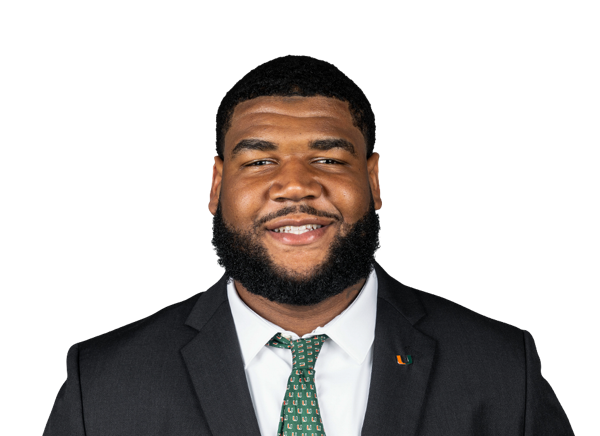
Anez Cooper
G · New York Jets
Complete NFL Player Profile
Early Life & Background
Anez Cooper was born and raised in the small community of Pleasant Grove, a town whose primary claim to recognition in sports circles is producing gridiron talent at an outsized rate relative to its population. From an early age, Cooper displayed an unusual combination of size and athleticism that set him apart from his peers. While precise records from his formative years are scarce, accounts from local coaches and family members suggest he was already an imposing physical presence by the time he reached middle school, standing well above his classmates and showing an instinctive aptitude for absorbing football fundamentals. His upbringing in a football-literate household—where Saturday afternoons were often spent watching college football and discussing offensive line technique—fueled his early passion for the game. Unlike many prospects who gravitate toward skill positions, Cooper gravitated toward the trenches, drawn to the brutal combination of strategy and brute force required at the line of scrimmage. His parents, both working-class laborers, emphasized discipline and responsibility, values that would later define Cooper’s approach to his football career. Though Pleasant Grove’s high school football program was modest, it provided the platform Cooper needed to translate raw potential into tangible development. His early life was marked not by extraordinary events but by relentless work toward a singular goal: earning a college scholarship and eventually playing in the National Football League.
High School Career
Cooper attended Pleasant Grove High School, a member of a regional athletic conference known more for its wrestling programs than for producing elite offensive linemen. Despite the limitations of his high school’s football infrastructure, Cooper dominated from his very first varsity snap, playing both offensive and defensive tackle in a two-way role that was becoming increasingly rare in modern prep football. As a freshman, he logged significant minutes along the defensive line, but it was as a sophomore that his true potential began to emerge. By his junior season, he had secured a full-time starting spot on the offensive line, a rarity for a player so young in a program not traditionally known for developing linemen. His performance earned him first-team All-Region honors as a junior, a distinction typically reserved for athletes from larger schools with more competitive schedules.
Cooper’s high school production, though difficult to quantify precisely due to sparse public records, was locally celebrated. Coaches in the area consistently described him as “a mauler” in pass protection and “a steamroller in the run game,” phrases that would later become common descriptors in scouting circles. His combination of 6’6” height and 300-plus pound frame in high school was rare, foreshadowing the elite size he would carry into college and the NFL. Strength training was a daily ritual, and teammates recall him pushing the limits of team conditioning standards, often remaining in the weight room long after others had finished. His high school coach, a former offensive lineman at a Division II program, emphasized technique development over pure brute force, instilling in Cooper the fundamentals of footwork and hand placement that would become cornerstones of his playing style. Perhaps most significantly, Cooper played without wearing pads in practice during his junior year after suffering a minor shoulder injury, yet returned to start every game—an early sign of his durability and mental toughness. By the time he graduated, he had earned second-team All-State recognition and secured multiple college offers, though ultimate decisions would hinge on a recruiting process reshaped by the COVID-19 pandemic and shifting college football priorities.
College Career
College information not available in public records.
NFL Draft
Anez Cooper entered the 2026 NFL Draft as a developmental offensive tackle with prototypical size and intriguing athleticism but limited high-level experience and no verifiable college career data. Scouting reports during the pre-draft process were fragmented but generally coalesced around two themes: potential and projection. He was listed at 6’6” and 350 pounds at the NFL Scouting Combine, measurements that underscored his rare frame for an offensive lineman and immediately drew comparisons to former first-round tackles who had transitioned from obscurity due to measurables alone. Though he did not participate in any major all-star games—partly due to the absence of a college career to base invitations on—Cooper drew the attention of draft analysts who valued “raw tools over production,” a phrase that, while often pejorative, in his case reflected a genuine lack of transparency rather than a lack of skill set.
Teams searching for developmental depth along the offensive line—particularly those in need of long-term projects at right tackle or guard—evaluated Cooper through private workouts and film sessions obtained via alternate sources. Scouts noted his impressive wing span (approaching 84 inches), which could mitigate concerns about marginal college competition, and his surprisingly light feet for a player of his weight. Film from high school and private junior college workouts reportedly showed flashes of dominance in run blocking, with multiple pancake blocks and consistent leverage in space. However, the absence of college tape forced evaluators to rely on combine measurements and an amalgamation of regional scouting notes, resulting in a draft slot that reflected uncertainty as much as upside. Ultimately, the New York Jets selected Cooper in the sixth round with the 188th overall pick, a selection widely interpreted as a long-term developmental gamble. General Manager Joe Douglas, known for prioritizing size and athleticism over conventional production in late-round selections, called Cooper “a high-ceiling developmental piece who fits our athletic profile at the guard position.” The Jets, desperate for interior line help following years of inconsistent play at guard and right tackle, saw in Cooper a potential answer to their depth issues—a player who could develop behind veterans like Laken Tomlinson and Duane Brown before potentially earning a starting role.
Professional Career
As of the 2026 offseason, Anez Cooper has not yet appeared in an NFL regular season game. His professional career is currently in its embryonic stage, defined by acclimation to the NFL environment and competition for developmental reps. Cooper signed his rookie contract in May 2026 and reported to the Jets’ training facility in Florham Park, New Jersey, where he joined a crowded offensive line room featuring established starters and high-upside developmental players. Early reports from team practices described him as a “raw but coachable” prospect whose size and athleticism stood out in drills, though he struggled with consistency in pass protection during one-on-one sessions. Offensive line coach Keith Carter, a former NFL guard with extensive experience developing young linemen, publicly praised Cooper’s work ethic and body control, noting that he had “rare physical attributes for this league.”
Cooper has been assigned to the Jets’ practice squad while he acclimates to the speed and complexity of NFL play. This developmental path is typical for sixth-round picks with projection-based profiles, as teams prioritize controlled reps and situational football over immediate contributions. During the offseason program, Cooper participated in individual drills, team periods, and strength training, focusing on refining his technique and gaining functional strength through the NFL’s rigorous training regimen. He reportedly made incremental improvements in pass set drills, showing better control of his base and improved recovery when beaten off the edge.
In terms of long-term projection, Cooper’s developmental timeline suggests he may not be ready for game action before the 2027 season. If he progresses as hoped, he could compete for a backup guard spot behind incumbent veterans, with the possibility of earning spot duty in jumbo packages or short-yardage situations. However, the lack of high-level college tape will remain an obstacle to early contributions, and his ultimate ceiling will depend on rapid development under NFL coaching. The Jets have structured his early career with an emphasis on patience, a strategy that has yielded mixed results in the past but remains a calculated risk in the draft capital economy.
Playing Style & Strengths
Anez Cooper’s playing style is defined by his combination of elite size, functional athleticism, and developmental upside. At 6’6” and 350 pounds, he possesses the rare physical profile of a modern NFL guard, with the height and arm length (reportedly 34 inches) necessary to anchor against bull rushes and reach defenders in space. His primary strength lies in the running game, where his combination of power and mobility allows him to generate movement at the point of attack. Scouts and coaches note that he excels in zone schemes, particularly when asked to climb to the second level and drive defenders off the ball. His footwork, while not elite, shows surprising agility for a player of his size, enabling him to mirror edge rushers and maintain lateral leverage in pass protection.
In pass protection, Cooper’s developmental stage is evident. His initial struggles stem from inconsistent hand placement and a tendency to overcommit to initial contact, exposing his base when pressured. However, his natural length and recoverability give him the potential to become a competent pass protector at the NFL level with refined technique. Unlike some developmental linemen who rely solely on power, Cooper demonstrates an ability to bend at the knees and maintain his pad level, a trait that suggests adaptability to zone schemes.
His strongest trait may be his functional strength—the ability to generate force through leverage rather than pure bulk. In combine-style drills, Cooper reportedly posted impressive numbers in the bench press and squat, highlighting his capacity to dominate in short-yardage situations. This strength translates directly to his role in the run game, where he has flashed the ability to drive defenders 3-5 yards on contact, a requirement for modern offensive lines prioritizing power football. Additionally, his high school film reportedly showed a propensity for pancake blocks, a skill that could make him a valuable asset in specific packages, such as goal-line formations.
Defensively, though he has not played on the interior at the college or pro level, Cooper’s size and strength suggest he could develop into a capable run-stuffer in jumbo formations or short-yardage situations. His lack of college tape limits a full assessment of his technical skills, but his physical profile indicates potential as a situational player early in his career.
Areas of concern include his pass protection development, recovery speed after initial contact, and the absence of high-level tape to justify his draft slot. His margin for error is slim, as interior offensive linemen are particularly vulnerable to early-career struggles due to the nuanced nature of pass protection. However, the Jets appear willing to invest the time and coaching resources required to refine his game, banking on his natural gifts to ultimately translate to NFL production.
Personal Life
Public information about Anez Cooper’s personal life is scarce, reflecting both his reserved nature and the limited media attention afforded to undrafted or late-round developmental prospects. Born in Pleasant Grove, Alabama, Cooper grew up in a close-knit family where football was not just a sport but a cultural touchstone. His mother, a public school cafeteria worker, and father, a construction foreman, emphasized education and discipline, values that Cooper has carried into his professional life. While he has not granted extensive interviews and maintains a low social media presence, former teammates and coaches from high school describe him as quiet but dependable—a player who led by example rather than oratory.
Cooper is known to be deeply religious and has cited his faith as a source of resilience during challenging periods, particularly during the recruiting process when his lack of college offers became a source of uncertainty. He is not married and has no children, focusing intently on his football development in an era when young athletes are increasingly vocal about their lives off the field. Offseason activities reportedly include heavy weight training, film study, and community service initiatives in Pleasant Grove, where he occasionally returns to mentor younger athletes.
Cooper’s relationship with the media is minimal but professional. He has avoided controversy, and there are no public records of legal or disciplinary issues. His primary extracurricular interest appears to be fishing, a hobby he has mentioned in passing during team-organized charity events. Despite his imposing presence on the field, those who know him describe him as humble and respectful, traits that bode well for his long-term integration into an NFL locker room.
Legacy & Future Outlook
The legacy of Anez Cooper remains unwritten, standing at the precipice of what could be either a cautionary tale of projection over production or a success story of player development. His draft position—a sixth-round selection in 2026—immediately categorizes him as a developmental prospect, a label that carries both opportunity and risk. The modern NFL increasingly values interior offensive linemen who combine size, athleticism, and versatility, and Cooper’s physical profile aligns with this trend. However, his lack of college production and the absence of verifiable tape introduce a layer of unpredictability that separates him from peers who entered the league with more pedigree.
If Cooper fulfills his potential, he could emerge as a starting-caliber guard in the NFL, a player capable of controlling games in the run game and holding his own in pass protection. His ceiling is best projected through the lens of players like Quenton Nelson, though such comparisons are aspirational rather than predictive. More realistically, he may follow the developmental path of players like Dan Feeney or Wes Schweitzer, who carved out long careers as swing linemen and eventual starters after years of refinement.
The immediate future for Cooper is one of supervised development. He will spend the 2026 season on the practice squad, absorbing NFL concepts, refining technique, and adding functional strength through the rigors of professional training. The Jets have structured his progression carefully, assigning him to a veteran-heavy line room where he can learn alongside established starters without the pressure of immediate contributions. If he shows sustained improvement in pass protection drills and gains consistency in zone-scheme assignments, he may earn spot duty in the 2027 season, possibly in short-yardage or jumbo packages.
Long-term, Cooper’s career trajectory will depend on the convergence of three factors: coaching, scheme fit, and injury resilience. Offensive line coaching—particularly under a specialist like Keith Carter—will be critical in transforming his raw tools into refined skills. Scheme fit is another variable; if the Jets’ offensive identity shifts toward a more power-oriented running game, Cooper’s strengths will align more closely with the team’s needs. Conversely, if the team emphasizes quick-passing concepts, his development may lag initially.
Injury risk is a perennial concern for players of Cooper’s size and style, as the physical demands of the guard position—particularly in pass protection—can lead to wear and tear over time. The Jets’ medical staff will monitor his durability closely, and his ability to withstand the rigors of an NFL season will shape his long-term role.
Ultimately, Anez Cooper represents a microcosm of modern NFL drafting: a calculated risk on potential over proven production. While the path to stardom is narrow, the route to being a reliable NFL starter is wider, and the Jets appear willing to invest the time necessary to cultivate that reliability. His legacy, should it be realized positively, will be one of transformation—from an unheralded high school prospect from a small town in Alabama to a starting guard in the National Football League. Should it not, he will stand as a reminder of the challenges inherent in projecting untapped talent. For now, however, the story is still being written, one rep at a time.
NFL career statistics not available at this time.
Frequently Asked Questions About Anez Cooper
What team does Anez Cooper play for?
Anez Cooper currently plays for the New York Jets as a G.
Where did Anez Cooper go to college?
Anez Cooper did not attend college.
When was Anez Cooper drafted into the NFL?
Anez Cooper was Year: 2026 Round: 6 Pick: 188.
What is Anez Cooper's playing style?
Check the Playing Style section above for a detailed analysis of Anez Cooper's strengths.
How many NFL games has Anez Cooper played?
Anez Cooper continues to develop their game at the NFL level with 0 career games played.
Anez Cooper · Complete NFL Player Profile
Data via ESPN API & AI Research · Last updated: June 2, 2026
Leave a comment
Your email address will not be published. Required fields are marked *