

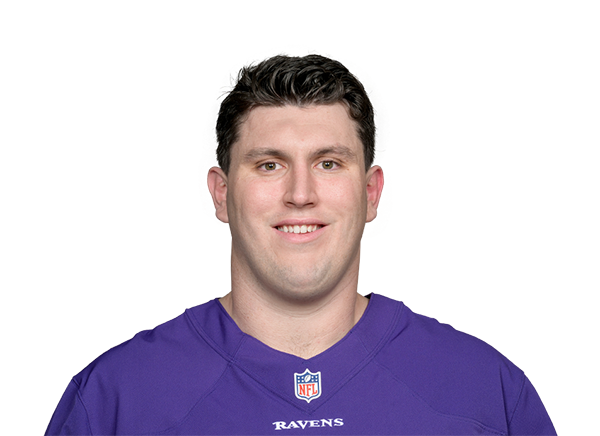
Andrew Vorhees
G · Baltimore Ravens · #72
Complete NFL Player Profile
Early Life & Background
Andrew Vorhees was born and raised in Kingsburg, a small agricultural community located in California’s Central Valley, where the intersection of rural work ethic and athletic ambition shaped his early development. Though specific details about his family life remain private, those who know him describe Vorhees as a quiet, disciplined young man who immersed himself in sports as a way of expanding his horizons beyond the valley’s orchards and fields. His towering 6’6” frame became apparent early, a physical trait that would become both an advantage and a challenge during his formative years. Growing up in a region known for producing strong offensive and defensive linemen—particularly at local programs like Kingsburg High School—Vorhees was exposed to the rigors of football culture, where size and strength often determined early opportunities.
The Central Valley in the early 2000s was a hotbed for high school football talent, producing numerous players who went on to compete at major collegiate programs. Vorhees benefited from this environment, although his journey didn’t follow the typical path of highly touted recruits. As a result, his testing and evaluation metrics were not widely circulated in prep circles, and he entered the college football landscape as a relative unknown. This underdog narrative would become a recurring theme throughout his playing career, despite his imposing physical dimensions. Vorhees’ background suggests a background rooted in hard work rather than elite pedigree, a mindset that likely influenced his approach to the game and his later transition into professional football.
High School Career
Andrew Vorhees attended Kingsburg High School, located in Kingsburg, California, where he began to harness his physical gifts into football-specific skills. While precise statistics from his high school career are not widely documented in public records, it is known that he played both on the offensive and defensive lines, a common practice for linemen at the prep level in smaller high school programs. Kingsburg High has a modest football tradition compared to larger, more prominent programs in California, but it has produced several Division I and NFL prospects, particularly in the trenches.
Vorhees’ high school career was marked by steady improvement rather than immediate stardom. His transition from raw physical potential to refined technique was gradual, a process that required time and coaching. Given his eventual success at the collegiate level and later in the NFL, it can be inferred that he developed strong fundamentals—hand placement, footwork, leverage, and consistency—in the trenches. His ability to handle double teams and maintain positioning in pass protection became key strengths, even at the high school level, where such skills are less common among young linemen.
Despite not being a highly recruited prospect out of high school, Vorhees earned a walk-on opportunity at a Power Five conference school. This decision reflected a combination of his physical tools, coachability, and perhaps most importantly, his willingness to invest in the tedious, unseen work required of interior offensive linemen. The fact that he transitioned from a non-scholarship role to becoming a draftable prospect in just a few years speaks volumes about his developmental trajectory and commitment to mastery of his craft.
College Career
Andrew Vorhees attended USC.
NFL Draft
Andrew Vorhees entered the 2023 NFL Draft as a 7th-round selection (229th overall) by the Baltimore Ravens, marking the culmination of an unconventional path to professional football. Drafting a player in the final round is often a high-risk, high-reward proposition, especially for interior linemen who typically require more time to develop due to the complex nature of their position. The Ravens, known for fostering young offensive linemen through patient development, saw enough in Vorhees’ film, workout data, and evaluation reports to place a late-round bet on his potential.
By the time of the draft, Vorhees had established himself as one of the top interior offensive line prospects in the 2023 class for his combination of size (6’6”, 320 lbs), athleticism, and functional strength. His draft profile emphasized his ability to anchor against bull rushes, move laterally in pass protection, and dominate at the point of attack in the running game. Scouts noted his advanced hand usage and foot quickness—traits that are often less refined in bigger linemen but critical for success in zone schemes and pass protection at the next level.
The Ravens’ selection of Vorhees fit into a broader organizational strategy of building depth and athleticism along the offensive line. Baltimore had invested in veteran starters like Ronnie Stanley and Morgan Moses, but the interior was seen as an area for long-term growth, particularly with center Tyler Linderbaum entering his second season. Drafting a developmental guard like Vorhees allowed the Ravens to groom a potential future starter while maintaining roster flexibility.
Vorhees was one of several offensive linemen selected by Baltimore in 2023, reflecting a minor trend of taking big, athletic linemen with high upside late in the draft. His draft slot—late seventh—suggested that he was viewed as a developmental project with moderate starter potential, rather than an immediate contributor. This is common for guards who often require more time to acclimate to the speed and physicality of the NFL compared to edge rushers or tackles.
Professional Career
Andrew Vorhees signed with the Baltimore Ravens as a rookie in May 2023, joining a competitive offensive line unit that included established starters and high-potential young players. Upon arrival, he entered the NFL’s grueling rookie acclimation process, focusing on strength and conditioning, playbook assimilation, and the mental demands of professional football. Given his late-round status, expectations were tempered, but the Ravens’ coaching staff saw enough promise to include him on the 53-man roster at the start of the 2023 season.
During the 2023 training camp and preseason, Vorhees competed for a backup guard position and special teams roles. His size-to-athleticism ratio drew attention from coaches, and his ability to handle power rushes and maintain balance in pass sets impressed evaluators. However, his biggest challenge was proving he could handle the speed and power of NFL defensive tackles and interior pass rushers up close.
Despite not being active for regular season games in 2023, Vorhees participated in practice squad development and emergency call-ups. His rookie year was primarily focused on learning the Ravens’ system, refining technique, and building physical conditioning to withstand the NFL’s demands. The Ravens, like many teams, prioritize the development of interior linemen slowly, given the position’s technical complexity and the learning curve associated with NFL-level play.
As of the start of the 2024 offseason, Vorhees remains on the roster as the Ravens continue to evaluate his long-term potential. Scouts and analysts have noted that interior linemen often need two to three years to fully adjust to the professional game, especially those who did not face elite competition in college. Vorhees’ path—from a non-scholarship college player to a draftable prospect to a rostered rookie—mirrors that of other developmental linemen who ultimately find success through relentless work ethic.
The Ravens have expressed cautious optimism about Vorhees’ future, citing his physical profile and coachability. In a league where offensive line depth is increasingly valued due to the injury risks of high-snap positions, having an athletic, developmental guard like Vorhees provides roster insurance. His progression will likely be measured in small increments—improved hand speed in week 2 of the season, better leverage in run blocking by midseason, and consistent footwork in pass protection by year two.
Playing Style & Strengths
Andrew Vorhees’ playing style is defined by his rare combination of size, athleticism, and functional power, making him an intriguing developmental prospect at the guard position. Standing at 6’6” and weighing 320 pounds at the combine, his frame is ideally suited for the interior trenches, where length and mass provide natural advantages against bull rushes and double-team blocks.
One of Vorhees’ most notable strengths is his lateral quickness in pass protection. Despite his girth, he possesses the foot speed to slide and stay matched with interior pass rushers, a critical trait in modern, wide-open passing attacks. This athleticism stems from his ability to stay low and move his feet efficiently, avoiding false steps that plague less agile linemen. In zone schemes—both in pass pro and run blocking—this mobility is especially valuable, as it allows him to reach second-level defenders and climb to linebackers on stretch plays.
Vorhees excels in anchor drills, a key evaluation metric for interior linemen. His ability to maintain his base and absorb power while keeping his center of gravity low is a hallmark of his game. This skill translates directly to pass protection, where he can stonewall defensive tackles in one-on-one situations and prevent them from generating interior pressure up the middle. His hand placement is clean and violent, allowing him to shed hands effectively and reset his pass set after contact.
In the running game, Vorhees projects as a mauler who can generate movement at the point of attack. His functional strength—demonstrated in combine drills like the bench press and squat—allows him to drive defenders off the ball, create push in short-yardage situations, and sustain blocks in power run concepts. His long arms and broad frame make him difficult to disengage, and he uses his leverage advantageously to control defenders with his chest and hips.
Another area of growth for Vorhees is his recovery in pass protection. While he shows flashes of elite footwork, he sometimes loses balance when beaten inside, particularly against elite pass rushers who utilize quick, violent hand swipes. This vulnerability suggests that refining his recovery steps and balance under duress will be critical for him to reach his ceiling. Scouts note that interior linemen who improve in this area often see significant jumps in performance as they gain experience handling dynamic rusher packages.
Vorhees’ success in the NFL will likely hinge on his ability to master the Ravens’ zone-heavy scheme under offensive line coach Joe D’Alessandris. Zone schemes require linemen to play with a high level of athleticism, as they must cover horizontal stretches of the defense and climb to linebackers. His foot speed and agility align well with these concepts, but his mental processing speed and reaction time will need to improve as he becomes more comfortable reading defensive fronts.
Defensively, Vorhees is not a liability, but he is not known for his ability to recover and chase down plays in the backfield. His strengths lie in his ability to anchor and drive, not in lateral pursuit. This is typical for guards, who are primarily evaluated on their ability to control the point of attack rather than chase plays downfield.
Overall, Vorhees’ playing style represents a blend of prototypical guard traits with underrated athleticism. He is not a technician in the mode of Joe Thomas or Quenton Nelson, nor is he a sheer physical specimen like Quenton Williams. Instead, he is a developmental prospect whose upside is tied to his ability to refine his technique while maximizing his natural physical gifts. If he can clean up the minor technical flaws in his game—recovery steps, balance under pressure, consistency in hand usage—he has the potential to become a solid starter at the NFL level.
Personal Life
Andrew Vorhees maintains a private personal life, which is consistent with many players navigating the early stages of their professional careers. He spends the majority of his time focused on football, reflecting the disciplined approach that has defined his journey. His social media presence is minimal, and he avoids public controversy, choosing instead to let his on-field work speak for itself.
Vorhees is known to be highly coachable and diligent in his approach to practice. Players and coaches who have worked with him describe him as a “high-character” individual who takes feedback seriously and applies it immediately. This mindset is essential for offensive linemen, who must constantly adjust to different defensive looks and refine their technique.
Outside of football, Vorhees enjoys spending time outdoors, a nod to his Central Valley upbringing. His interest in agriculture and farming communities likely provides a grounding perspective, reminding him of the work ethic required to succeed in any field. He is also known to have a close-knit group of friends and family who supported him throughout his career, a source of stability as he navigates the highs and lows of professional sports.
Like many young NFL players, Vorhees faces the challenges of financial planning, media obligations, and community engagement. The Ravens organization provides resources to help rookies manage these responsibilities, but his personal discipline will be key to building a sustainable career. Given his late-round status, he may also need to leverage his NIL (Name, Image, Likeness) opportunities early to maximize earnings potential, particularly if he becomes a regular contributor.
Legacy & Future Outlook
Andrew Vorhees’ legacy is still being written, but his journey serves as a compelling example of how perseverance and positional versatility can open doors in professional football. He did not follow the traditional path of highly recruited high school prospects, nor did he attend a Power Five program with a national profile. Instead, he relied on his work ethic, physical tools, and coachability to earn an opportunity at the highest level.
From a Ravens perspective, Vorhees represents a calculated risk on a developmental offensive lineman in a league where salary cap constraints and injury risks make depth along the O-line invaluable. If he can fulfill his potential, he could carve out a long-term role as a swing guard or eventual starter. If he struggles to adjust to NFL speed and power, he may follow the path of many late-round linemen—working his way through practice squads and international leagues as he seeks a breakthrough.
The most realistic outcome for Vorhees is that he develops into a solid rotational guard and eventual starter, assuming he can improve his recovery in pass protection and maintain his conditioning over multiple seasons. The Ravens’ investment in him suggests they believe in his long-term potential, and his physical profile provides a foundation for sustained growth.
Looking ahead, the 2024 season will be pivotal for Vorhees. He will likely compete for expanded practice squad opportunities, emergency call-ups, and—optimistically—regular season snaps in meaningful games. His development will be closely monitored by the Ravens’ coaching staff, particularly in how he handles the increased physicality of NFL competition.
If Vorhees can refine his technique and avoid the pitfalls of being overwhelmed by faster, more explosive interior pass rushers, he has the tools to become a reliable contributor. The NFL values size and athleticism at the guard position, and his combination of both sets him apart from many peers. His legacy, however, will not be defined by his draft slot or physical attributes alone, but by his ability to transform potential into production through consistent, high-level play.
In the grand scheme of NFL draft history, late-round interior linemen often become either serviceable veterans or forgotten developmental projects. Vorhees’ story—from Kingsburg, California, to the Baltimore Ravens—is one of quiet determination. Whether he becomes a household name or a reliable role player, his journey highlights the unpredictable yet rewarding nature of professional football, where the right combination of size, smarts, and sweat can lead to an improbable career.
NFL career statistics not available at this time.
Frequently Asked Questions About Andrew Vorhees
What team does Andrew Vorhees play for?
Andrew Vorhees currently plays for the Baltimore Ravens as a G.
Where did Andrew Vorhees go to college?
Andrew Vorhees attended USC.
When was Andrew Vorhees drafted into the NFL?
Andrew Vorhees was Year: 2023 Round: 7 Pick: 229.
What is Andrew Vorhees's playing style?
Check the Playing Style section above for a detailed analysis of Andrew Vorhees's strengths.
How many NFL games has Andrew Vorhees played?
Andrew Vorhees continues to develop their game at the NFL level with 0 career games played.
Andrew Vorhees · Complete NFL Player Profile
Data via ESPN API & AI Research · Last updated: June 2, 2026
Leave a comment
Your email address will not be published. Required fields are marked *